
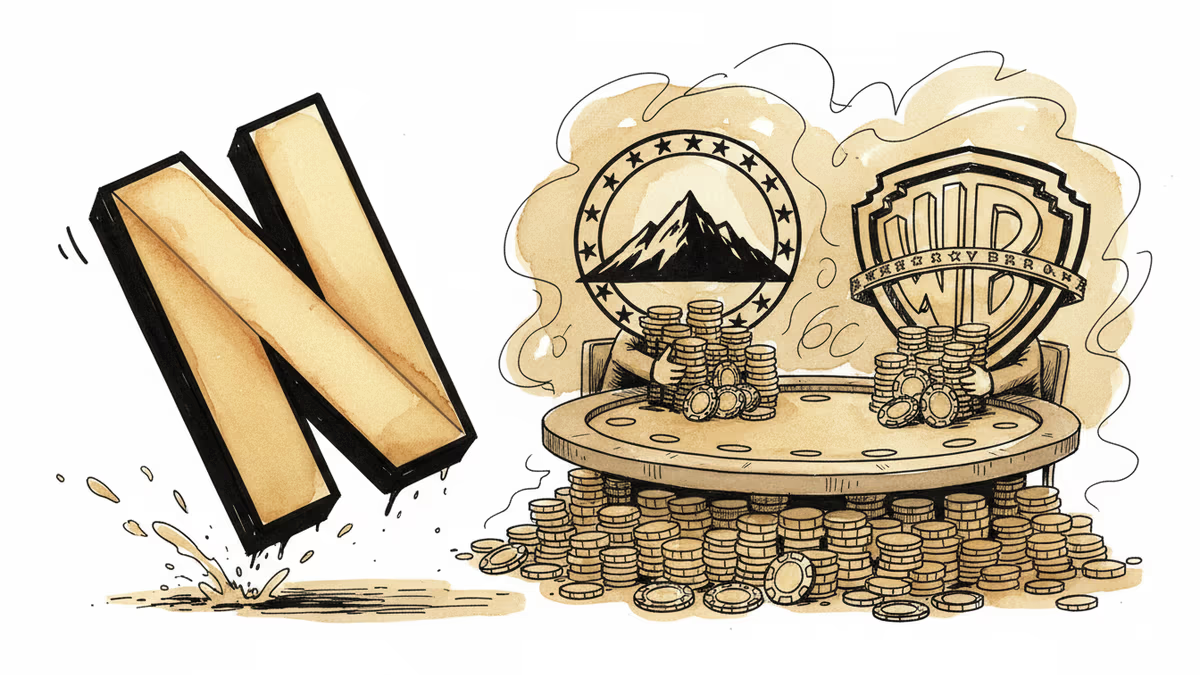
Netflix Backs Down as Media Giants Prepare Mega-Merger
Netflix withdraws from Warner Bros. Discovery bidding, clearing path for Paramount-Skydance to create streaming colossus. What this means for the industry.
The $150 billion streaming chess game just lost its biggest player. Netflix has walked away from the Warner Bros. Discovery (WBD) bidding war, effectively handing Paramount-Skydance the keys to what could become the industry's most formidable content empire.
This isn't just another corporate acquisition. It's a fundamental shift in how streaming giants think about growth, debt, and the future of entertainment.
Why Netflix Folded Its Hand
Netflix's retreat surprised industry watchers. Here's a company that spent $15 billion on content last year alone, suddenly turning conservative when the biggest prize comes up for grabs.
The math tells the story. WBD carries $43 billion in debt—nearly Netflix's entire annual revenue. Acquiring WBD would mean inheriting not just HBO, CNN, and Warner Bros. studios, but also a mountain of obligations that could cripple Netflix's famously lean operation.
More revealing is Netflix's strategic pivot. The company is moving from "own everything" to "partner strategically." Instead of buying studios, they're increasingly licensing content and forming production partnerships. It's a bet that agility beats ownership in the streaming age.
Paramount's All-In Gamble
If the Paramount-Skydance-WBD merger clears regulatory hurdles, the resulting entity would dwarf most competitors. Combined, they'd control HBO Max, Paramount+, Showtime, Nickelodeon, and CNN—a content library rivaling Netflix's decade-long head start.

But here's the uncomfortable truth: both companies are bleeding money. Paramount+ has 68 million subscribers yet posts quarterly losses. WBD's Max service faces similar struggles. Merging two unprofitable streaming operations doesn't automatically create profitability.
The merger logic relies on "scale economics"—spreading content costs across larger subscriber bases and eliminating duplicate operations. It's the same reasoning that drove Disney's acquisition spree, with mixed results.
Consumer Impact: More Choice or Less?
For viewers, this consolidation presents a paradox. More content under one roof sounds appealing—imagine Game of Thrones, Top Gun, and SpongeBob on the same platform. But media consolidation historically leads to higher prices and reduced innovation.
The regulatory question looms large. The Biden administration has shown skepticism toward big tech mergers. A Paramount-WBD combination would control significant news operations (CNN, CBS News) and entertainment properties, potentially triggering antitrust scrutiny.
Meanwhile, Netflix's restraint might prove prescient. By avoiding WBD's debt burden, they maintain flexibility to adapt as the market evolves. Their recent password-sharing crackdown and ad-tier introduction show a company focused on optimizing existing assets rather than empire-building.
The Global Streaming Landscape
This American media reshuffling has worldwide implications. Netflix's pullback from major acquisitions could accelerate their international content investments. Expect more Korean dramas, European thrillers, and Latin American productions as Netflix doubles down on global storytelling.
For competitors like Disney+ and Amazon Prime Video, a merged Paramount-WBD creates both opportunity and threat. They'll face a more formidable content rival but might benefit if the merger struggles with integration challenges—a common fate for media mega-deals.
Authors
Related Articles

Netflix's hiring of ESPN's Elle Duncan is a strategic move beyond live events, signaling a serious new playbook to compete in the high-stakes world of live sports.

YouTube is pulling data from Billboard's charts. PRISM analyzes why this isn't a data spat, but a power play over the future of music and fandom.

Netflix's $82.6B bid for Warner Bros. isn't just a deal; it's a high-stakes pivot. Our analysis breaks down the risks, rewards, and what it means for investors.
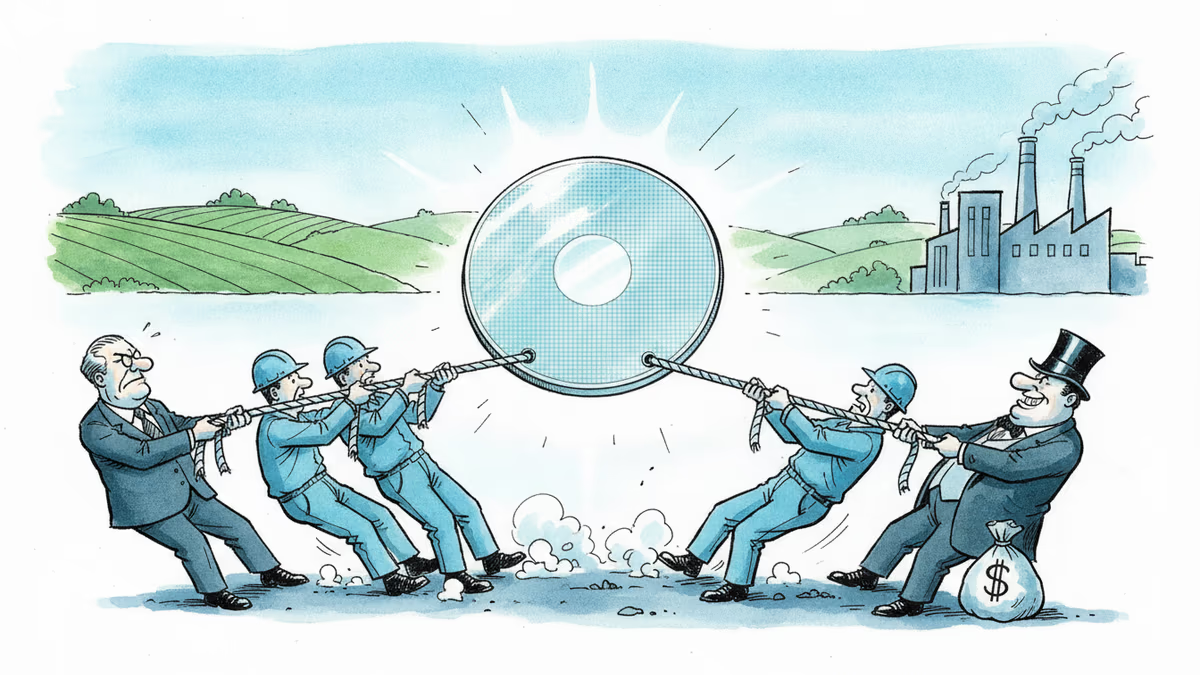
Samsung Electronics' union branch revealed that 84% of survey respondents oppose the government's roughly $290 billion (₩400 trillion) semiconductor megaproject in Gwangju. Government, management, the union and shareholders are all reading the same national project in sharply different ways.
Netflix's hiring of ESPN's Elle Duncan is a strategic move beyond live events, signaling a serious new playbook to compete in the high-stakes world of live sports.
YouTube is pulling data from Billboard's charts. PRISM analyzes why this isn't a data spat, but a power play over the future of music and fandom.
Netflix's $82.6B bid for Warner Bros. isn't just a deal; it's a high-stakes pivot. Our analysis breaks down the risks, rewards, and what it means for investors.
Samsung Electronics' union branch revealed that 84% of survey respondents oppose the government's roughly $290 billion (₩400 trillion) semiconductor megaproject in Gwangju. Government, management, the union and shareholders are all reading the same national project in sharply different ways.
Thoughts
Share your thoughts on this article
Sign in to join the conversation