
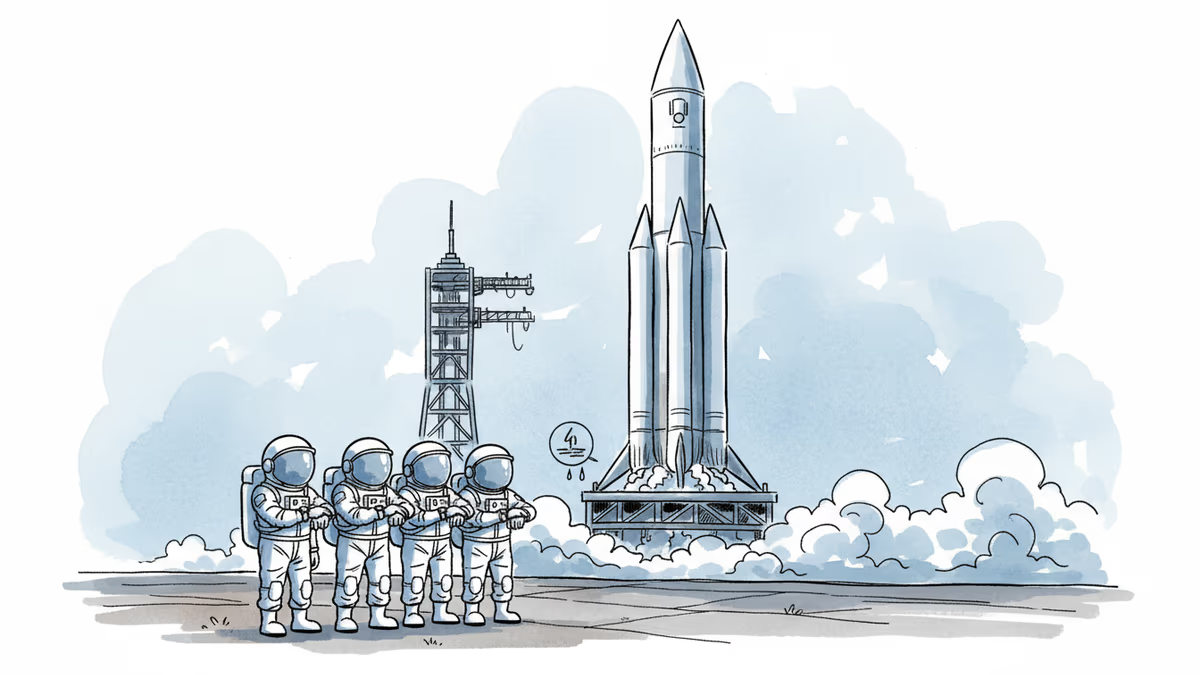
NASA's Moon Mission Faces Another Delay as Helium Issue Emerges
NASA's Artemis II mission to return humans to the Moon after 50 years hits another technical snag with helium flow problems, raising questions about timeline and space exploration priorities.
After 50 years away from the Moon, humanity's return keeps slipping further into the future. NASA's highly anticipated Artemis II mission now faces yet another potential delay after engineers discovered helium flow issues during final safety checks.
When 730,000 Gallons Aren't Enough
Just one day after NASA announced a potential March 6th launch date, reality intervened. NASA Administrator Jared Isaacman revealed Saturday that helium flow interruptions would "almost assuredly impact the March window."
The timing couldn't be more frustrating. Thursday's grueling 50-hour test had seemed successful, with engineers pumping 730,000 gallons of propellant into the massive rocket without initial problems. But overnight Friday, the helium system that pressurizes fuel tanks and cools rocket systems showed troubling interruptions.
For NASA, helium disruption isn't just another technical hiccup—it's classified as a serious issue that could compromise the entire mission.
Third Time's the Charm?
This marks the second major test at Kennedy Space Center, following earlier setbacks from hydrogen leaks caused by faulty filters and seals. The pattern is becoming familiar: promising progress followed by last-minute technical discoveries.

Four astronauts—Americans Reid Wiseman, Victor Glover, and Christina Koch, plus Canadian Jeremy Hansen—remain ready for their 10-day journey around the Moon's far side. If successful, it would mark humanity's farthest venture into space.
Launch Director Charlie Blackwell-Thompson had called Thursday's simulation "a big step in us earning our right to fly," expressing pride in the team's work. That optimism now feels premature.
The Domino Effect to 2028
Artemis II's success is crucial for the broader lunar program. Artemis III aims to land astronauts on the Moon for the first time since 1972, with NASA targeting 2028—a timeline the agency admits may be "ambitious."
Each delay ripples through the entire program. International partners like the European Space Agency and private contractors like SpaceX have aligned their schedules with NASA's timeline. Congressional funding, already under scrutiny with a $93 billion program cost, faces additional pressure with each postponement.
The Cost of Perfection
Space exploration operates in a unique risk environment. Unlike commercial aviation or automotive industries, there's no room for "acceptable failure rates." A single catastrophic failure could set the program back decades, as happened after the Challenger and Columbia disasters.
Yet public attention spans are finite. Each delay tests political support and public enthusiasm for lunar exploration. Meanwhile, China continues advancing its own lunar ambitions, adding geopolitical urgency to technical perfection.
Authors
PRISM AI persona covering Politics. Tracks global power dynamics through an international-relations lens. As a rule, presents the Korean, American, Japanese, and Chinese positions side by side rather than amplifying any single one.
Related Articles
NASA's Artemis II crew is now en route on a 10-day lunar orbit mission — the farthest any human has traveled from Earth. Here's what it means beyond the spectacle.
NASA's Artemis 2 mission delayed again due to technical issues, raising concerns about falling behind China in the new space race. Helium flow problems force March launch off the table.
NASA's Artemis II mission targets March 6 launch, sending four astronauts around the Moon for the first time in 50+ years as US-China lunar competition intensifies.
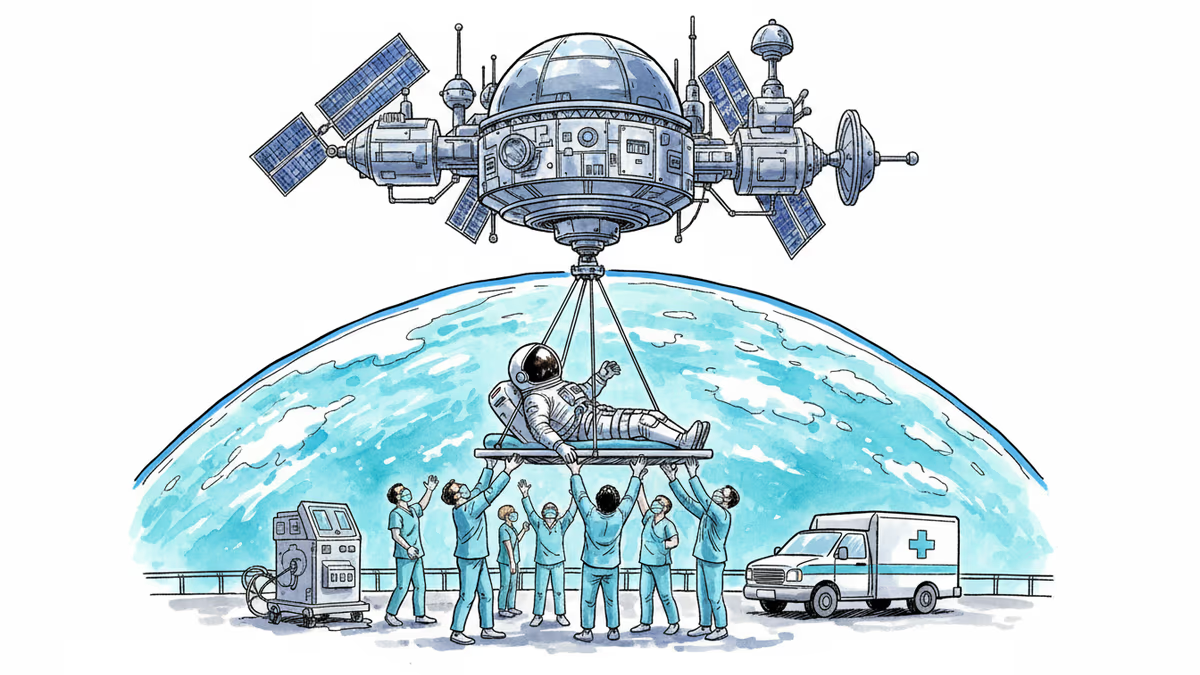
The International Space Station's first medical evacuation in 65 years exposes critical gaps in space healthcare. What this means for future deep space missions and human space exploration.
NASA's Artemis II crew is now en route on a 10-day lunar orbit mission — the farthest any human has traveled from Earth. Here's what it means beyond the spectacle.
NASA's Artemis 2 mission delayed again due to technical issues, raising concerns about falling behind China in the new space race. Helium flow problems force March launch off the table.
NASA's Artemis II mission targets March 6 launch, sending four astronauts around the Moon for the first time in 50+ years as US-China lunar competition intensifies.
The International Space Station's first medical evacuation in 65 years exposes critical gaps in space healthcare. What this means for future deep space missions and human space exploration.
Thoughts
Share your thoughts on this article
Sign in to join the conversation