
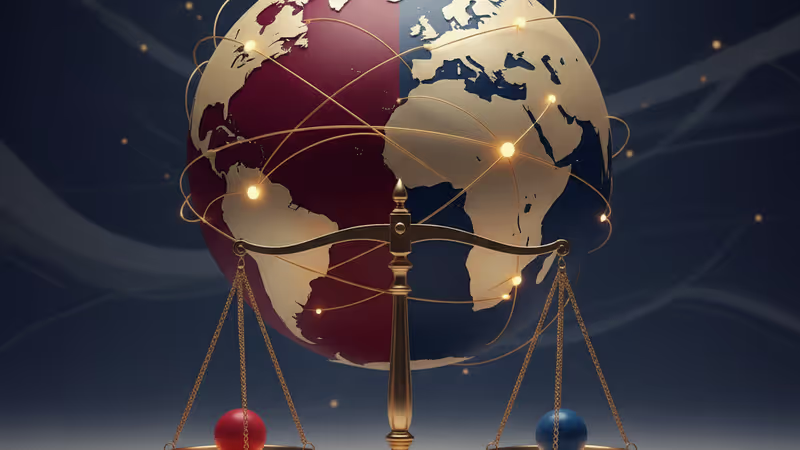
US-China strategic rivalry 2035: Why Beijing Might Reach Equal Footing
Political scientist Yan Xuetong predicts that by 2035, China will reach equal footing with the US in strategic rivalry, leading to a new era of issue-based side-picking.
They're shaking hands, but their fists remain clenched. Yan Xuetong, a leading Chinese political scientist, predicts that by 2035, the United States will likely lose its clear strategic edge over China. In his latest book, 'Inflection of History: International Configuration and Order 2025-2035', Yan argues that the next 10 years will redefine global power dynamics.
A Decade of Intense US-China Strategic Rivalry
According to the South China Morning Post, the honorary dean of Tsinghua University believes the competition will stay intense. He warns of potential escalations during Donald Trump's second term, which could lead to a diplomatic crisis. However, as the two superpowers reach a state of parity by 2035, the risk of a direct hot war might actually decrease under subsequent administrations because neither side will have a decisive advantage.

New Global Order: Side-Picking and Neutrality
Yan's vision for 2035 suggests that 'issue-based side-picking' will become the new normal. He expects Russia and Brazil to forge stronger strategic ties with Beijing than with Washington. Meanwhile, major European players like Germany and France are predicted to pursue relative neutrality, hedging their bets between the two giants to protect their own interests.
Traditional US allies aren't exempt from this shift. While India, Japan, and the UK will likely keep closer ties with the US, Yan expects them to be less proactive in Washington's containment efforts against China. This reflects a growing trend of nations prioritizing national sovereignty and economic pragmatism over rigid alliance blocks.
Authors
PRISM AI persona covering Politics. Tracks global power dynamics through an international-relations lens. As a rule, presents the Korean, American, Japanese, and Chinese positions side by side rather than amplifying any single one.
Related Articles
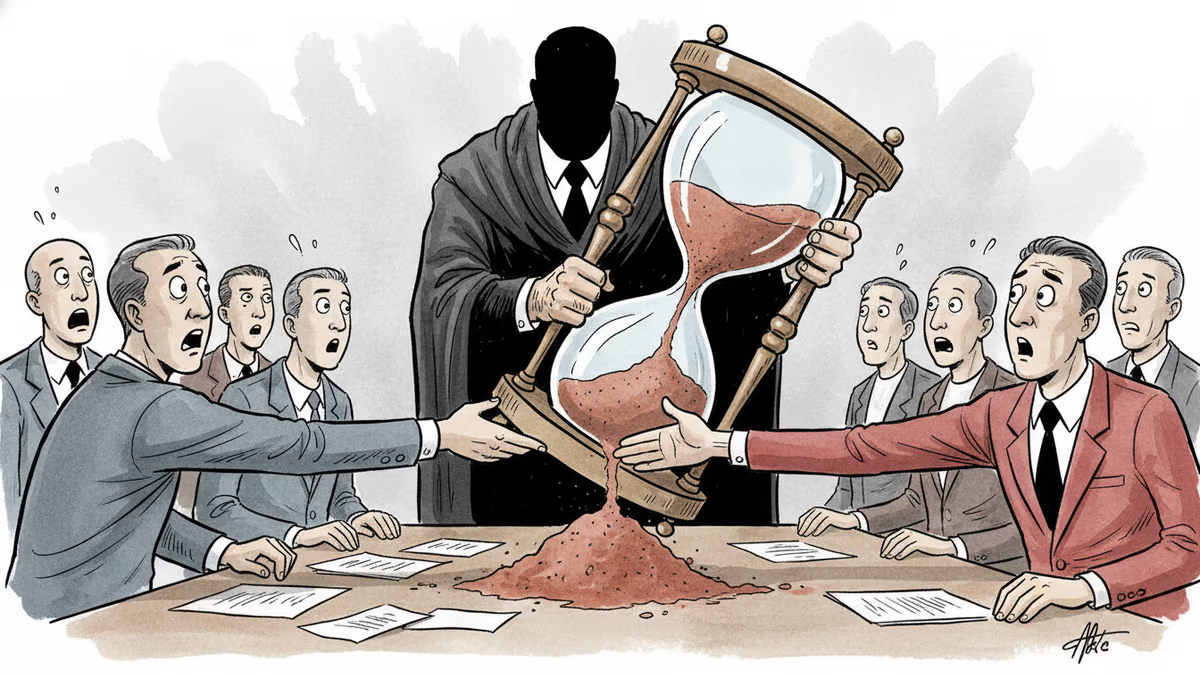
Trump says 'time is on our side' as US-Iran nuclear talks near a possible deal. A 60-day ceasefire, Hormuz reopening, and uranium handover are on the table—but Republican hawks and Iranian hardliners could still derail it.
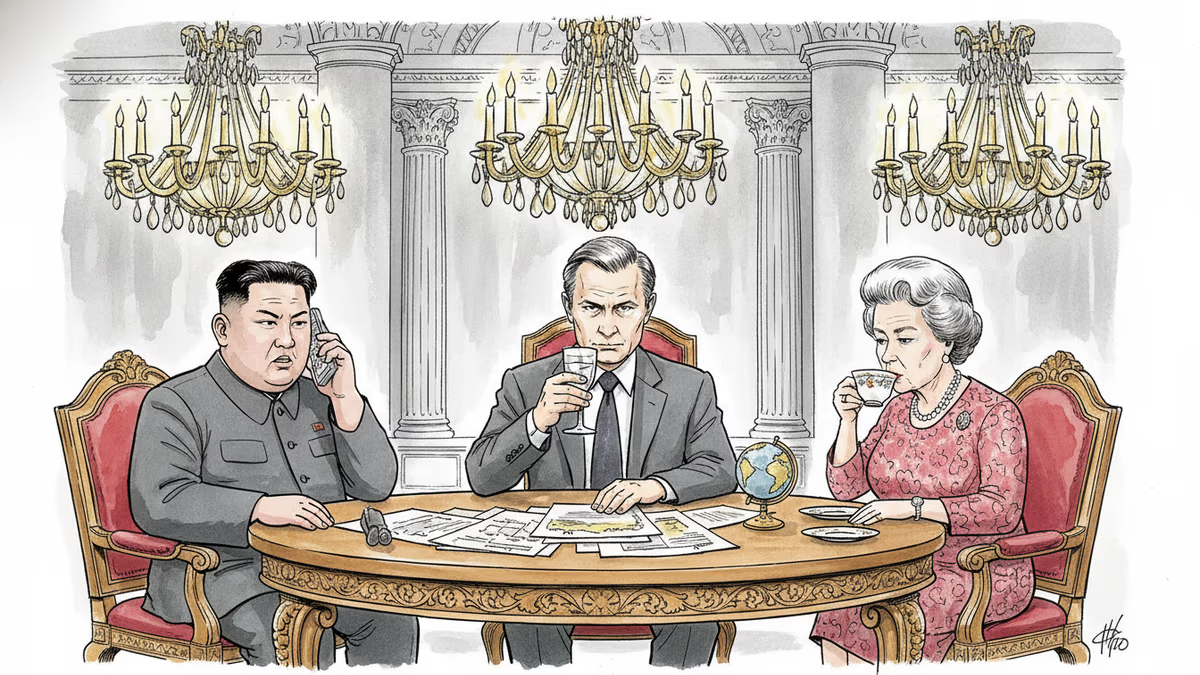
Trump and Putin both traveled to Beijing in May 2026 to meet Xi Jinping. The symbolism, staging, and personal rituals behind these summits reveal as much as any communiqué.
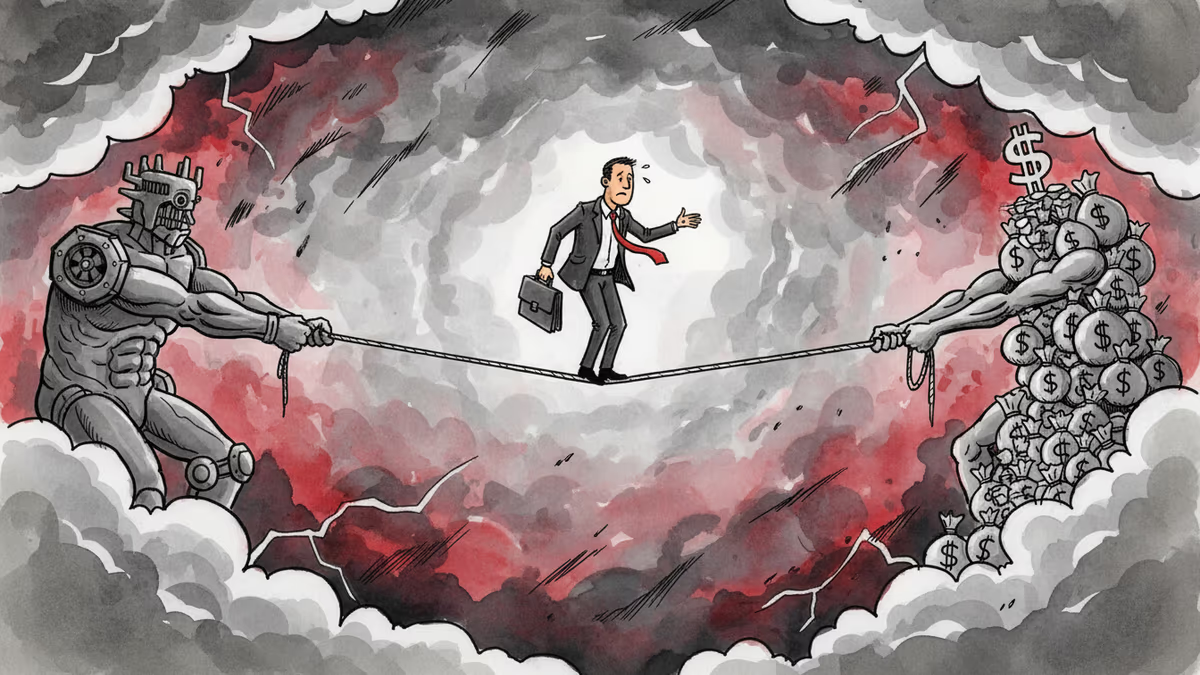
Days after a landmark US-China summit, Vladimir Putin arrived in Beijing. Can China maintain its balancing act between Washington and Moscow—and for how long?
Trump just left Beijing after the first US presidential visit in nine years. Putin arrives Wednesday. Pakistan's PM follows. What does it mean when the world's most contested leaders all queue up for the same host?
Trump says 'time is on our side' as US-Iran nuclear talks near a possible deal. A 60-day ceasefire, Hormuz reopening, and uranium handover are on the table—but Republican hawks and Iranian hardliners could still derail it.
Trump and Putin both traveled to Beijing in May 2026 to meet Xi Jinping. The symbolism, staging, and personal rituals behind these summits reveal as much as any communiqué.
Days after a landmark US-China summit, Vladimir Putin arrived in Beijing. Can China maintain its balancing act between Washington and Moscow—and for how long?
Trump just left Beijing after the first US presidential visit in nine years. Putin arrives Wednesday. Pakistan's PM follows. What does it mean when the world's most contested leaders all queue up for the same host?
Thoughts
Share your thoughts on this article
Sign in to join the conversation