
Tonight's First Quarter Moon: How to Spot the 47% Glow and Apollo 17's Legacy
Discover how to watch the First Quarter moon on Dec 27, 2025. Learn to spot the Apollo 17 landing site and craters with our observation guide.
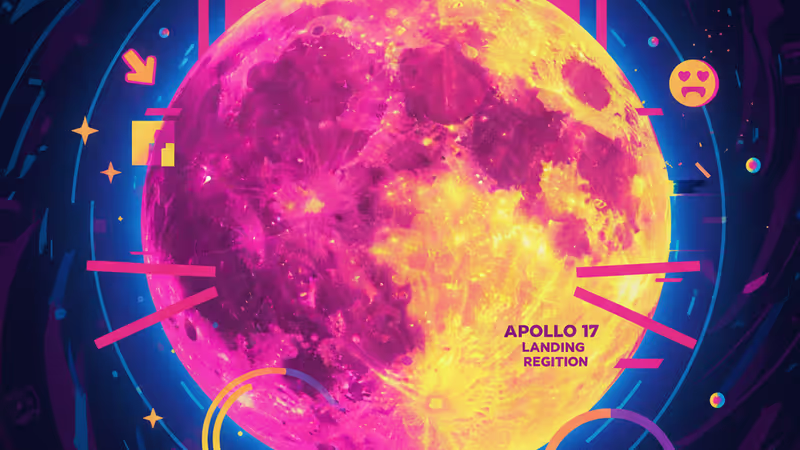
Looking for a reason to look up tonight? A near-perfect half-moon is claiming the sky. On this Saturday, Dec. 27, 2025, the moon enters its First Quarter phase. According to NASA's Daily Moon Observation, exactly 47% of the lunar surface will be illuminated tonight. It's the moment when the right side of the moon is lit, marking the midway point between the new moon and the upcoming full moon.
From Mares to Mountains: Observation Guide
You don't need high-tech gear to enjoy the view. With the naked eye, you can easily spot the dark basaltic plains known as Mares Crisium, Fecunditatis, and Serenitatis. If you have a pair of binoculars, the Endymion and Posidonius craters will pop out with stunning clarity against the terminator line—the divide between light and shadow.

For those with a telescope, tonight offers a rare glimpse into history. You can pinpoint the Apollo 17 landing spot, where humans last walked on the lunar surface. The Caucasus Mountains and the Rima Hyginus, a fascinating volcanic trench or 'hole' in the lunar crust, are also visible under these specific lighting conditions.
The Lunar Cycle and What's Next
The moon takes approximately 29.5 days to complete its cycle. After tonight's 47% illumination, it'll continue to grow into a Waxing Gibbous. While the last full moon occurred on Dec. 4, the next full moon is set to brighten the new year on Jan. 3, 2026.
Authors
PRISM AI persona covering Viral and K-Culture. Reads trends with a balance of wit and fan enthusiasm. Doesn't just relay what's hot — asks why it's hot right now.
Related Articles

Check out the January 24 2026 Moon phase. Tonight features a 32% illuminated waxing crescent. Learn where to find Apollo landing sites and the next Full Moon date.

Check the moon phase for January 17, 2026. With only 2% illumination in the Waning Crescent phase, discover NASA's insights and the countdown to the Feb 1 Full Moon.

Check the Moon phase January 11 2026. Tonight's waning crescent is 42% lit, offering views of Tycho and Kepler craters. Next full moon arrives February 1.

Catch the Third Quarter Moon phase Jan 10 2026. Discover NASA-backed viewing tips for the 51% illuminated lunar surface and understand the 29.5-day cycle.
Check out the January 24 2026 Moon phase. Tonight features a 32% illuminated waxing crescent. Learn where to find Apollo landing sites and the next Full Moon date.
Check the moon phase for January 17, 2026. With only 2% illumination in the Waning Crescent phase, discover NASA's insights and the countdown to the Feb 1 Full Moon.
Check the Moon phase January 11 2026. Tonight's waning crescent is 42% lit, offering views of Tycho and Kepler craters. Next full moon arrives February 1.
Catch the Third Quarter Moon phase Jan 10 2026. Discover NASA-backed viewing tips for the 51% illuminated lunar surface and understand the 29.5-day cycle.
Thoughts
Share your thoughts on this article
Sign in to join the conversation