
The Death of the API Call: How Model Context Protocol MCP Redefines Software
Model Context Protocol MCP is shifting the software paradigm from code-based to language-based interfaces. Discover how it simplifies enterprise integration and changes developer roles.
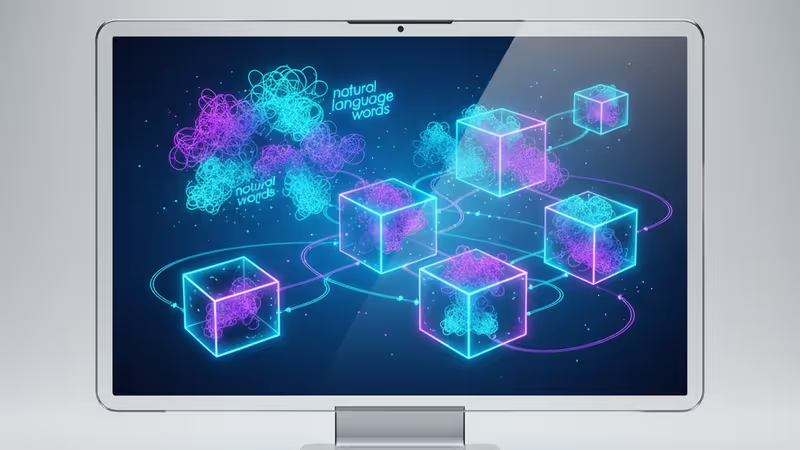
For decades, we've adapted to software. We learned shell commands, memorized HTTP method names, and wired together SDKs. Each interface assumed we'd speak its language. But that's changing. We're entering a new paradigm where the machine absorbs human language, and the Model Context Protocol MCP is the engine driving this shift.
Model Context Protocol MCP: Moving from Code to Intent
Modern LLMs are challenging the notion that users must remember method signatures. Instead of asking "Which API do I call?", the question becomes: "What outcome am I trying to achieve?" This is the essence of language-driven integration. In this shift, MCP emerges as the abstraction that allows models to interpret human intent and execute complex workflows autonomously.

Enterprise ROI and the Shift in Engineering Roles
Enterprises are drowning in integration sprawl. Workers struggle because they have too many tools, each with its own interface. According to McKinsey & Company, 63% of organizations using Gen AI are already creating text outputs. By adopting MCP-driven interfaces, companies can turn data access latency from days into seconds.
This evolution also changes who enterprises hire. We're seeing a shift from integration engineers to ontology engineers and capability architects. These new roles focus on defining the semantics of business operations and mapping business entities to system capabilities through the protocol.
Authors
Related Articles
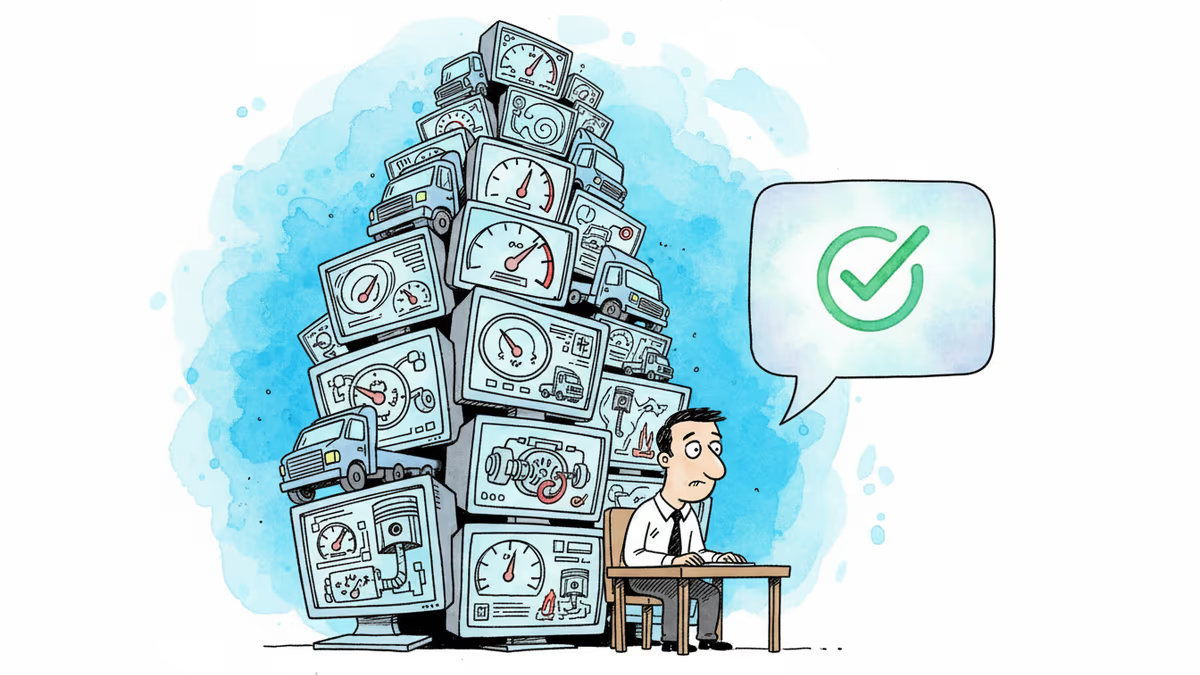
Ford's new generative AI tool for commercial fleets turns vehicle data into plain-English recommendations. It's convenient—but who's really in control?
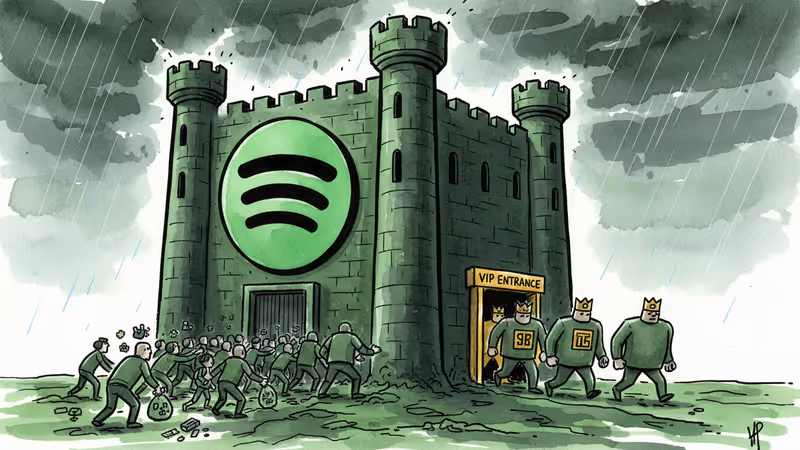
Spotify dramatically restricts its Developer Mode API, requiring Premium subscriptions and cutting test users from 25 to 5. Is this the end of the open platform era?

Blue Origin announces TeraWave, a multi-orbit satellite network offering up to 6Tb bandwidth for enterprise customers. Deployment starts late 2027.

Microsoft released a Windows 11 2026 emergency update on Jan 17 to fix critical shutdown and remote desktop bugs in the Enterprise and IoT 23H2 versions.
Ford's new generative AI tool for commercial fleets turns vehicle data into plain-English recommendations. It's convenient—but who's really in control?
Spotify dramatically restricts its Developer Mode API, requiring Premium subscriptions and cutting test users from 25 to 5. Is this the end of the open platform era?
Blue Origin announces TeraWave, a multi-orbit satellite network offering up to 6Tb bandwidth for enterprise customers. Deployment starts late 2027.
Microsoft released a Windows 11 2026 emergency update on Jan 17 to fix critical shutdown and remote desktop bugs in the Enterprise and IoT 23H2 versions.
Thoughts
Share your thoughts on this article
Sign in to join the conversation