
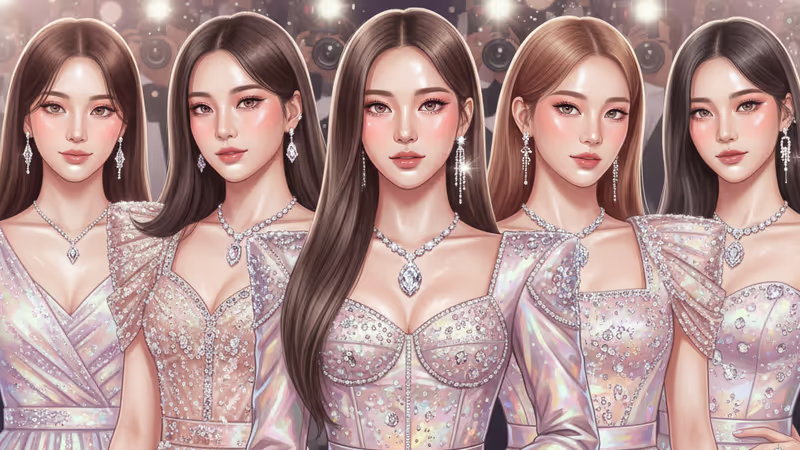
MMA 2025 Red Carpet: Decoding the Billion-Dollar Brand Strategies Behind the Looks
The MMA 2025 red carpet isn't just fashion. It's a battleground for brand deals, tech innovation, and K-Pop's global economic influence. PRISM analyzes.
The Lede: Beyond the Velvet Rope
The Melon Music Awards 2025 red carpet is not a fashion parade; it's a real-time display of multi-billion dollar economic strategy. For the C-suite executive, this is not about celebrity gossip. It is a critical case study in brand architecture, global market penetration, and the calculated deployment of cultural soft power. The choice of a tuxedo or gown is a move on a global chessboard, with implications for luxury goods markets, entertainment stock valuations, and the future of fan engagement technology.
Why It Matters: The New Currency of Culture
What happens on the red carpet has immediate and significant second-order effects. A single, well-placed look does more than generate social media buzz; it functions as a strategic asset with quantifiable ROI:
- Market Creation: When a top-tier idol wears an emerging Korean designer, it can trigger global distribution inquiries overnight, effectively creating a new market for that brand.
- Ambassadorship as Equity: These are not simple endorsements. They are long-term partnerships that directly influence luxury brand stock prices. A successful red carpet appearance by a brand ambassador like IDID's members for global fashion houses is a direct signal of market resonance to investors.
- IP Fortification: For entertainment agencies, the red carpet is a showcase of their management prowess. The curated looks reinforce a group's specific 'concept' or intellectual property, strengthening their global brand and downstream revenue opportunities from tours to merchandise.
The Analysis: From Uniformity to Individuality Inc.
Two decades ago, K-Pop red carpets were defined by coordinated, often domestically-sourced, group outfits designed to emphasize collective identity. The MMA 2025 carpet marks the final stage of a seismic shift. The dominant trend is now the ‘Group as a House of Brands,’ where each member is a distinct profit center with their own global luxury ambassadorship.
This evolution reflects the maturation of the K-Pop industry from a music exporter to a sophisticated manager of global talent IP. We've moved from the era of SM Entertainment’s synchronized aesthetics to HYBE's model of leveraging superstar individuality. This creates a competitive dynamic not just between entertainment companies, but between the French, Italian, and American luxury conglomerates like LVMH and Kering, who now see Seoul as a primary battleground for capturing the next generation of consumers. The fact that a rookie group chose a sustainable Seoul-based designer this year is a counter-maneuver, a signal of nationalistic 'cool' and a potential threat to the dominance of established European houses.
PRISM Insight: The Red Carpet as a Data Goldmine
The real story isn't just the fabric; it's the data stack behind it. The most advanced labels and agencies are no longer guessing at impact. They are deploying AI-powered analytics to measure the 'Red Carpet ROI' in real-time:
- Earned Media Value (EMV): Sophisticated platforms are scraping millions of social media posts, articles, and fan comments to assign a dollar value to every second an idol is on camera wearing their brand.
- Sentiment & Trend Analysis: AI tools are analyzing the emotional response to outfits, identifying breakout trends that will inform next season's collections and marketing campaigns.
- The Next Frontier - Phygital Assets: We are seeing the first experiments with digital-only accessories, visible via AR filters on red carpet broadcasts. This is a clear investment signal for companies operating at the intersection of Web3, fashion, and fandom. The virtual twin of an idol's outfit, sold as an NFT for a metaverse, is the next logical—and highly lucrative—step.
PRISM's Take: The K-Pop Conglomerate is a Fashion-Tech Hybrid
The Melon Music Awards 2025 red carpet solidifies a fundamental truth: the K-Pop industry has transcended entertainment. It is now a highly efficient engine for global commerce and a testbed for the future of marketing. The most powerful agencies are now operating as hybrid tech/media/fashion conglomerates, with the red carpet serving as their quarterly shareholder presentation. Ignore the flashbulbs and watch the brand choices. They are a more accurate predictor of future market movements and consumer trends than any traditional industry report. The key takeaway is that an idol's outfit is no longer just a statement; it's a balance sheet.
Related Articles

BB Girls' Minyoung's viral photos aren't just about looks. It's a strategic move in K-Pop's creator economy, signaling a shift in artist IP and brand control.

One member's sick day is more than a fan update. It's a signal of operational risk in K-Pop's high-intensity business model. PRISM analyzes the impact.

NewJeans' Danielle's unpublicized volunteering is more than a good deed—it's a masterclass in brand authenticity and the future of fan-driven PR. PRISM analyzes.

BLACKPINK's Lisa's tattoos aren't just personal. They signal a strategic shift in K-Pop's power dynamics, from corporate control to artist-as-CEO.