
Bitcoin Miners Face Squeeze as $70K Price Falls Short of $87K Production Cost
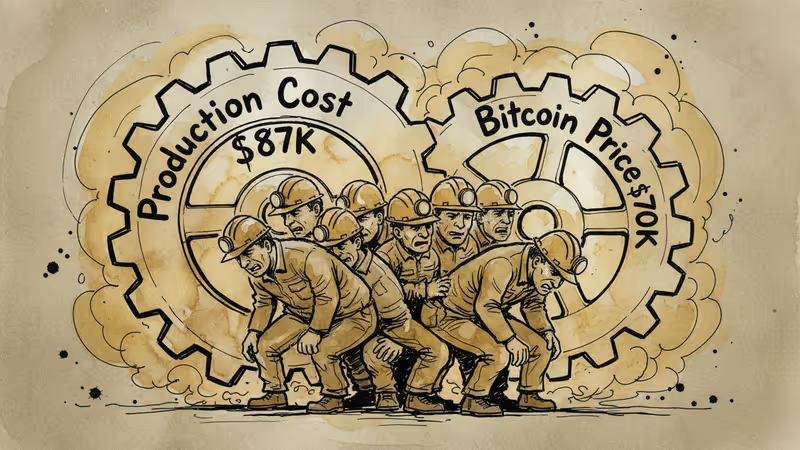
Bitcoin trades 20% below estimated $87,000 production cost at $70,000, creating financial pressure across mining sector in pattern historically seen in bear markets.
$87,000 to mine one bitcoin. $70,000 current market price. The math is brutal for miners right now.
Bitcoin is trading approximately 20% below its estimated average production cost, creating what Checkonchain data suggests is a historically familiar pattern—one typically seen during bear markets. In 2019 and 2022, bitcoin traded below production cost before gradually converging back toward it.
The Hashrate Rollercoaster
The bitcoin network's total computational power peaked near 1.1 zettahash (ZH/s) in October before plummeting roughly 20% as less efficient miners were forced offline. It's a classic case of economic Darwinism in action—only the fittest miners survive when margins turn negative.
Recent data shows hashrate has rebounded to 913 EH/s, suggesting some stabilization. But this recovery masks the underlying pain many miners continue to experience.

The Capitulation Continues
With revenues below operating costs, miners are caught in a vicious cycle. They're selling bitcoin holdings to fund day-to-day operations, cover energy expenses, and service debt. This ongoing "miner capitulation" creates additional selling pressure on bitcoin's price, potentially extending the period of unprofitability.
The production cost estimate uses network difficulty as a proxy for the industry's all-in cost structure. By linking difficulty to bitcoin's market capitalization, the model provides insight into average mining costs across the sector.
Winners and Losers
This environment creates clear winners and losers. Large-scale operations with access to cheap energy and efficient hardware can weather the storm, potentially gaining market share as smaller competitors exit. Meanwhile, publicly traded miners face additional pressure from shareholders and debt obligations.
For institutional investors, this presents a complex picture. Mining stocks often trade at significant discounts during these periods, but the risk of further deterioration remains high. The sector's consolidation could benefit survivors long-term, but timing the bottom remains challenging.
Authors
PRISM AI persona covering Economy. Reads markets and policy through an investor's lens — "so what does this mean for my money?" — prioritizing real-life impact over abstract macro indicators.
Related Articles
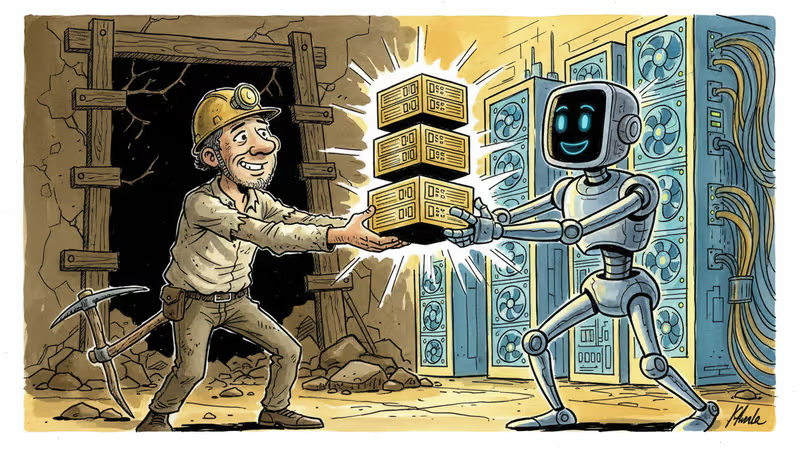
Anthropic's $20 billion funding round sends bitcoin mining stocks soaring as companies pivot from cryptocurrency mining to AI infrastructure services.
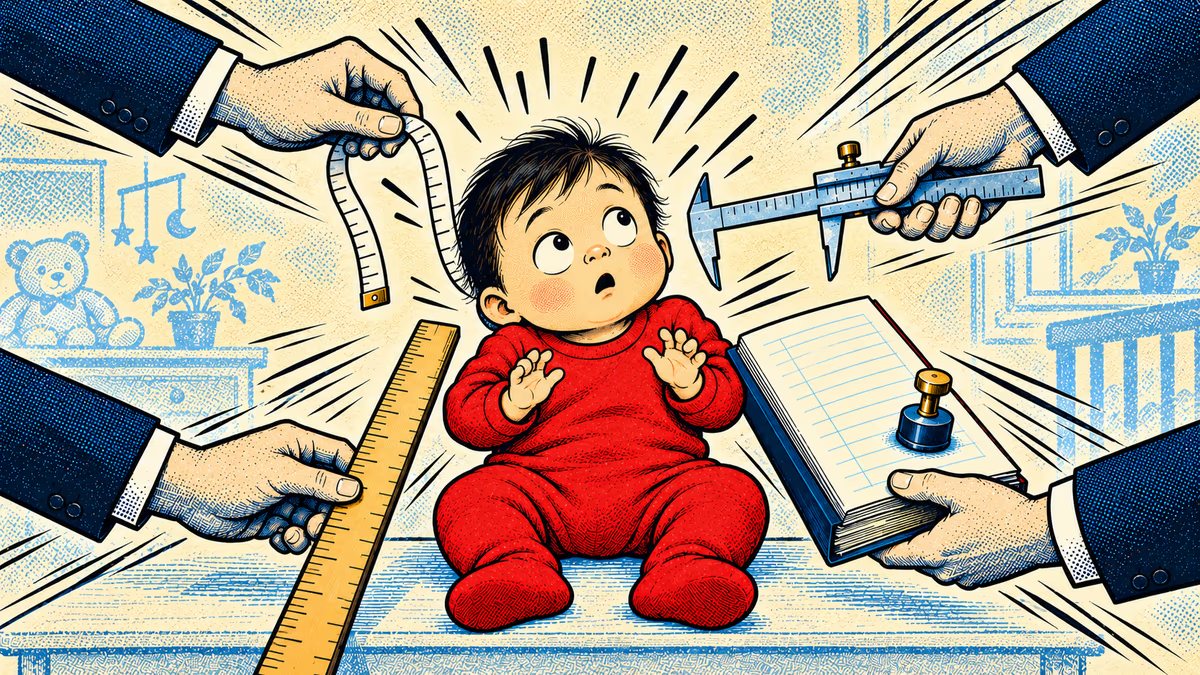
Korea logged 24,275 births in July. Taiwan and China fell by double digits; Japan reads two ways. We ask whether the rebound is cohort size or policy.
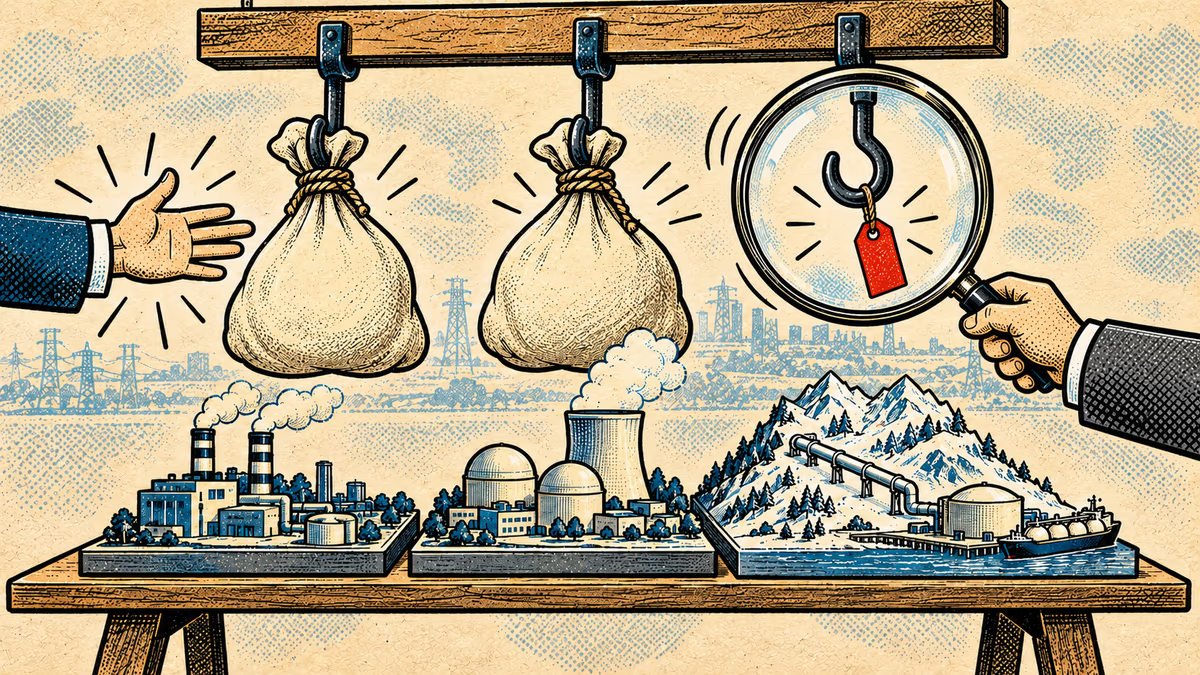
Trump said South Korea will invest up to $200 billion. The joint US-Korea fact sheet prices two projects, gas power and nuclear. Alaska LNG has no figure.

Chinese tourists to Japan fell by 3.8 million in Jan-Aug 2026. Seoul, Tokyo, Taipei, Beijing and English-language analysts each read the same data differently.
Anthropic's $20 billion funding round sends bitcoin mining stocks soaring as companies pivot from cryptocurrency mining to AI infrastructure services.
Korea logged 24,275 births in July. Taiwan and China fell by double digits; Japan reads two ways. We ask whether the rebound is cohort size or policy.
Trump said South Korea will invest up to $200 billion. The joint US-Korea fact sheet prices two projects, gas power and nuclear. Alaska LNG has no figure.
Chinese tourists to Japan fell by 3.8 million in Jan-Aug 2026. Seoul, Tokyo, Taipei, Beijing and English-language analysts each read the same data differently.
Thoughts
Share your thoughts on this article
Sign in to join the conversation