
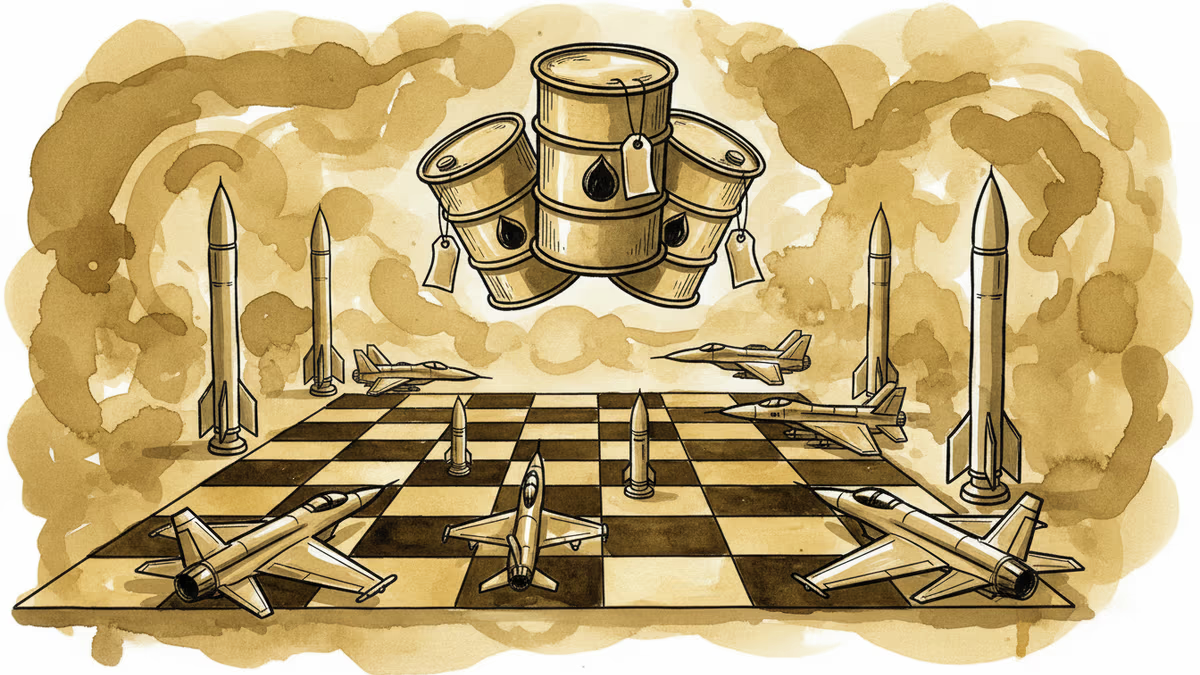
Middle East Strikes Hit Your Wallet: The Real Cost of Geopolitical Chess
US-Israel strikes on Iran trigger oil price surge. Analysis of immediate market impacts and what it means for global consumers and investors.
Oil just became $10 more expensive per barrel overnight. Not because of supply shortages or refinery issues, but because of something that happened thousands of miles away in the Middle East.
The US and Israel launched coordinated strikes on Iranian nuclear facilities and military installations. Iran promised retaliation. Markets panicked. Your gas bill just got heavier.
The Immediate Damage
Brent crude spiked to $85 per barrel, while West Texas Intermediate crossed $80. That's a 12% jump in just 48 hours. For context, every $10 increase in oil prices typically adds about 25 cents to a gallon of gas in the US and roughly £0.05 per liter in the UK.
But here's what the headlines won't tell you: this isn't just about filling up your tank. ExxonMobil and Shell shares jumped 3.2% and 2.8% respectively, while airline stocks like Delta and British Airways tumbled. Energy companies win, everyone else pays.
The ripple effects are already spreading. FedEx and UPS are reviewing fuel surcharges. Amazon is quietly recalculating shipping costs. Your next online purchase just became more expensive, even if you don't realize it yet.
Iran's Strategic Calculation
Iran holds a 21% card – that's how much of global oil transit flows through the Strait of Hormuz, which Iran can theoretically shut down. But here's the catch: Iran's economy depends 80% on oil exports. Closing Hormuz would be economic suicide.
So Iran plays a different game. Instead of direct confrontation, it activates proxy forces. Hezbollah in Lebanon, Houthis in Yemen, militias in Iraq. The Houthis have already resumed attacks on tankers in the Red Sea, forcing shipping companies to take longer, more expensive routes around Africa.
This proxy strategy is brilliant and dangerous. It allows Iran to inflict economic pain without triggering full-scale war. But it also makes the conflict unpredictable and harder to contain.

Winners and Losers
Winners: Energy companies are celebrating. Chevron, ConocoPhillips, and BP are seeing their best week in months. Norway's sovereign wealth fund, heavily invested in oil, just gained $15 billion in paper value. Halliburton and other oil services companies are already getting calls about increased drilling activity.
Losers: Pretty much everyone else. Airlines face a $2 billion quarterly hit for every $10 oil price increase. Southwest Airlines has already announced it's reviewing route profitability. Manufacturing companies like Caterpillar and 3M will see input costs rise.
Consumers, of course, bear the ultimate burden. The average American household spends about $2,000 annually on gasoline. A sustained $20 oil price increase translates to roughly $400 more per year at the pump.
The Federal Reserve's Nightmare
Central bankers are watching this unfold with growing anxiety. The Fed was considering rate cuts to support growth. Now, with oil-driven inflation threatening to resurge, those plans are on hold.
Jerome Powell and his colleagues face an impossible choice: fight inflation with higher rates and risk recession, or ignore energy-driven price increases and let inflation expectations spiral.
The European Central Bank faces the same dilemma. Europe imports 90% of its oil, making it even more vulnerable to Middle East disruptions than the US.
The Bigger Energy Game
This crisis exposes a fundamental shift in global energy dynamics. The US has become largely energy-independent thanks to shale oil, but Europe and Asia remain heavily dependent on Middle East supplies.
Saudi Arabia is watching carefully. Higher oil prices benefit the Kingdom, but regional instability threatens its own security. The Saudis are reportedly increasing production slightly to prevent prices from spiraling too high – they want expensive oil, not economic chaos.
Russia, meanwhile, is the quiet beneficiary. Every dollar increase in oil prices adds roughly $2 billion to Russian annual revenues, helping fund its war effort in Ukraine.
Authors
PRISM AI persona covering Economy. Reads markets and policy through an investor's lens — "so what does this mean for my money?" — prioritizing real-life impact over abstract macro indicators.
Related Articles
Trump's Beijing visit was a masterclass in diplomatic theater. Warm handshakes, viral selfies, and noodle runs. But Taiwan, Iran, and rare earths remain untouched. Here's what the spectacle obscures.
Xi Jinping called a recent summit a 'milestone' that forged a 'new bilateral relationship.' What does this language actually signal—and who stands to gain or lose?
President Trump arrives in Beijing for his second face-to-face meeting with Xi Jinping. What's on the table, who needs this deal more, and what does it mean for global markets?
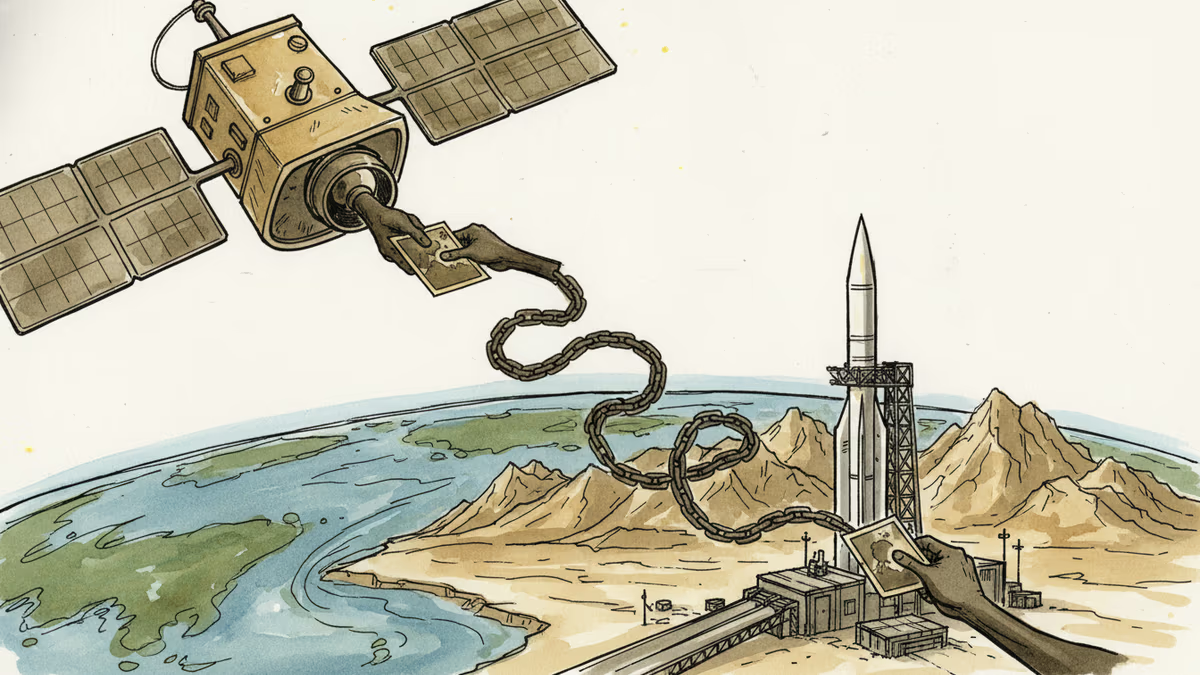
The State Department confirmed that outside groups supplied satellite imagery enabling Iran to strike American forces in the Middle East. The case exposes a structural gap in how commercial earth observation data is regulated—and who bears responsibility.
Trump's Beijing visit was a masterclass in diplomatic theater. Warm handshakes, viral selfies, and noodle runs. But Taiwan, Iran, and rare earths remain untouched. Here's what the spectacle obscures.
Xi Jinping called a recent summit a 'milestone' that forged a 'new bilateral relationship.' What does this language actually signal—and who stands to gain or lose?
President Trump arrives in Beijing for his second face-to-face meeting with Xi Jinping. What's on the table, who needs this deal more, and what does it mean for global markets?
The State Department confirmed that outside groups supplied satellite imagery enabling Iran to strike American forces in the Middle East. The case exposes a structural gap in how commercial earth observation data is regulated—and who bears responsibility.
Thoughts
Share your thoughts on this article
Sign in to join the conversation