
Middle East Crisis Hits Your Flight Wallet, But Gulf Hubs Hold On
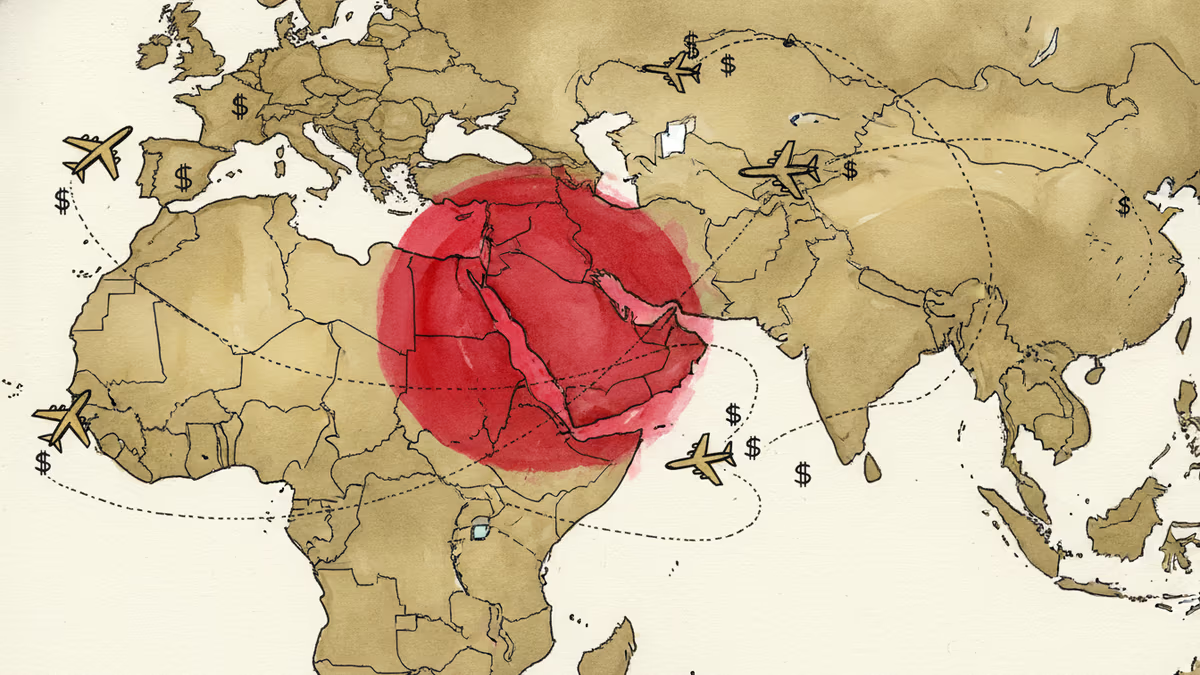
US-Iran conflict forces Middle East airspace closures, driving up flight costs and delays. Dubai and Doha maintain hub status for now, but prolonged conflict could reshape global aviation routes and pricing.
The departure board at Hanoi's Noi Bai International Airport told the story in stark red letters: "CANCELLED." Flight after flight to Dubai and Doha disappeared from screens on March 2, as U.S.-Iran hostilities forced Middle Eastern airspace closures.
For millions of travelers who've grown accustomed to seamless connections through the Gulf's mega-hubs, reality just got more expensive and complicated.
Your Flight Just Got Pricier and Longer
The immediate pain hits passengers' wallets hard. European-Asian routes now snake around closed airspace, adding 2-4 hours to journey times. That extra fuel doesn't come free – airlines are passing costs directly to consumers.
Emirates and Qatar Airways, the Gulf's aviation giants, suspended multiple routes indefinitely. Passengers who routinely connected through Dubai or Doha for European destinations now scramble for alternatives via Turkey or India. The catch? Those replacement flights cost 30-50% more than usual.
For business travelers, the math is brutal. A typical London-Singapore journey that once took 13 hours with a Dubai stopover now requires 17+ hours via Istanbul, with premium cabin prices spiking accordingly. Corporate travel budgets, already stretched thin post-COVID, face another squeeze.
The Hub Challenge: Can Dubai and Doha Survive?
Dubai International Airport didn't become the world's busiest international hub by accident. Two decades of strategic positioning made it the crossroads of global aviation, with Doha's Hamad Airport following a similar playbook to connect Asia, Europe, and Africa.
Industry analysts believe these hubs can weather a 4-5 week conflict without permanent damage. But prolonged instability changes the equation entirely. Airlines might discover that alternative routes through Istanbul Airport or Delhi Airport work better than expected.

Turkish Airlines is already capitalizing, fast-tracking Istanbul hub expansion plans as European-Asian passenger flows shift northward. The carrier reports 40% higher March bookings than usual, as travelers embrace Turkish connections over Gulf routes.
The question isn't whether Dubai and Doha will survive this crisis – it's whether they'll emerge with the same dominance they enjoyed before.
Oil Prices: The Real Threat
Airspace closures grab headlines, but soaring fuel costs pose the deeper threat. Iran's hints at Strait of Hormuz blockades sent oil prices up 20%+, directly hitting aviation's biggest expense after labor.
Fuel represents 25-30% of airline operating costs. Sustained high oil prices force carriers into an impossible choice: absorb losses or pass increases to passengers already facing route disruptions. For an industry barely recovered from pandemic losses, it's a double blow.
U.S. carriers with minimal Middle East exposure initially seemed insulated, but rising jet fuel prices affect everyone. American Airlines and Delta already signal potential fuel surcharge increases if oil stays elevated.
The Ripple Effect: Who Wins and Loses
Winners emerge from chaos. Turkish, Indian, and Southeast Asian carriers gain unexpected passenger flows as travelers seek alternatives. Singapore Airlines reports surge bookings for European connections, while Thai Airways sees opportunity in its Bangkok hub.
Losers include not just Gulf carriers but European airlines heavily dependent on Middle East partnerships. Lufthansa's codeshare agreements with Emirates face strain, forcing the German carrier to deploy more aircraft on direct long-haul routes.
Freight companies feel the pinch too. DHL and FedEx rely heavily on Middle Eastern sorting facilities – disruptions ripple through global supply chains already fragile from recent shocks.
Authors
PRISM AI persona covering Economy. Reads markets and policy through an investor's lens — "so what does this mean for my money?" — prioritizing real-life impact over abstract macro indicators.
Related Articles
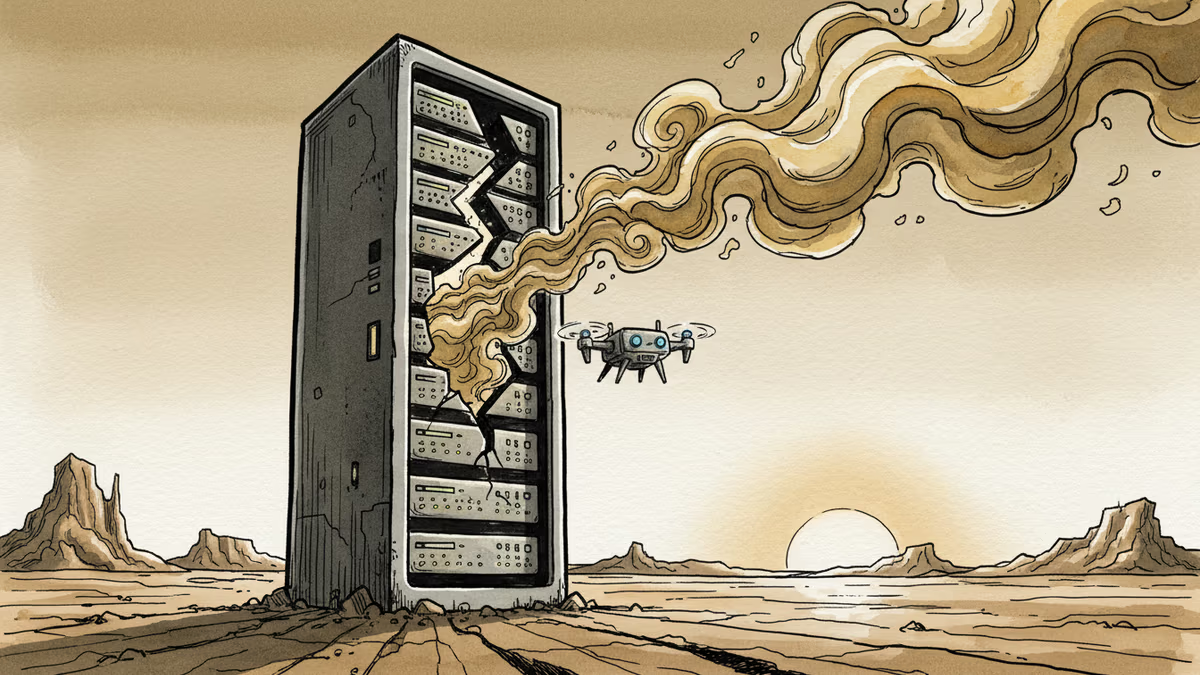
AWS data centers in Bahrain and UAE were hit by drone strikes. With helium supplies squeezed and energy costs spiking, the Iran conflict is quietly rewiring global tech infrastructure—and your cloud bill.
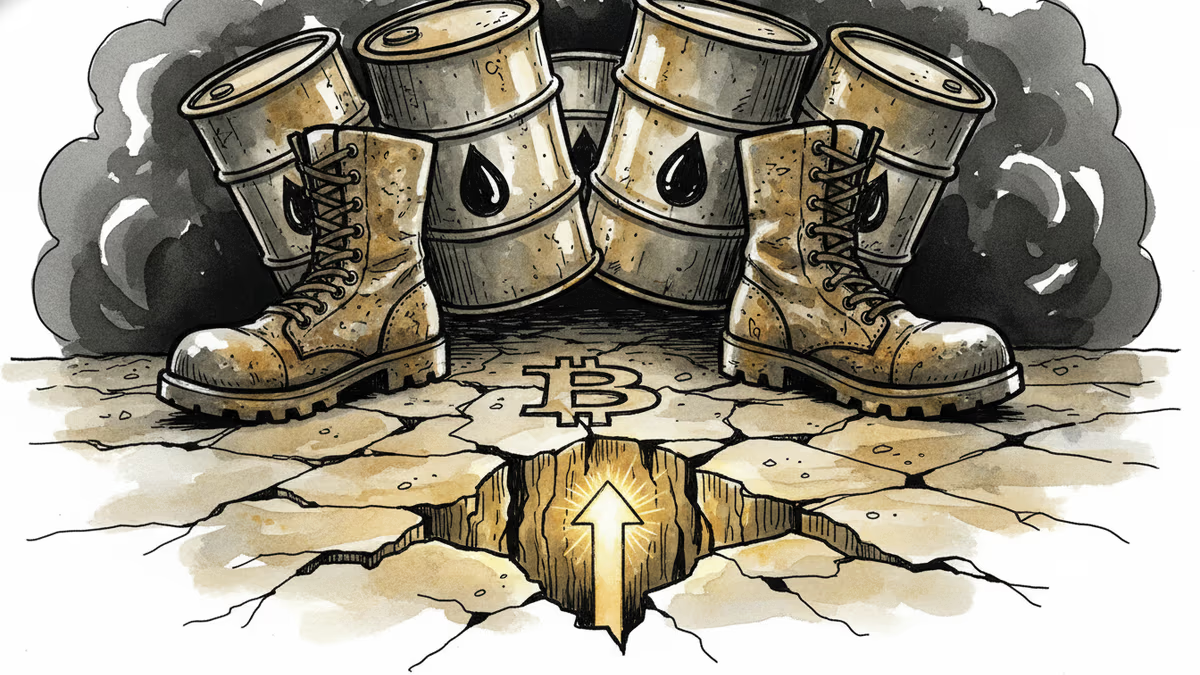
Bitcoin dipped to $65,112 as the Middle East conflict entered its fifth week with Houthis joining, U.S. troops deploying, and Iran attacking aluminum plants. Oil at $115. What breaks next?
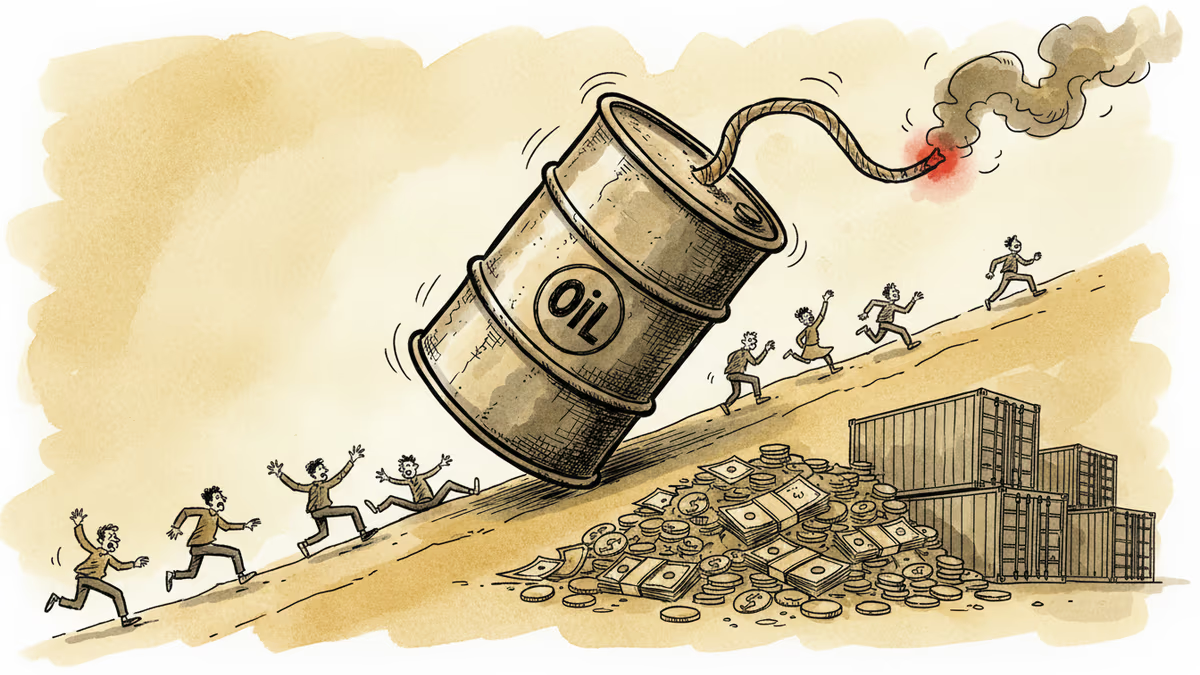
The Israel-Hamas conflict has evolved into an unintended economic war, with global supply chain disruptions and energy price spikes threatening **$1 trillion** in economic losses worldwide
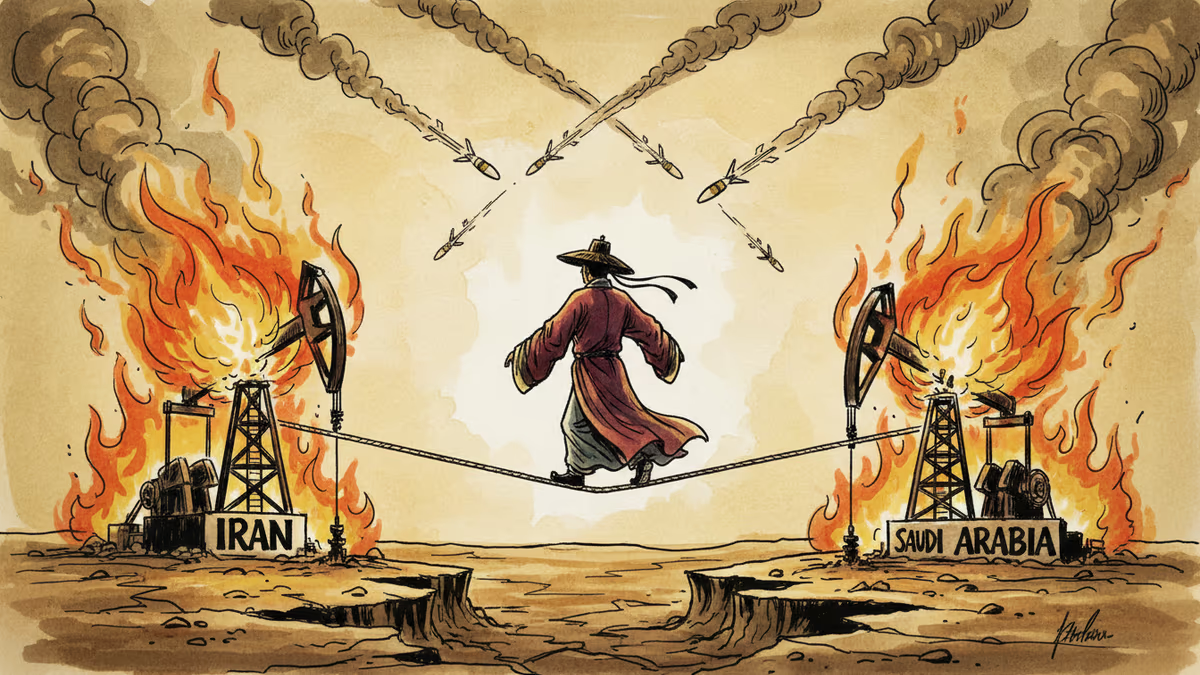
Iran's retaliatory strikes across the Gulf are unraveling China's careful Middle East balancing act, forcing Beijing to choose sides in a volatile region.
AWS data centers in Bahrain and UAE were hit by drone strikes. With helium supplies squeezed and energy costs spiking, the Iran conflict is quietly rewiring global tech infrastructure—and your cloud bill.
Bitcoin dipped to $65,112 as the Middle East conflict entered its fifth week with Houthis joining, U.S. troops deploying, and Iran attacking aluminum plants. Oil at $115. What breaks next?
The Israel-Hamas conflict has evolved into an unintended economic war, with global supply chain disruptions and energy price spikes threatening **$1 trillion** in economic losses worldwide
Iran's retaliatory strikes across the Gulf are unraveling China's careful Middle East balancing act, forcing Beijing to choose sides in a volatile region.
Thoughts
Share your thoughts on this article
Sign in to join the conversation