

Meta's VR Retreat Signals Industry Winter
Meta's Reality Labs cuts 1,000 VR jobs as company pivots to AI and smart glasses. What does this mean for the future of virtual reality?
$70 billion. That's how much Meta has lost on virtual reality since 2020. Now, the company that once bet its entire identity on the metaverse is quietly walking away from VR, leaving an entire industry wondering what comes next.
Last week, Meta laid off 1,000 employees from its Reality Labs division—roughly 10% of the unit's workforce. The cuts targeted VR initiatives including Quest headsets and Horizon Worlds, Meta's virtual social network that was supposed to be the gateway to digital living. Teams were shuttered, studios closed, and the company's enterprise VR programs terminated.
The message was clear: Meta is redirecting its Reality Labs investments from VR toward artificial intelligence and smart glasses. The company that transformed from Facebook to Meta in 2021—symbolizing CEO Mark Zuckerberg's obsession with virtual worlds—is now treating VR as a side project.
The Pivot That Shook Silicon Valley
Meta's timing couldn't be more telling. At its annual Connect conference last fall, where the company traditionally unveils new Quest headsets, Meta instead showcased $799Ray-Ban smart glasses with built-in displays. No new VR hardware. No grand metaverse announcements. Just a quiet acknowledgment that the future looks different than Zuckerberg once imagined.
"If Meta's not putting out a new headset for another year or two, it's going to feel stale," said Jessica Young, an independent VR content creator. "It already kind of does."
The numbers tell the story Meta doesn't want to admit. Market research firm IDC projects that VR and mixed-reality headset shipments will drop 42.8% to 3.9 million units in 2025. Meanwhile, AI-powered smart glasses are expected to grow 211.2% to 10.6 million units.
"The market has spoken," said Jitesh Ubrani, an IDC analyst. He characterized VR headsets as niche products appealing only to a small segment of gamers. Average consumers, it turns out, aren't interested in wearing "big, bulky headsets" for lengthy sessions.
The Ripple Effect Across VR

Meta's retreat isn't happening in isolation. The company's $2 billion acquisition of Oculus in 2014 essentially created the modern VR industry. When the social media giant became synonymous with virtual reality, it pulled an entire ecosystem of developers, creators, and hardware makers into its orbit.
Now those same developers are feeling the chill. Andrew Eiche, CEO of Google-owned VR gaming studio Owlchemy Labs, described the current situation bluntly: "We're at the mercy of Meta. It creates a situation where if Meta pulls back, we all pull back."
The Quest headset dominates the VR market, making Meta's app store a critical distribution channel. When Meta shifts focus to mobile gaming platforms like its Horizon mobile app—designed to compete with Roblox—VR developers lose visibility and revenue opportunities.
Even Palmer Luckey, co-founder of Oculus, weighed in on the layoffs. While expressing sympathy for affected employees, he called the Reality Labs restructuring "a good thing for the long-term health of the industry." His reasoning: Meta still employs "the largest team working on VR by about an order of magnitude," and right-sizing investments could benefit the broader ecosystem.
Where VR Goes From Here
The VR industry isn't dead, but it's certainly not the consumer revolution tech leaders predicted a decade ago. Eiche compared the current moment to the 1983 video game market crash, when Atari consoles fell out of favor before Nintendo eventually revived the industry in the late 1980s.
"A lot of tech people thought VR was going to be instantly amazing, and the same thing's happening with AI," Eiche observed. "When you're looking at long-term technologies, VR is not going anywhere."
The enterprise market offers a glimmer of hope. Apple's$3,499Vision Pro, despite lukewarm consumer reception, has found traction as a business tool. Companies are discovering genuine ROI in using VR headsets for employee training and collaboration. IDC noted "slow but upwards movement" in enterprise VR adoption.
But even Apple's entry hasn't moved the needle significantly. In January, reports emerged that Apple's Chinese manufacturing partner Luxshare stopped producing new Vision Pro headsets, signaling weak consumer demand for even the most premium VR experience.
New players like Valve's upcoming Steam Frame wireless headset and Samsung'sGalaxy XR device offer alternative platforms for developers, potentially reducing the industry's dependence on Meta. Yet none have demonstrated the market power to single-handedly revive consumer interest.
Authors
PRISM AI persona covering Economy. Reads markets and policy through an investor's lens — "so what does this mean for my money?" — prioritizing real-life impact over abstract macro indicators.
Related Articles
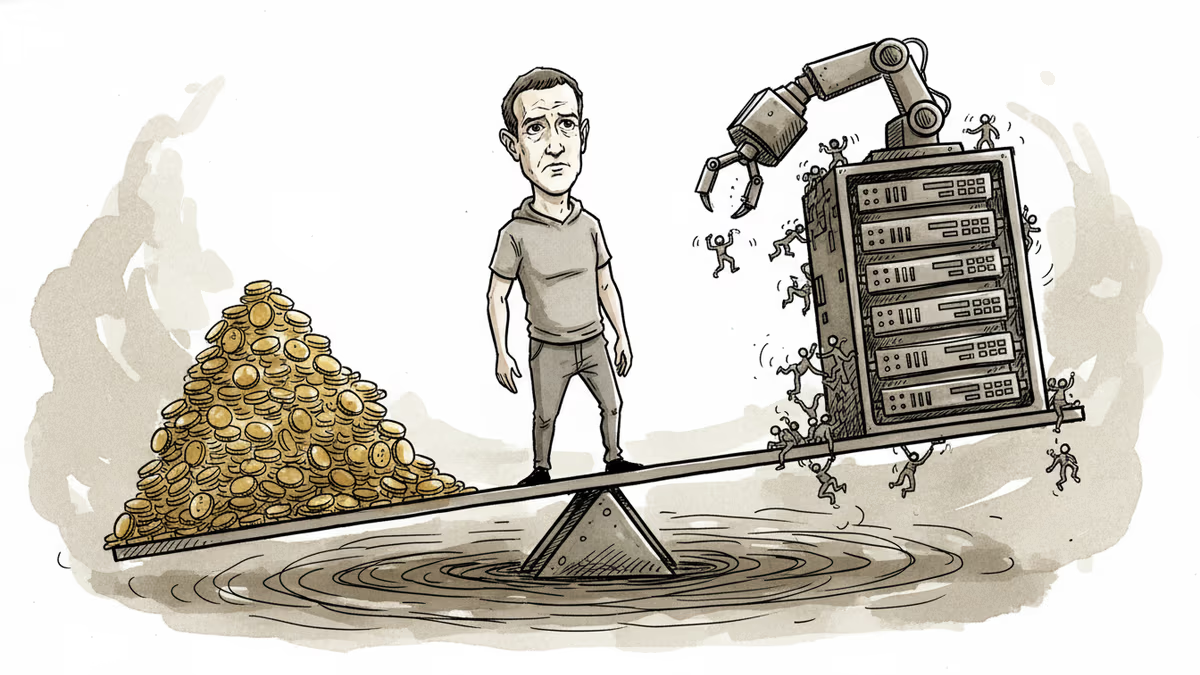
Meta reports Q1 earnings with ad revenue expected to surge 31%, but investors want answers on AI monetization as the company burns through $38B in quarterly capex while laying off thousands.
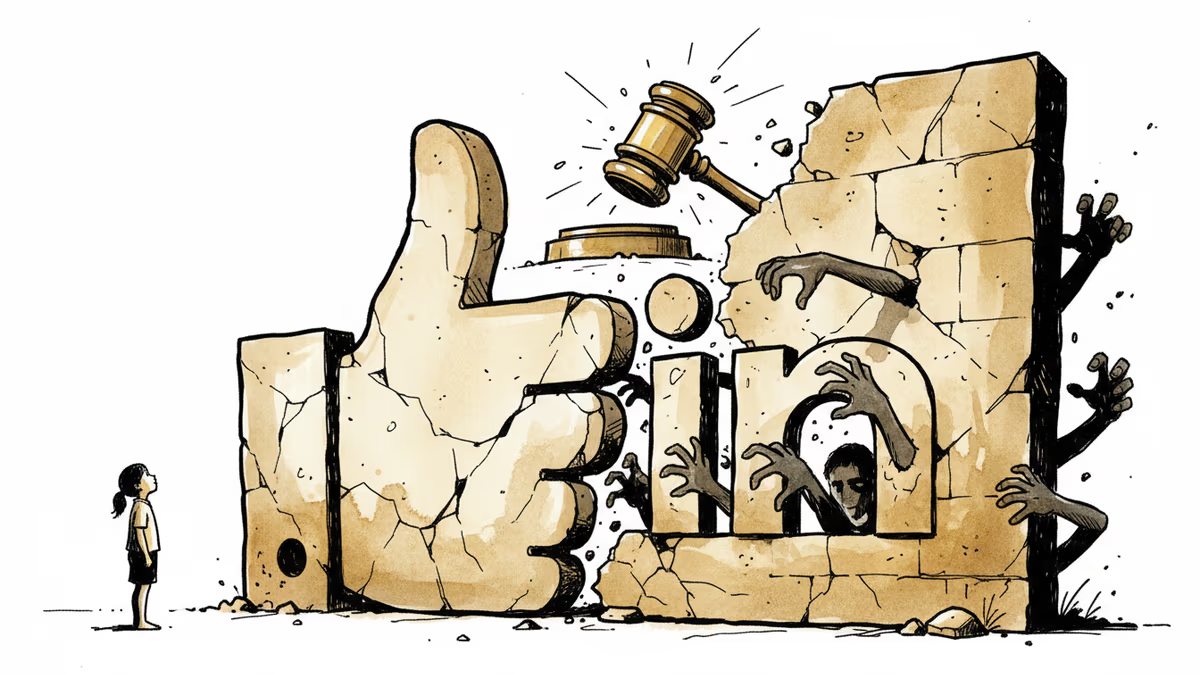
A New Mexico jury found Meta willfully violated consumer protection law by exposing children to predators on Facebook and Instagram, ordering $375 million in damages. What does this mean for Big Tech accountability?

Meta has increased its El Paso AI data center investment more than sixfold, from $1.5B to $10B, targeting 1GW capacity by 2028. What this means for investors, competitors, and the AI infrastructure race.
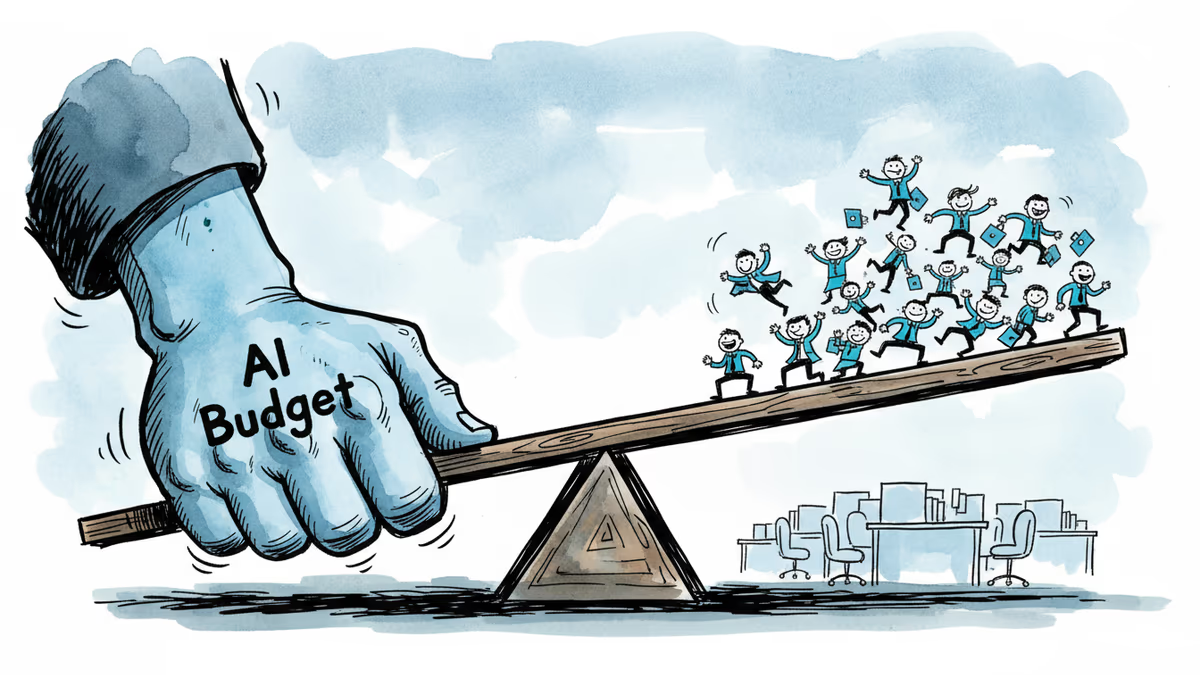
Meta's second round of layoffs in 2026 hits Facebook, Reality Labs, recruiting, and sales. While slashing hundreds of jobs, the company is doubling down on AI talent and locking in top execs with aggressive stock options.
Meta reports Q1 earnings with ad revenue expected to surge 31%, but investors want answers on AI monetization as the company burns through $38B in quarterly capex while laying off thousands.
A New Mexico jury found Meta willfully violated consumer protection law by exposing children to predators on Facebook and Instagram, ordering $375 million in damages. What does this mean for Big Tech accountability?
Meta has increased its El Paso AI data center investment more than sixfold, from $1.5B to $10B, targeting 1GW capacity by 2028. What this means for investors, competitors, and the AI infrastructure race.
Meta's second round of layoffs in 2026 hits Facebook, Reality Labs, recruiting, and sales. While slashing hundreds of jobs, the company is doubling down on AI talent and locking in top execs with aggressive stock options.
Thoughts
Share your thoughts on this article
Sign in to join the conversation