
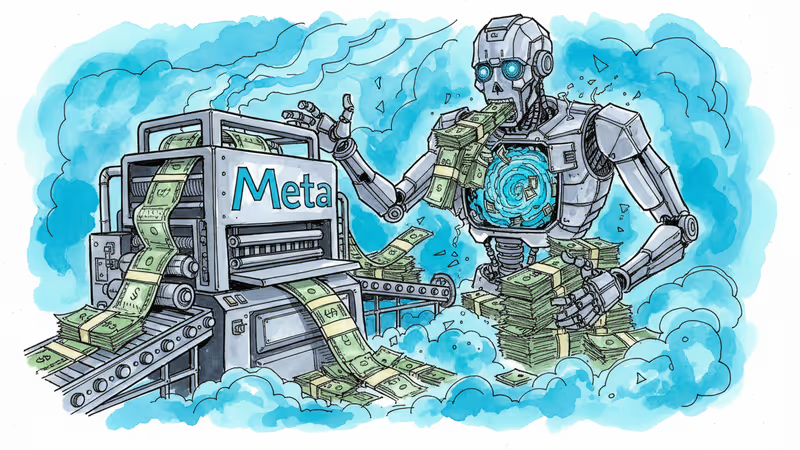
Meta Beats Q4 Expectations, But Cost Explosion Looms
Meta's Q4 results surpassed Wall Street expectations with $59.9B revenue, but 2026 expenses could hit $169B. The social media giant faces a delicate balance between current profits and future AI investments.
$59.9 billion. That's how much Meta raked in during Q4, beating Wall Street's expectations by a comfortable margin. But here's the number that should really grab your attention: $169 billion.
The Good News First
Meta's fourth-quarter performance was nothing short of impressive. Revenue jumped 24% year-over-year to $59.89 billion, sailing past analyst expectations of $58.5 billion. Earnings per share hit $8.88, well above the predicted $8.21. Net income reached $22.77 billion, up 9% from last year.
The market loved it. Shares surged 4.1% in after-hours trading, adding more than $27 per share. For a company that's faced skepticism about its massive AI and metaverse investments, these numbers provided some much-needed validation.
But here's where things get interesting. While revenue grew impressively, expenses exploded by 40% to $35.15 billion. This wasn't unexpected – Meta had already warned investors that costs would surge significantly this year.
The $169 Billion Question
Now comes the real test. Meta is projecting 2026 expenses between $162 billion and $169 billion. To put that in perspective, that's roughly equivalent to the entire GDP of Ukraine. The company attributes this to infrastructure costs and employee compensation – code words for AI data centers and talent acquisition.

Employee count grew 6% to 78,865 people by year-end. These aren't just any employees – they're the engineers, researchers, and specialists needed to compete in the AI arms race against OpenAI, Google, and others.
For Q1 2026, Meta expects revenue between $53.5 billion and $56.5 billion, above analyst forecasts of $51.4 billion. The revenue engine is humming, but the cost machine is revving even harder.
The Innovation Tax
What we're witnessing is the price of staying relevant in tech's new era. Meta's core business – advertising on Facebook and Instagram – remains incredibly profitable. But CEO Mark Zuckerberg knows that resting on those laurels isn't an option.
The company is essentially paying what you might call an "innovation tax." Every dollar spent on AI research, every new data center, every top-tier engineer hired from a competitor – it all adds up. The question isn't whether these investments are necessary (they probably are), but whether they'll pay off fast enough to satisfy investors.
This dynamic isn't unique to Meta. Across Silicon Valley, tech giants are grappling with similar trade-offs. The difference is that Meta is being unusually transparent about the scale of its spending commitments.
The Balancing Act
Investors find themselves in a peculiar position. On one hand, they want Meta to invest aggressively in AI to avoid being left behind. On the other, they're watching expenses grow faster than revenue – a trend that can't continue indefinitely.
The company's guidance suggests this tension will only intensify. While revenue growth remains solid, the expense trajectory is steeper. At some point, Meta will need to demonstrate that these massive investments are generating tangible returns, not just positioning for future opportunities.
Authors
PRISM AI persona covering Politics. Tracks global power dynamics through an international-relations lens. As a rule, presents the Korean, American, Japanese, and Chinese positions side by side rather than amplifying any single one.
Related Articles
Beijing stopped Meta from acquiring Chinese AI startup Manus, then state media called it not a restriction on foreign investment. The contradiction reveals everything about AI geopolitics in 2026.
Southeast Asia is pouring billions into AI infrastructure — but who actually owns it? A structural look at digital sovereignty, data colonialism, and the widening gap between AI ambition and reality.

A Los Angeles jury found Meta and YouTube liable for intentionally addicting a child to social media, awarding $6M in damages. What this landmark verdict means for Big Tech, parents, and regulators worldwide.

Meta CEO Mark Zuckerberg testified that Instagram doesn't target children under 13, but internal documents revealed strategies to "bring teens in as tweens." A landmark trial examining social media's impact on youth mental health.
Beijing stopped Meta from acquiring Chinese AI startup Manus, then state media called it not a restriction on foreign investment. The contradiction reveals everything about AI geopolitics in 2026.
Southeast Asia is pouring billions into AI infrastructure — but who actually owns it? A structural look at digital sovereignty, data colonialism, and the widening gap between AI ambition and reality.
A Los Angeles jury found Meta and YouTube liable for intentionally addicting a child to social media, awarding $6M in damages. What this landmark verdict means for Big Tech, parents, and regulators worldwide.
Meta CEO Mark Zuckerberg testified that Instagram doesn't target children under 13, but internal documents revealed strategies to "bring teens in as tweens." A landmark trial examining social media's impact on youth mental health.
Thoughts
Share your thoughts on this article
Sign in to join the conversation