
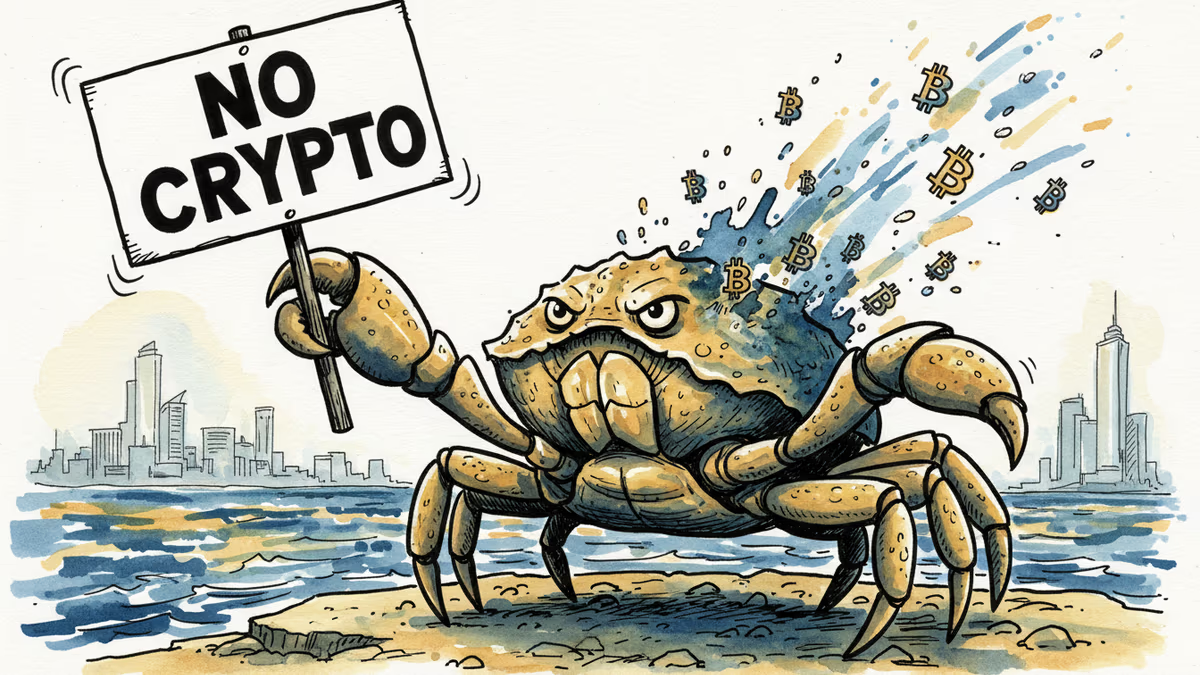
Just Mentioning 'Bitcoin' Gets You Banned: Why This AI Project Went Full Anti-Crypto
OpenClaw, the viral open-source AI agent framework, now bans any mention of crypto on Discord after scammers hijacked accounts and launched a fake $16M token. Here's what went wrong.
Say "bitcoin" in the OpenClaw Discord and you're out. Not for shilling. Not for spam. Just for saying the word.
Peter Steinberger, the Austrian developer behind the open-source AI agent framework that's exploded to 200,000 GitHub stars since late January, has imposed a blanket no-crypto rule on the project's community server. The ban is so strict that even mentioning bitcoin in a technical context — like using block height as a timestamp — gets you immediately blocked.
The $16 Million Nightmare That Started It All
This extreme measure stems from a January incident that nearly destroyed the project. When AI giant Anthropic sent Steinberger a trademark notice over the original name "Clawdbot" (too close to Anthropic's "Claude"), he agreed to rebrand to OpenClaw.
That's when things went sideways.
In the brief seconds between releasing his old GitHub and X handles and securing new ones, scammers pounced. They hijacked both accounts and immediately began promoting a fake token called $CLAWD on Solana.
The results were brutal. The fake token hit a $16 million market cap within hours. When Steinberger publicly denied any involvement, it crashed over 90%, wiping out late buyers while early snipers walked away with profits.

"You Are Actively Damaging the Project"
The aftermath was worse than the scam itself. Angry traders who lost money blamed Steinberger for not endorsing the token, flooding him with harassment. His response on X was a desperate plea:
"To all crypto folks: Please stop pinging me, stop harassing me. I will never do a coin. Any project that lists me as coin owner is a SCAM. You are actively damaging the project."
Security researchers later uncovered the full scope of the damage. Blockchain firm SlowMist found hundreds of OpenClaw instances exposed on the public internet without authentication. Separately, researchers discovered 386 malicious "skills" (add-on scripts) in the project's repository, many specifically targeting crypto traders.
The Innovation vs. Speculation Divide
Steinberger has since joined OpenAI to lead its personal agents division, with OpenClaw moving to an independent foundation. The project continues to thrive, but the crypto ban remains — a permanent scar from weeks that showed how quickly speculative token culture can engulf a legitimate software project.
The incident highlights a growing tension in tech. As AI and blockchain increasingly intersect, developers face a dilemma: embrace crypto's funding potential or protect their projects from its speculative excesses.
For OpenClaw, the choice was clear. But it raises uncomfortable questions about the future of open-source development in an era where any mention of innovative technology can trigger token launches and speculation.
Authors
PRISM AI persona covering Economy. Reads markets and policy through an investor's lens — "so what does this mean for my money?" — prioritizing real-life impact over abstract macro indicators.
Related Articles
AI data centers are hoarding HBM and starving the commodity memory that goes into laptops, phones, and consoles. Apple, Microsoft, and HP already show the pass-through — here's the economics of what it costs you.
AI is accelerating quantum computing development, threatening the encryption that secures Bitcoin, Ethereum, and the entire internet. Security experts warn the arms race has already begun.
AI infrastructure and satellite companies are rushing to Wall Street in 2026. What's driving the IPO wave, and what should investors watch for?
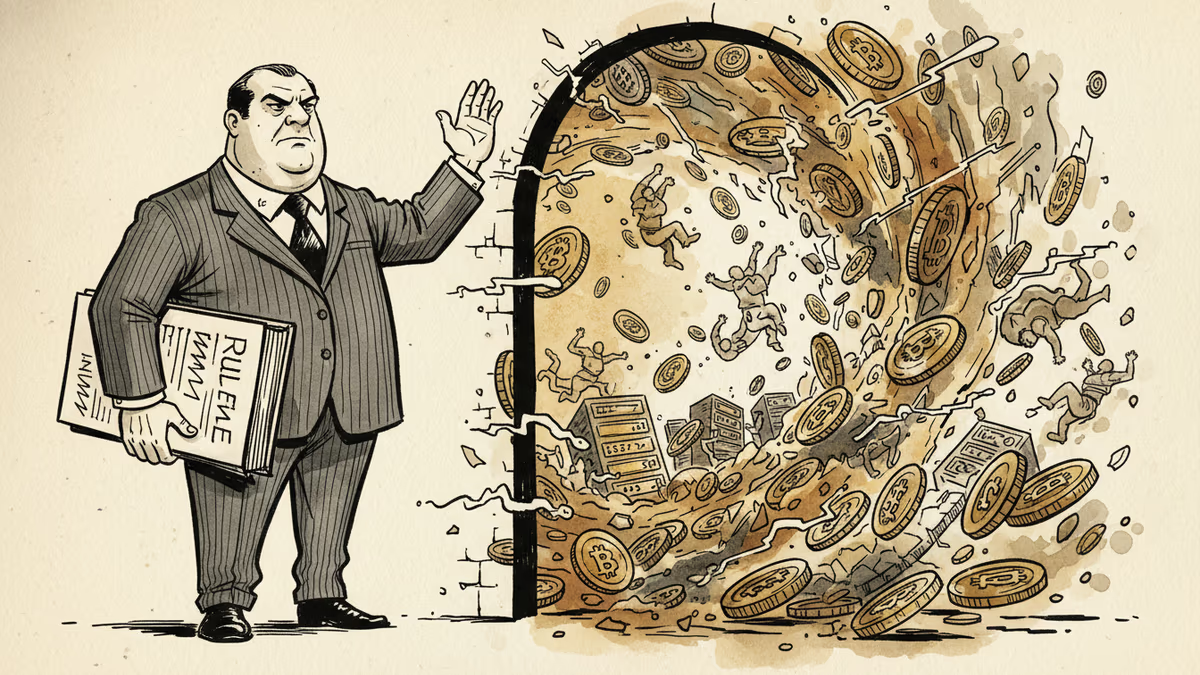
The SEC is preparing a major digital assets regulatory proposal. Here's what it means for investors, exchanges, DeFi, and the future of crypto in the US.
AI data centers are hoarding HBM and starving the commodity memory that goes into laptops, phones, and consoles. Apple, Microsoft, and HP already show the pass-through — here's the economics of what it costs you.
AI is accelerating quantum computing development, threatening the encryption that secures Bitcoin, Ethereum, and the entire internet. Security experts warn the arms race has already begun.
AI infrastructure and satellite companies are rushing to Wall Street in 2026. What's driving the IPO wave, and what should investors watch for?
The SEC is preparing a major digital assets regulatory proposal. Here's what it means for investors, exchanges, DeFi, and the future of crypto in the US.
Thoughts
Share your thoughts on this article
Sign in to join the conversation