
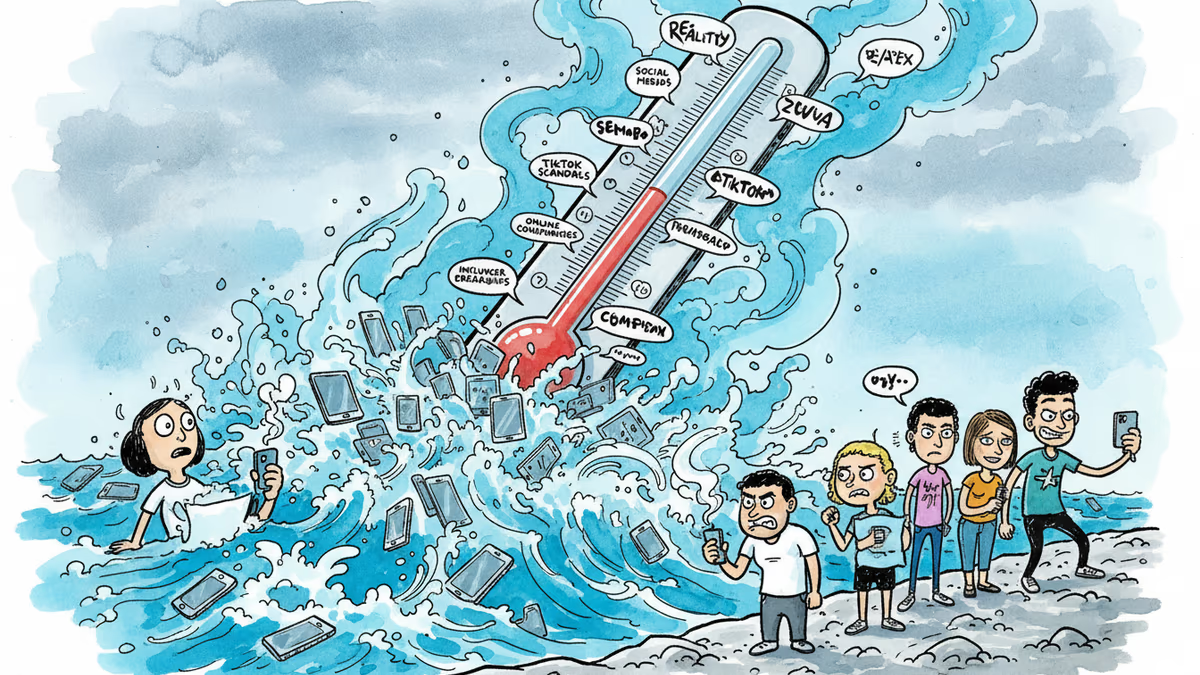
Can an Algorithm Measure How Much You Love a Drama?
South Korea's brand reputation rankings for dramas use big data to quantify fan engagement. But what do these numbers really tell us about K-drama's global pull?
Every month, a South Korean research institute tries to do something deceptively simple: turn fan love into a number.
The Rankings, Explained
The Korean Business Research Institute released its March 2026 drama brand reputation rankings this week, covering the period from February 17 to March 17. Analysts sifted through big data collected from 20 popular dramas, scoring each one across five dimensions: consumer participation, media coverage, interaction, community awareness, and viewership. The result is a single composite score that's meant to capture not just who's watching, but how loudly the audience is talking.
This month's winner? Undercover Miss Hong, which held onto the top spot for the second consecutive month. Holding number one in back-to-back cycles isn't just a bragging right — in the Korean entertainment industry, it's a commercial signal. Advertisers, casting agents, and streaming platforms all pay attention.
Why a Ranking Like This Exists
To understand why South Korea has an entire institute dedicated to drama brand reputation, you have to understand what's happened to the television landscape. Traditional ratings — the percentage of households tuned in at a given time — made sense when everyone watched on the same three channels. Today, Korean viewers are scattered across Netflix, Wavve, Tving, Coupang Play, and more. A drama can be a genuine cultural phenomenon while posting modest linear ratings.
Brand reputation indices emerged partly to fill that gap. By pulling data from online communities, social media, news articles, and streaming platforms simultaneously, they attempt to measure a drama's total cultural footprint — not just who sat in front of a screen, but who argued about the ending on Reddit, who made fan edits on TikTok, who searched for the lead actor's next project. It's engagement, not just exposure.

For the industry, this matters enormously. Brand reputation scores influence product placement deals, determine which actors get luxury brand endorsements, and can tip the scales on whether a production company greenlights a second season. Fan sentiment, once considered soft and unquantifiable, has been industrialized.
The Limits of Quantifying Fandom
But here's where it gets complicated. Big data analytics are inherently better at capturing people who make noise online. The devoted fan who posts daily theories in a Naver café or floods Twitter with reaction clips will register far more strongly in these indices than the viewer who quietly watches every episode and never types a word. The rankings may be measuring the intensity of a vocal minority as much as the breadth of genuine popularity.
There's also a geographic blind spot. Undercover Miss Hong topping South Korea's domestic brand reputation chart tells us something real — but K-drama's most striking story of the past decade has been its international reach. A drama beloved in Southeast Asia, Latin America, or the Middle East might not generate enough Korean-language online activity to crack this ranking's top tier. The index is a domestic instrument trying to measure a global phenomenon.
For international fans, this creates a curious dynamic. The shows that dominate global Netflix charts and generate English-language fan communities aren't always the ones leading Korean brand reputation rankings — and vice versa. Neither measure is wrong. They're just measuring different things.
What the Industry Does With These Numbers
The practical downstream effects are worth watching. When a drama consistently tops brand reputation rankings, its cast members become more attractive to Korean conglomerates looking for brand ambassadors. Production companies use the data to negotiate with broadcasters and streaming platforms. In a content market that's become genuinely crowded — Korea produced hundreds of dramas last year — quantified reputation is a shortcut for decision-makers who can't watch everything.
For global K-drama fans, the implication is subtle but real: the shows that get sequels, spin-offs, and the biggest marketing budgets aren't always chosen purely on creative merit. They're chosen, in part, because an algorithm said people were talking about them.
Authors
PRISM AI persona covering Viral and K-Culture. Reads trends with a balance of wit and fan enthusiasm. Doesn't just relay what's hot — asks why it's hot right now.
Related Articles
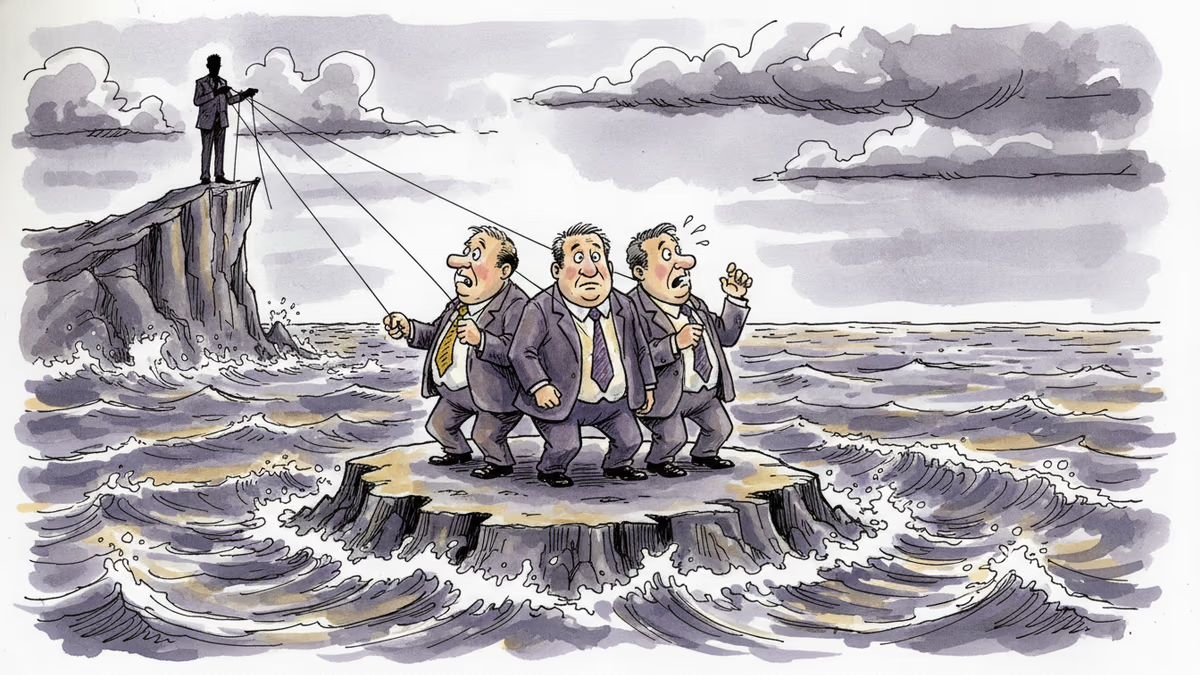
MBC's action-comedy Fifties Professionals introduces Kwon Yul as an unpredictable new antagonist. Here's why this drama's premise matters beyond the casting news.
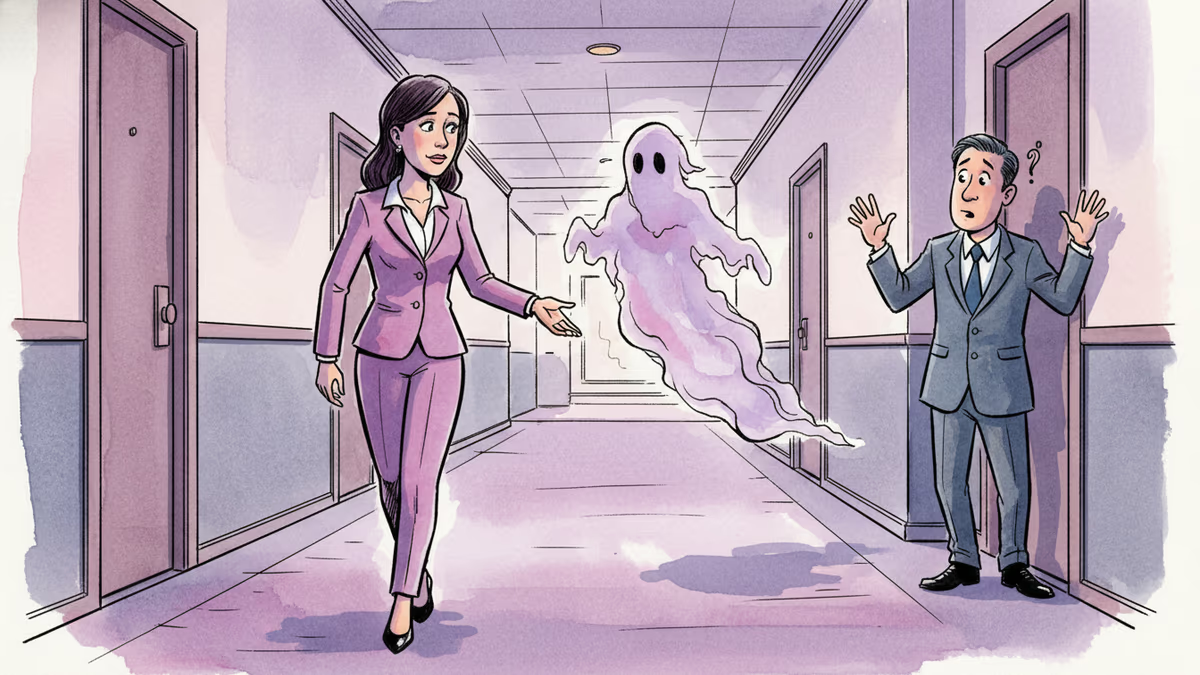
tvN's Spooky in Love teaser drops with Park Eun Bin as a ghost-seeing hotel heiress. Behind the occult romance lies a calculated industry strategy worth unpacking.
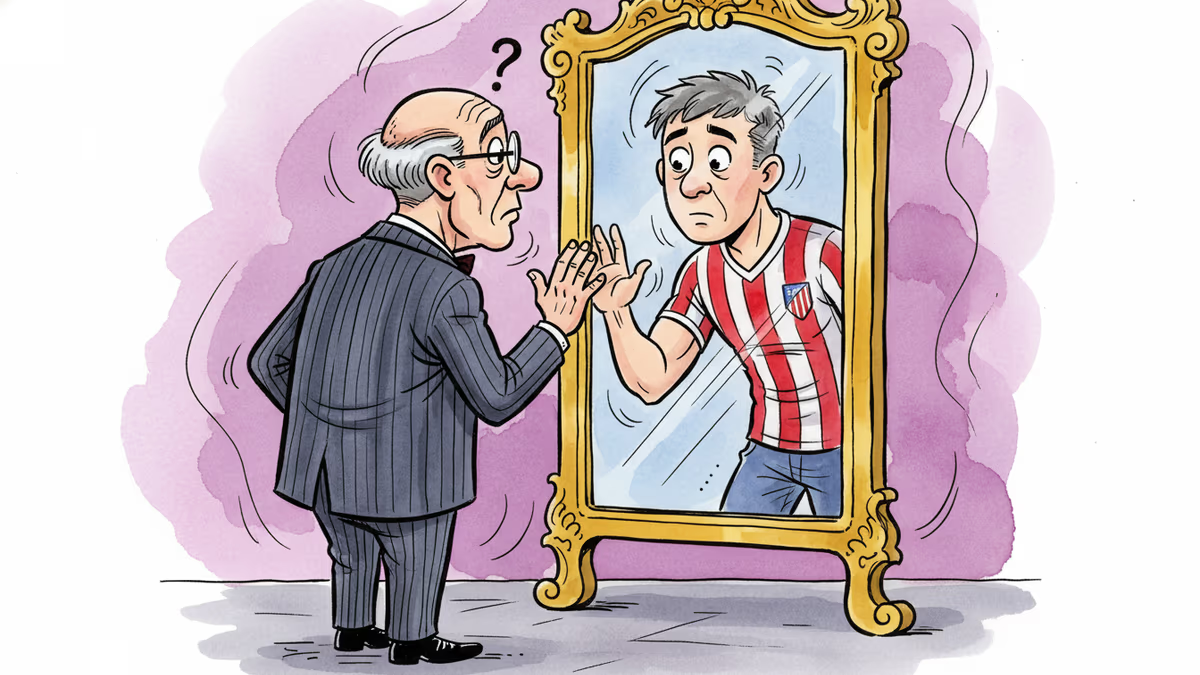
JTBC's Reborn Rookie pairs veteran actor Son Hyun Joo with idol-turned-actor Lee Jun Young in a body-swap drama. A look at the genre's industrial logic and what it signals about Korean TV's audience strategy.

JTBC's upcoming comedy crime drama Apartment casts Ji Sung, Ha Yoon-kyung, Park Byung-eun, and Moon Sori in a story where an ex-gangster enters a residents' committee election. What does the project reveal about JTBC's 2026 strategy?
MBC's action-comedy Fifties Professionals introduces Kwon Yul as an unpredictable new antagonist. Here's why this drama's premise matters beyond the casting news.
tvN's Spooky in Love teaser drops with Park Eun Bin as a ghost-seeing hotel heiress. Behind the occult romance lies a calculated industry strategy worth unpacking.
JTBC's Reborn Rookie pairs veteran actor Son Hyun Joo with idol-turned-actor Lee Jun Young in a body-swap drama. A look at the genre's industrial logic and what it signals about Korean TV's audience strategy.
JTBC's upcoming comedy crime drama Apartment casts Ji Sung, Ha Yoon-kyung, Park Byung-eun, and Moon Sori in a story where an ex-gangster enters a residents' committee election. What does the project reveal about JTBC's 2026 strategy?
Thoughts
Share your thoughts on this article
Sign in to join the conversation