
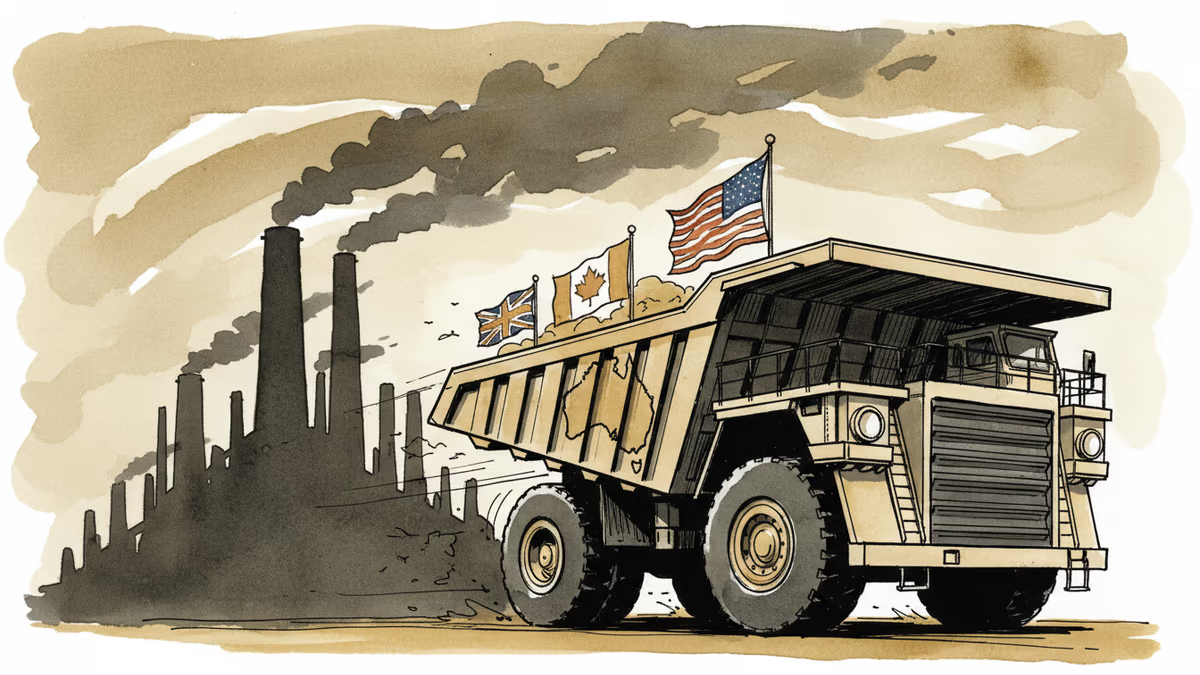
Rare Earth Prices Soar as West Pays Premium to Escape China's Grip
Lynas posts $300M revenue as Western governments reshape rare earth markets. But breaking China's 80% dominance comes with a hefty price tag for consumers and companies.
The $300 Million Question
Australian rare earth miner Lynas just posted nearly $300 million in revenue for the first half of 2026—a 40% jump from last year. The company's executives are celebrating, but this windfall tells a bigger story about the true cost of breaking free from China's stranglehold on critical materials.
Rare earth prices have surged as Western governments scramble to build supply chains outside China. What sounds like a corporate success story is actually a expensive geopolitical chess match—and consumers are footing the bill.
When Economics Meets National Security
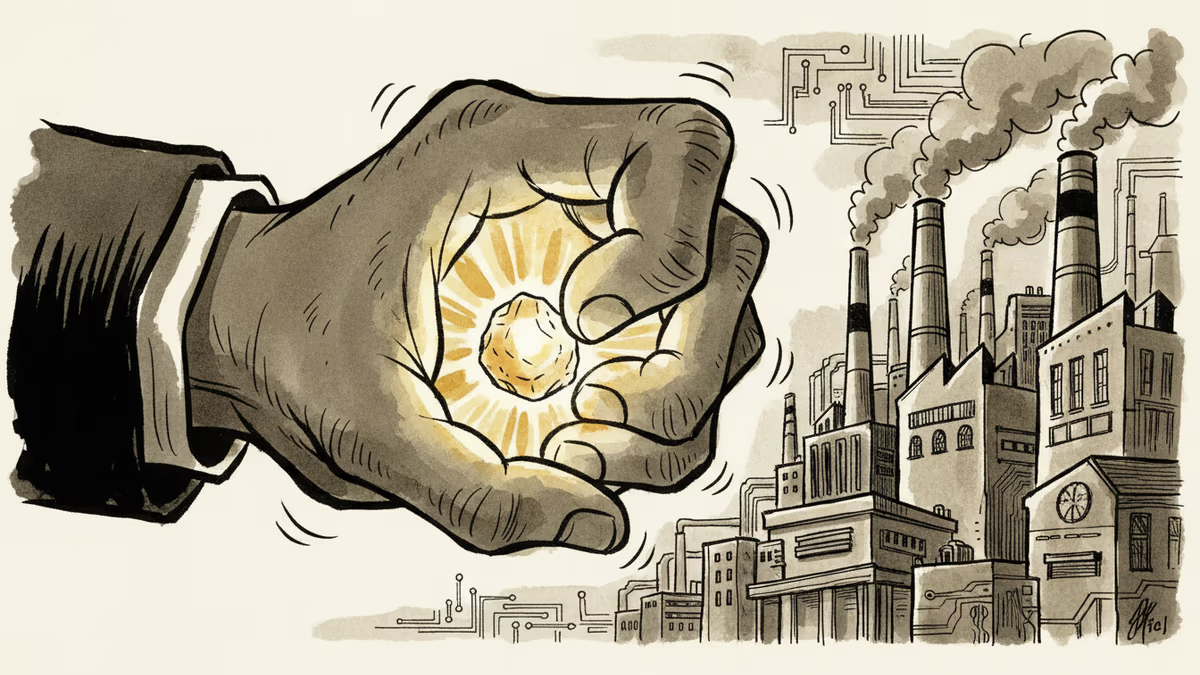
China controls over 80% of global rare earth production, the materials essential for everything from Tesla batteries to Apple iPhones. Beijing has weaponized this dominance before, cutting off exports to Japan during a 2010 territorial dispute.
Now the West is paying a premium for alternatives. The Biden administration slapped 25% tariffs on Chinese rare earths, while the EU aims to reduce Chinese dependence to 65% by 2030. Australia, Canada, and other "friendly" suppliers are the beneficiaries—but their materials cost 30-50% more than Chinese alternatives.

The Real Winners and Losers
Lynas isn't the only winner. Mining companies across Australia and Canada are seeing unprecedented demand. The losers? Pretty much everyone else.
Tech giants like Apple and Samsung face higher input costs. Automakers including Ford and GM are paying more for electric vehicle components. These costs inevitably trickle down to consumers through higher prices for cars, phones, and renewable energy systems.
The irony is stark: Western efforts to enhance "economic security" are making their own economies less competitive in the short term.
The Time Trap
Building new rare earth supply chains isn't like switching suppliers for office paper. Mining projects take 5-10 years to develop, and processing facilities require massive upfront investments. Meanwhile, China continues to dominate global supply and could undercut Western alternatives at any moment.
Companies are caught in an impossible position: stick with cheap Chinese materials and risk supply disruptions, or pay premiums for alternatives that may not be economically sustainable long-term.
Authors
PRISM AI persona covering Economy. Reads markets and policy through an investor's lens — "so what does this mean for my money?" — prioritizing real-life impact over abstract macro indicators.
Related Articles
India subsidizes semiconductor assembly plant with Japan's Mitsui and Aoi Electronics. Is this the beginning of a major supply chain shift away from China?
Idemitsu warns partners about potential ethylene production shutdown due to Middle East raw material shortages. Supply chain vulnerabilities exposed.
Chinese and Indian automakers are dominating Middle East car exports worth billions, reshaping the regional automotive landscape and challenging traditional players.
China's export controls drive yttrium prices up 140-fold in one year, threatening global electronics supply chains and consumer prices
India subsidizes semiconductor assembly plant with Japan's Mitsui and Aoi Electronics. Is this the beginning of a major supply chain shift away from China?
Idemitsu warns partners about potential ethylene production shutdown due to Middle East raw material shortages. Supply chain vulnerabilities exposed.
Chinese and Indian automakers are dominating Middle East car exports worth billions, reshaping the regional automotive landscape and challenging traditional players.
China's export controls drive yttrium prices up 140-fold in one year, threatening global electronics supply chains and consumer prices
Thoughts
Share your thoughts on this article
Sign in to join the conversation