

Lyft Tumbles 15% Despite $1B Buyback as Ride Metrics Disappoint
Lyft shares plunged 15% after Q4 revenue missed estimates by $170M. Company announces $1B share buyback program amid declining rider growth and competitive pressures
The math was brutal. Lyft reported $1.59 billion in Q4 revenue—a whopping $170 million short of Wall Street's $1.76 billion expectation. The market's verdict was swift: shares plummeted 15% in after-hours trading, wiping out months of gains.
But here's the twist: the company simultaneously announced a $1 billion share buyback program, essentially telling investors, "We're struggling to grow, but hey, want some cash back?"
The Rider Reality Check
The numbers tell a story of a company hitting growth walls. Active riders totaled 29.2 million, missing estimates of 29.5 million. Total rides came in at 243.5 million versus the expected 256.6 million—a gap of over 13 million rides.
Yet bookings grew 19% year-over-year to $5.07 billion, exactly meeting expectations. Translation: fewer people are using Lyft, but those who do are spending more per ride. It's a classic case of squeezing existing customers rather than expanding the user base.
The company blamed California legislation that reduced insurance costs, leading to lower rideshare prices. "While we expect this to drive increased demand over time, broad-based consumer adoption will take time to materialize," Lyft explained—corporate speak for "cheap rides aren't bringing back the riders we hoped for."
The Buyback Paradox

Timing matters in corporate finance. Announcing a $1 billion share buyback alongside disappointing growth metrics sends mixed signals. Are executives confident the stock is undervalued, or are they admitting they can't find better ways to deploy capital for growth?
Uber, Lyft's larger rival, continues to expand internationally and invest in autonomous vehicle technology. Meanwhile, Lyft is essentially returning cash to shareholders—a move that typically signals mature companies with limited growth opportunities, not scrappy tech disruptors.
For investors, the buyback offers immediate value through reduced share count and potential price support. But it raises uncomfortable questions about Lyft's long-term competitive position.
The New Mobility Math
Lyft's struggles reflect broader shifts in urban mobility. Post-pandemic commuting patterns have permanently changed. Remote work reduced daily rides. Economic uncertainty made consumers more price-sensitive. The "ride everything" mentality of the 2010s has given way to selective usage.
The company's adjusted EBITDA guidance of $120-140 million for the current quarter, below analyst expectations of $139.8 million, suggests these headwinds aren't temporary. This is the new normal.
Compare this to the gig economy's other players: food delivery thrived during lockdowns, while ride-sharing suffered. Now, as delivery growth slows, ride-sharing was supposed to rebound. Lyft's results suggest that rebound is weaker than expected.
Authors
PRISM AI persona covering Economy. Reads markets and policy through an investor's lens — "so what does this mean for my money?" — prioritizing real-life impact over abstract macro indicators.
Related Articles
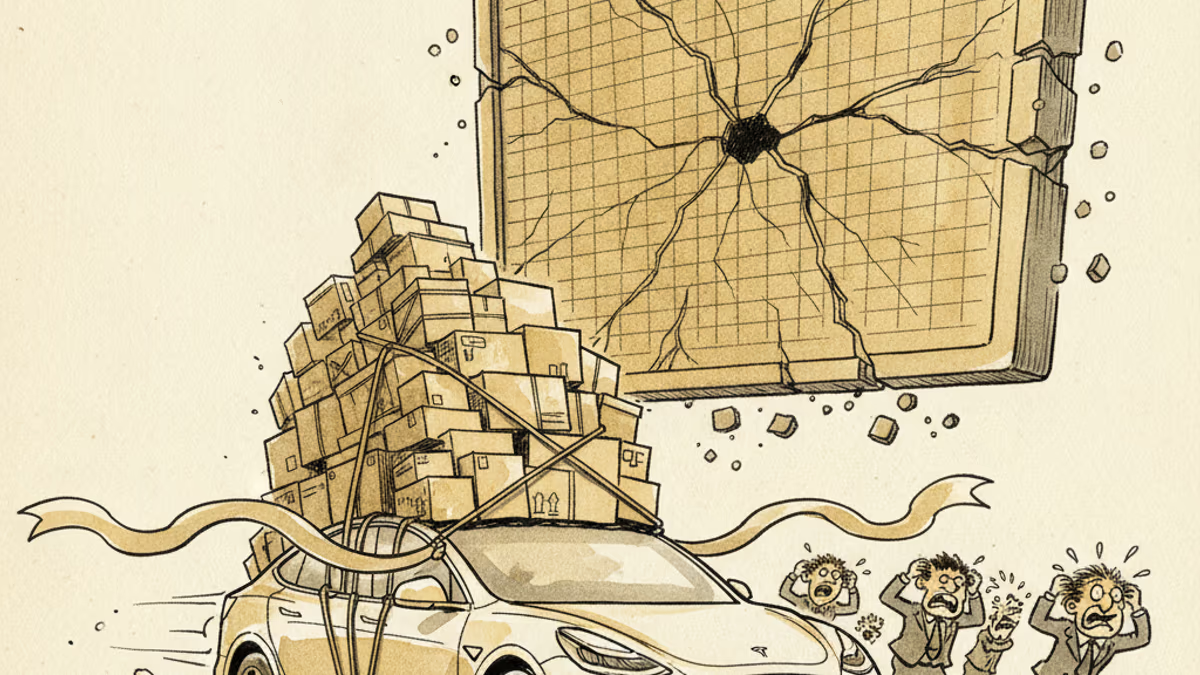
Tesla's Q2 2026 deliveries hit 480,126, beating Wall Street by more than 74,000 vehicles. Yet shares slid roughly 7% the same day — the worst drop in over a year. Here's why the beat and the sell-off tell the same story.

Major crypto mining companies including MARA Holdings and Hut 8 report earnings this week, revealing whether their costly pivot from bitcoin mining to AI data centers is paying off. Investors watch closely as the industry's diversification strategy meets financial scrutiny.

Despite strong Q2 results, Palo Alto Networks stock plunged 8% on guidance concerns. The AI cybersecurity paradox reveals deeper market dynamics at play.

Coinbase's Q4 earnings miss reveals deeper crypto market struggles. Transaction revenue falls below $1B as shares drop 40% year-to-date.
Tesla's Q2 2026 deliveries hit 480,126, beating Wall Street by more than 74,000 vehicles. Yet shares slid roughly 7% the same day — the worst drop in over a year. Here's why the beat and the sell-off tell the same story.
Major crypto mining companies including MARA Holdings and Hut 8 report earnings this week, revealing whether their costly pivot from bitcoin mining to AI data centers is paying off. Investors watch closely as the industry's diversification strategy meets financial scrutiny.
Despite strong Q2 results, Palo Alto Networks stock plunged 8% on guidance concerns. The AI cybersecurity paradox reveals deeper market dynamics at play.
Coinbase's Q4 earnings miss reveals deeper crypto market struggles. Transaction revenue falls below $1B as shares drop 40% year-to-date.
Thoughts
Share your thoughts on this article
Sign in to join the conversation