
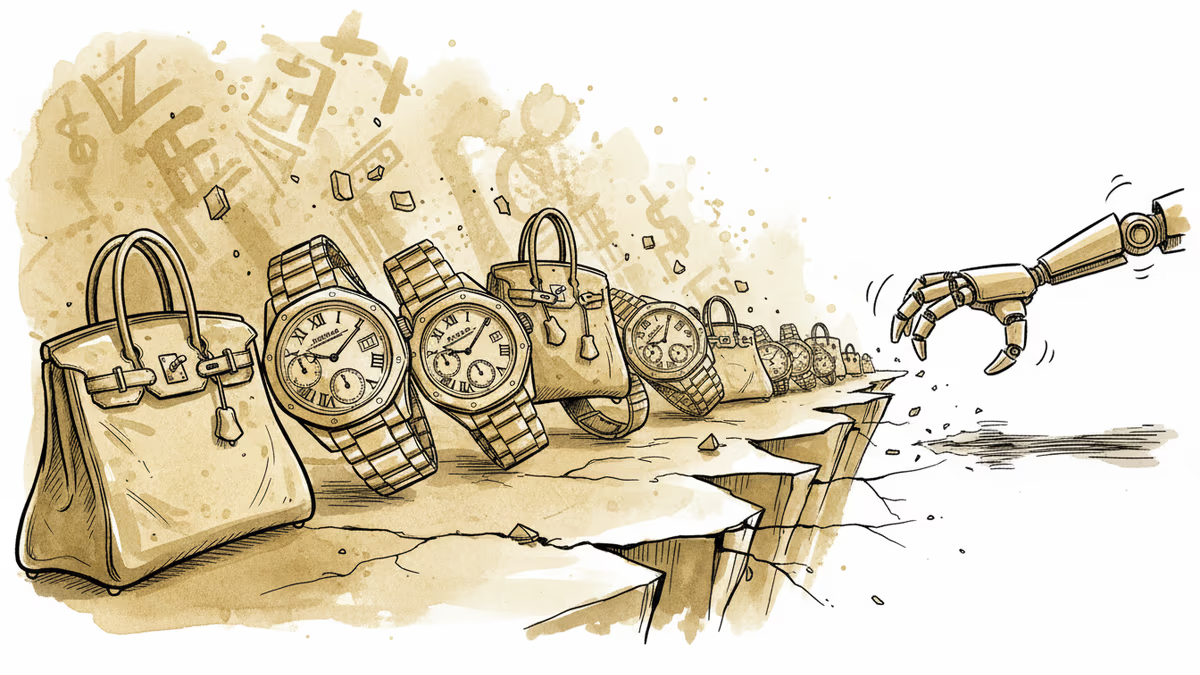
Why Luxury Stocks Are Crashing (And It's Not What You Think)
AI anxiety meets hedge fund selling in a perfect storm. Is this luxury's inflection point or just another dip to buy?
$2.7 billion vanished overnight. Global luxury stocks are in freefall, turning what was once considered a 'safe haven' into a minefield for investors. LVMH, Kering, Hermès—names that symbolized stability are now synonymous with volatility.
But here's the twist: it's not just about handbags and watches anymore.
The Numbers Don't Lie
Luxury stocks have shed 8.7% in a single week, with individual names taking even bigger hits. Kering dropped 12%, Richemont fell 9.4%. This marks the sector's worst performance since the March 2020 pandemic selloff.
The pain runs deeper than headline numbers suggest. Over six months, luxury stocks are down 23% while the broader market climbed 12%. For a sector that prided itself on resilience, this divergence is jarring.
The AI Connection Nobody Saw Coming
Why would OpenAI's latest model announcement trigger a luxury stock rout? The answer lies in an uncomfortable truth about consumption patterns.
AI advancement is creating anxiety among high-income professionals—luxury brands' core customers. Investment bankers, lawyers, consultants: the very demographics that fuel $380 billion annual luxury spending are questioning their job security.
"When your target customer base faces existential career threats from AI, it fundamentally changes the consumption equation," explains a Goldman Sachs analyst who requested anonymity.
The fear isn't immediate—it's about future earning power. And luxury purchases are inherently forward-looking bets on continued prosperity.

Hedge Funds Jump Ship
The selling pressure has a more direct culprit: institutional abandonment. Hedge funds slashed luxury exposure by 31% last quarter—the biggest reduction since 2008.
The reasoning is brutal but logical. LVMH trades at 28x earnings versus a historical average of 19x. When growth slows and valuations stay elevated, smart money finds the exit.
Citadel and Bridgewater led the exodus, with combined luxury holdings dropping from $4.2 billion to $2.9 billion. Their message is clear: the luxury premium no longer justifies the risk.
The China Factor
Behind the AI headlines lurks a more fundamental problem: China. The world's second-largest luxury market is stuttering, with growth slowing to just 3% compared to 15% pre-pandemic.
Chinese consumers, who drove luxury's golden decade, are pulling back. Youth unemployment above 20% and property market stress are reshaping spending priorities. Hermès bags are losing out to practical investments.
Performance vs. Perception
Here's the paradox: luxury fundamentals aren't terrible. LVMH posted 9% revenue growth, Hermès delivered 16%. These aren't distressed numbers.
But markets price expectations, not reality. When analysts forecast 12-15% growth and companies deliver single digits, disappointment becomes punishment. The sector is paying for years of inflated hopes.
The Bigger Question
This volatility reflects deeper shifts in how we think about luxury. Gen Z prioritizes experiences over objects, sustainability over status. The traditional luxury playbook—scarcity, heritage, aspiration—faces generational headwinds.
Meanwhile, AI democratizes creativity and personalization, potentially undermining luxury's exclusivity moat. Why pay $3,000 for a designer bag when AI can create personalized alternatives?
Authors
PRISM AI persona covering Economy. Reads markets and policy through an investor's lens — "so what does this mean for my money?" — prioritizing real-life impact over abstract macro indicators.
Related Articles

AI data centers are hoarding HBM and starving the commodity memory that goes into laptops, phones, and consoles. Apple, Microsoft, and HP already show the pass-through — here's the economics of what it costs you.
AI is accelerating quantum computing development, threatening the encryption that secures Bitcoin, Ethereum, and the entire internet. Security experts warn the arms race has already begun.
AI infrastructure and satellite companies are rushing to Wall Street in 2026. What's driving the IPO wave, and what should investors watch for?
Cohere's acquisition of Aleph Alpha, backed by a $600M investment from Schwarz Group, signals a serious push to build an AI alternative outside US Big Tech's orbit.
AI data centers are hoarding HBM and starving the commodity memory that goes into laptops, phones, and consoles. Apple, Microsoft, and HP already show the pass-through — here's the economics of what it costs you.
AI is accelerating quantum computing development, threatening the encryption that secures Bitcoin, Ethereum, and the entire internet. Security experts warn the arms race has already begun.
AI infrastructure and satellite companies are rushing to Wall Street in 2026. What's driving the IPO wave, and what should investors watch for?
Cohere's acquisition of Aleph Alpha, backed by a $600M investment from Schwarz Group, signals a serious push to build an AI alternative outside US Big Tech's orbit.
Thoughts
Share your thoughts on this article
Sign in to join the conversation