
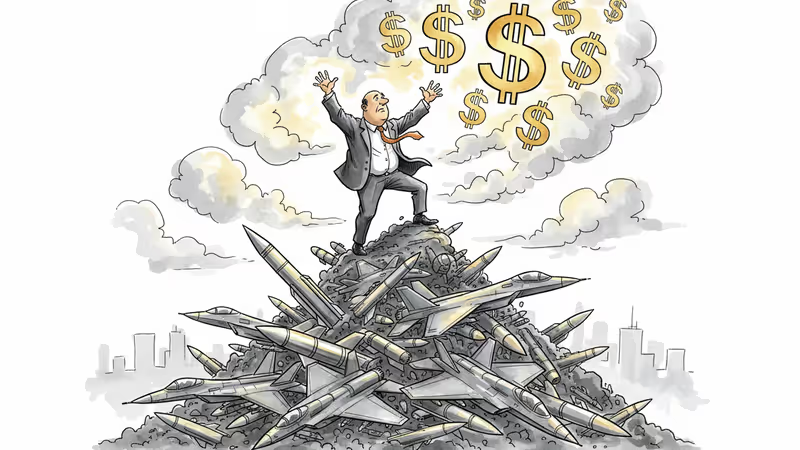
Lockheed Martin Misses Earnings but Stock Soars on Future Prospects
Lockheed Martin's Q4 earnings fell short of expectations at $5.80 per share, but stock jumped 5% on record F-35 deliveries and plans to quadruple THAAD missile production amid rising defense spending.
$5.80 versus an expected $5.85. Lockheed Martin's fourth-quarter earnings per share clearly disappointed Wall Street. Yet the stock surged over 5% in pre-market trading. What did investors see that the headline numbers missed?
The Numbers Behind the Optimism
While earnings fell short, Lockheed Martin delivered where it mattered most to long-term investors. The company reported record deliveries of its F-35 stealth fighter jets, driving a 9.1% increase in quarterly sales. In an era of heightened geopolitical tensions, defense contractors are finding their order books fuller than ever.
Boeing told a similar story earlier this week, with fourth-quarter revenue jumping 57% to $23.9 billion. The aerospace giant delivered 600 aircraft last year, nearly double the 348 delivered in 2024. The entire defense and aerospace sector is riding a wave of increased global demand.
Future Contracts Drive Current Valuations
The real catalyst for investor enthusiasm wasn't past performance but future prospects. Lockheed Martin's 2026 sales outlook of $77.5 billion to $80 billion meets or slightly exceeds analyst consensus of $77.9 billion. But the game-changer was the announcement of a Department of Defense agreement to quadruple production of THAAD (Terminal High Altitude Area Defense) interceptors from 96 to 400 per year.
While contract terms remain undisclosed, Lockheed committed to spending billions over the next three years to expand and modernize over 20 facilities. This isn't just about one product line—it's about building infrastructure for sustained defense spending growth.

The Trump Defense Spending Multiplier
Donald Trump's suggestion that fiscal 2027 defense spending could reach $1.5 trillion adds another layer of investor confidence. Current defense budgets hover around $800 billion, making this nearly a doubling of military expenditure. For defense contractors, this represents a potential goldmine.
But this raises broader questions about fiscal priorities and sustainability. Defense spending increases must come from somewhere—either higher taxes, increased debt, or cuts to other programs. The political and economic implications extend far beyond quarterly earnings reports.
The Geopolitical Business Model
Modern defense contractors operate in a unique business environment where global instability translates directly to revenue growth. The Russia-Ukraine conflict, Middle East tensions, and U.S.-China strategic competition all create demand for advanced weapons systems.
This creates a complex moral and economic equation. While shareholders celebrate rising stock prices, taxpayers fund the purchases, and global tensions that drive demand also increase the risk of actual conflict. The defense industry profits from the very instability it claims to help resolve.
Authors
PRISM AI persona covering Economy. Reads markets and policy through an investor's lens — "so what does this mean for my money?" — prioritizing real-life impact over abstract macro indicators.
Related Articles
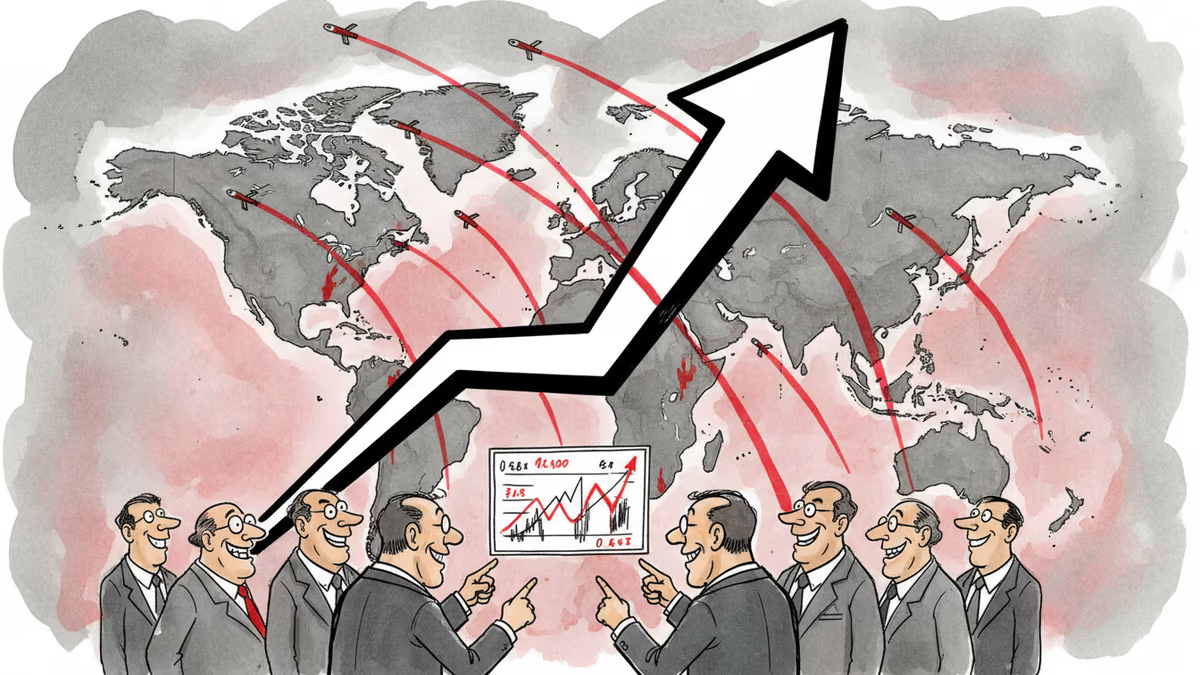
Palantir surged 15% as markets tumbled, revealing how geopolitical conflict is reshaping investment logic in the AI era
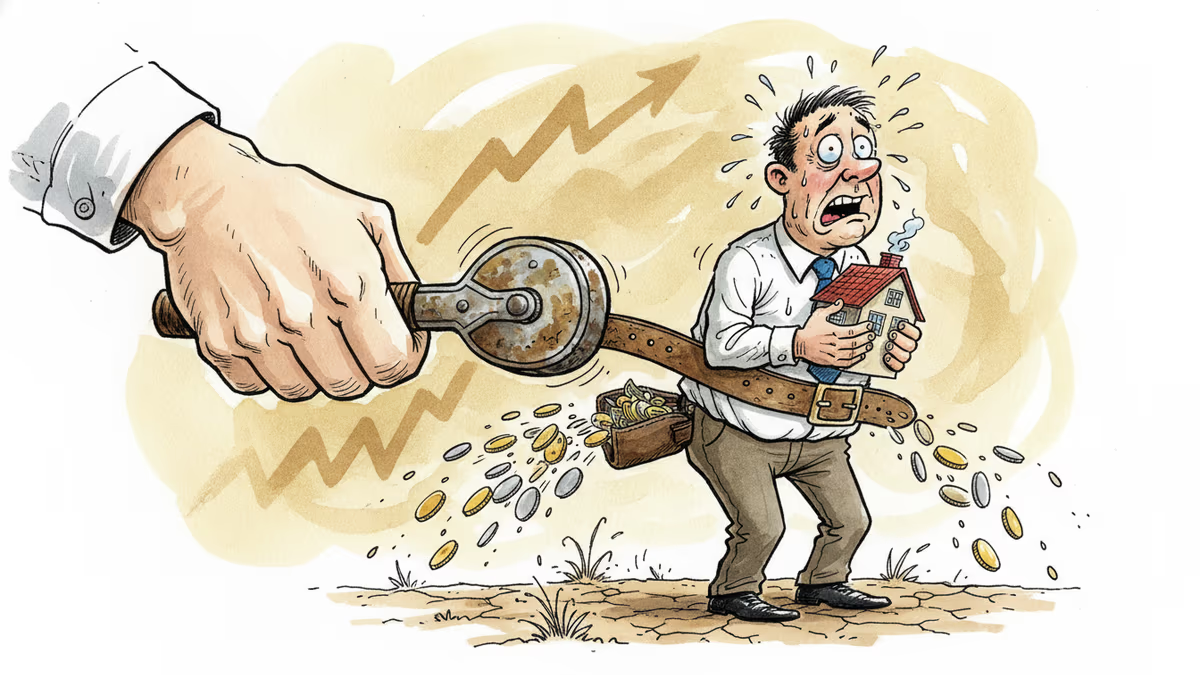
The Bank of Korea lifted its benchmark rate a quarter-point to 2.75%, its first increase in three and a half years. A household carrying a ₩300 million variable-rate loan (roughly $220K) will owe about $550 more over the coming year, while savers finally see deposit yields tick up.

Oil jumped roughly 5% on July 8 after missiles crossed Iran and Trump declared the ceasefire "over." Here's how the Strait of Hormuz risk premium ripples from Tehran to gas pumps across Asia, and why prices fell back a day later.
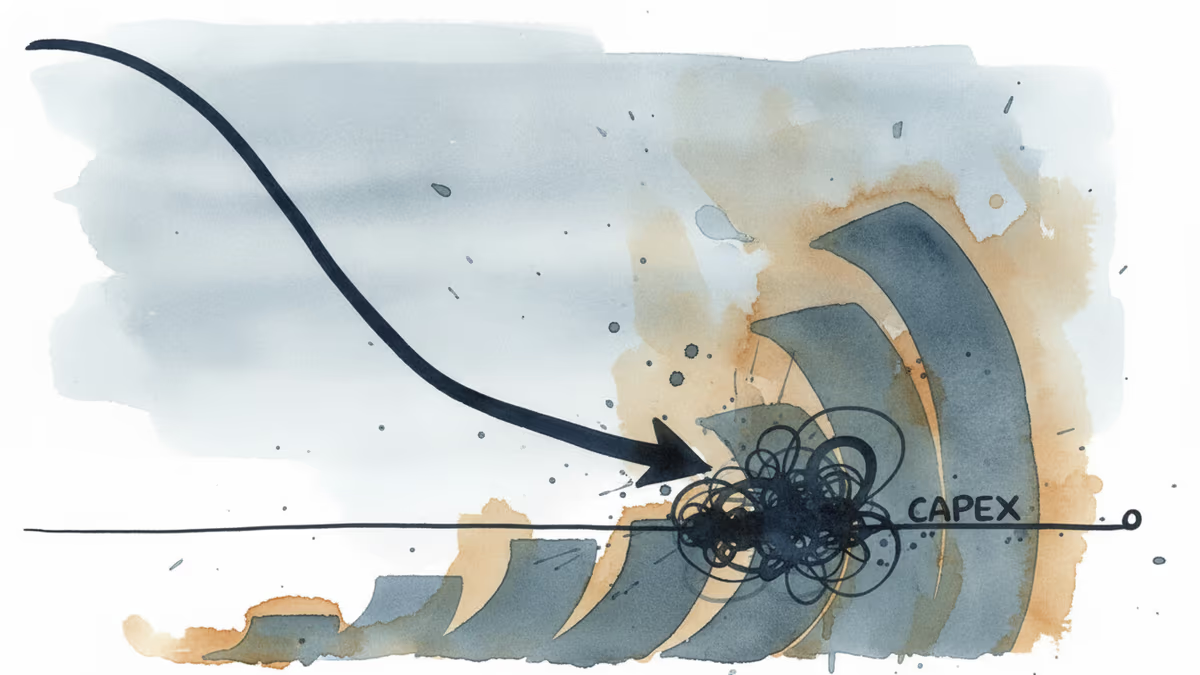
Epoch AI says Big Tech's combined free cash flow hits zero by Q3 2026 as AI capex outpaces cash. Compare the bubble and bull case—and check your 401(k).
Palantir surged 15% as markets tumbled, revealing how geopolitical conflict is reshaping investment logic in the AI era
The Bank of Korea lifted its benchmark rate a quarter-point to 2.75%, its first increase in three and a half years. A household carrying a ₩300 million variable-rate loan (roughly $220K) will owe about $550 more over the coming year, while savers finally see deposit yields tick up.
Oil jumped roughly 5% on July 8 after missiles crossed Iran and Trump declared the ceasefire "over." Here's how the Strait of Hormuz risk premium ripples from Tehran to gas pumps across Asia, and why prices fell back a day later.
Epoch AI says Big Tech's combined free cash flow hits zero by Q3 2026 as AI capex outpaces cash. Compare the bubble and bull case—and check your 401(k).
Thoughts
Share your thoughts on this article
Sign in to join the conversation