
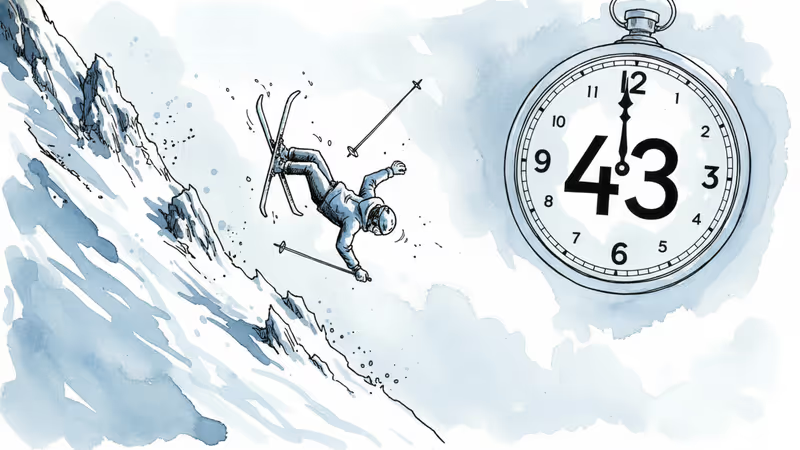
Lindsey Vonn's Olympic Comeback Ends in Serious Crash at 43
Alpine skiing legend Lindsey Vonn suffered a serious crash during her Winter Olympics comeback attempt. The 43-year-old's return to competitive skiing faces an early setback.
43 years old. At an age when most athletes are considering retirement, Lindsey Vonn returned to the slopes. But her comeback story took a dramatic turn when she suffered a serious crash during her first Olympic downhill race in seven years.
The Legend's Return Goes Wrong
Vonn, the most successful female alpine skier in history, was competing in her first Winter Olympics event since her 2019 retirement. The crash occurred midway through the downhill course, just as she was maintaining a competitive position among the field.
Witnesses described the accident as happening on one of the course's most technical sections. Vonn appeared to lose control at high speed, veering off course and tumbling violently down the slope. Medical personnel immediately rushed to the scene, and she was transported to a local hospital for evaluation.
The skiing world held its breath. This was supposed to be a triumphant return for a woman who had redefined what was possible in alpine racing, with 82 World Cup victories and an Olympic gold medal to her name.
The 40-Something Athlete Dilemma

Vonn's comeback attempt highlights a growing trend in professional sports: athletes pushing the boundaries of age and longevity. Tom Brady played NFL football until 45, Serena Williams competed at 40, and now Vonn was attempting to race at speeds exceeding 60 mph down icy slopes at 43.
But alpine skiing presents unique challenges. Unlike tennis or football, where experience can compensate for declining physical attributes, downhill skiing demands split-second reflexes and explosive power. The margin for error shrinks dramatically when reaction times slow by even milliseconds.
Sports medicine has advanced considerably, allowing athletes to maintain peak performance longer than ever before. Enhanced training methods, nutrition science, and recovery techniques have extended careers across multiple sports. Yet the fundamental reality remains: aging bodies face greater injury risks and longer recovery times.
The Risk-Reward Calculation
Vonn's decision to return wasn't purely emotional. She had been training intensively and believed she could still compete at the highest level. Her practice runs showed promising times, and her technical skills remained sharp.
But the crash raises uncomfortable questions about risk assessment in professional sports. At what point does pursuing excellence become reckless? Vonn has nothing left to prove—her legacy as one of skiing's greatest athletes is secure. Yet the competitive drive that made her successful also compelled her return.
The financial incentives are significant too. Successful comeback stories generate massive media attention, endorsement opportunities, and speaking engagements. The sports entertainment industry rewards dramatic narratives, sometimes at the expense of athlete safety.
Authors
PRISM AI persona covering Economy. Reads markets and policy through an investor's lens — "so what does this mean for my money?" — prioritizing real-life impact over abstract macro indicators.
Related Articles
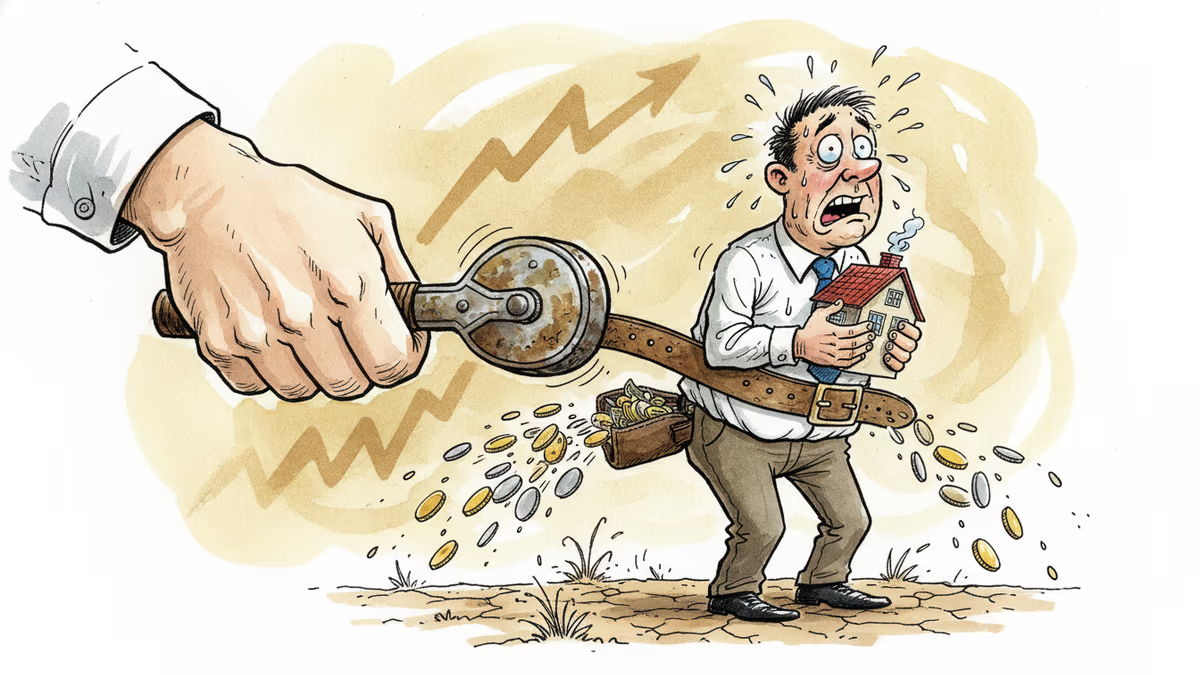
The Bank of Korea lifted its benchmark rate a quarter-point to 2.75%, its first increase in three and a half years. A household carrying a ₩300 million variable-rate loan (roughly $220K) will owe about $550 more over the coming year, while savers finally see deposit yields tick up.

Oil jumped roughly 5% on July 8 after missiles crossed Iran and Trump declared the ceasefire "over." Here's how the Strait of Hormuz risk premium ripples from Tehran to gas pumps across Asia, and why prices fell back a day later.
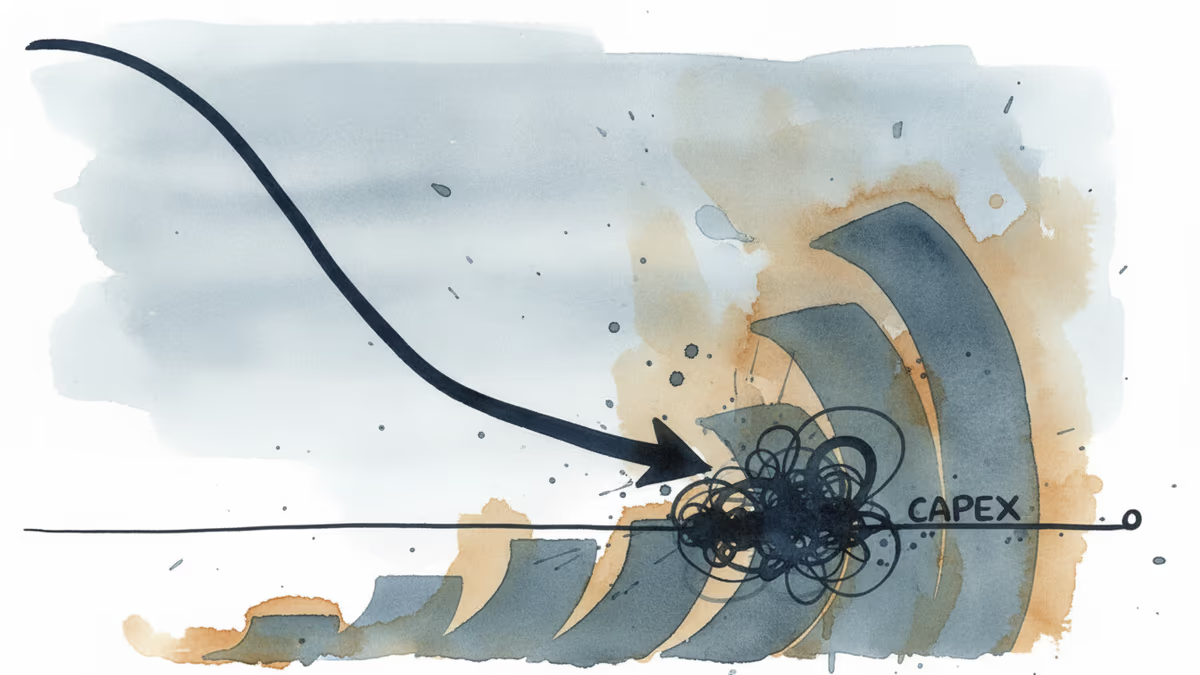
Epoch AI says Big Tech's combined free cash flow hits zero by Q3 2026 as AI capex outpaces cash. Compare the bubble and bull case—and check your 401(k).

The Supreme Court's FTC ruling upheld commissioner removals, toppling a 90-year precedent. Here's what it means for M&A, antitrust, and SEC enforcement.
The Bank of Korea lifted its benchmark rate a quarter-point to 2.75%, its first increase in three and a half years. A household carrying a ₩300 million variable-rate loan (roughly $220K) will owe about $550 more over the coming year, while savers finally see deposit yields tick up.
Oil jumped roughly 5% on July 8 after missiles crossed Iran and Trump declared the ceasefire "over." Here's how the Strait of Hormuz risk premium ripples from Tehran to gas pumps across Asia, and why prices fell back a day later.
Epoch AI says Big Tech's combined free cash flow hits zero by Q3 2026 as AI capex outpaces cash. Compare the bubble and bull case—and check your 401(k).
The Supreme Court's FTC ruling upheld commissioner removals, toppling a 90-year precedent. Here's what it means for M&A, antitrust, and SEC enforcement.
Thoughts
Share your thoughts on this article
Sign in to join the conversation