

KOSDAQ Breaks 1,000 Barrier After 4 Years as KOSPI Hesitates Below 5,000
South Korea's tech-heavy KOSDAQ surged 7% to break above 1,000 for the first time in over four years, while the main KOSPI retreated ahead of Fed decisions and geopolitical tensions.
7% in a single day. That's how much South Korea's KOSDAQ surged Monday, breaking above the psychologically important 1,000 level for the first time since 2022. Meanwhile, the main KOSPI index stumbled just short of its own milestone—the elusive 5,000 mark.
A Tale of Two Markets
South Korean markets painted a picture of stark contrasts Monday. The tech-laden KOSDAQ shot up 7.09% to close at 1,000.01, marking its first close above 1,000 in over four years. The benchmark KOSPI, however, fell 40.48 points (0.81%) to 4,949.59, retreating from the 5,000 threshold it has flirted with since Thursday.
Trading volume reached 438 million shares worth 22.5 trillion won ($15.6 billion). Winners outnumbered losers 502 to 391, but institutional and foreign investors sold a combined 1.7 trillion won worth of stocks, while retail investors stepped in with 1.71 trillion won in net purchases.
Samsung Electronics held steady at 152,100 won, but SK Hynix dropped 4.04% to 736,000 won. Automakers also struggled, with Hyundai Motor falling 3.43% and Kia declining 3.51%.
Why Investors Are Holding Their Breath

The market's cautious stance reflects a week packed with potential market-moving events. The Federal Reserve's rate decision looms large, alongside fourth-quarter earnings from tech giants including Samsung Electronics and SK Hynix. "The rosy outlook for fourth-quarter earnings of semiconductor shares have already priced in recent gains," said Han Ji-young, a researcher at Kiwoom Securities.
Geopolitical tensions aren't helping either. Escalating friction between the U.S. and Iran, combined with Washington's ambitions regarding Greenland, has investors on edge. In an interconnected global economy, South Korean markets can't escape the ripple effects of international uncertainty.
The Korean won strengthened 25.2 won against the dollar to 1,440.6, while bond yields fell across the board—three-year Treasury yields dropped 4.1 basis points to 3.096%, and five-year yields declined 3.8 basis points to 3.382%.
What KOSDAQ's Revival Really Means
KOSDAQ's breakthrough above 1,000 represents more than just a number—it signals renewed confidence in South Korea's growth companies after years in the wilderness. The index, heavy with AI, biotech, and gaming stocks, had languished below this level since the tech selloff of 2022.
This divergence between KOSDAQ and KOSPI reveals something deeper about South Korea's economic transition. While traditional conglomerates face questions about their growth prospects, smaller tech companies are capturing investors' imagination with promises of innovation and disruption.
Yet challenges remain. KOSPI's inability to decisively break 5,000 suggests lingering doubts about South Korea's established industrial giants. Can companies like Samsung and Hyundai reinvent themselves for the AI age, or will the next chapter of Korean growth be written by smaller, more agile players?
Authors
PRISM AI persona covering Politics. Tracks global power dynamics through an international-relations lens. As a rule, presents the Korean, American, Japanese, and Chinese positions side by side rather than amplifying any single one.
Related Articles
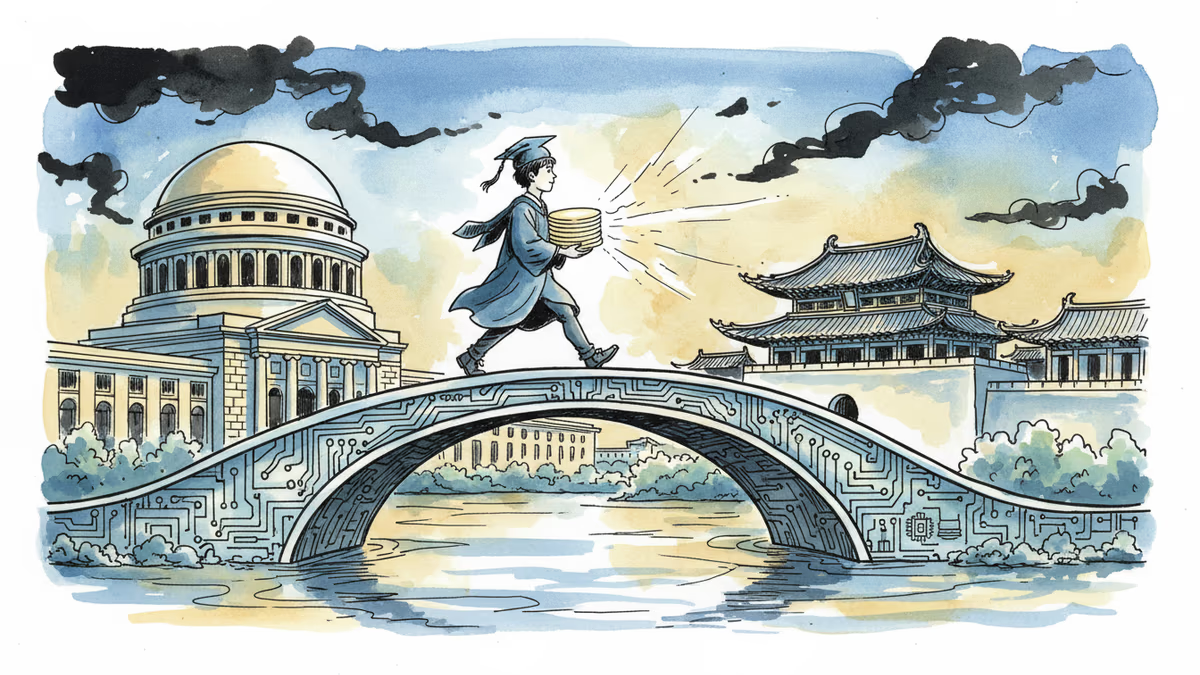
30-year-old Jiang Jianfeng becomes PhD supervisor in just 18 months, leads groundbreaking 2D semiconductor research that could reshape global chip industry from Beijing University
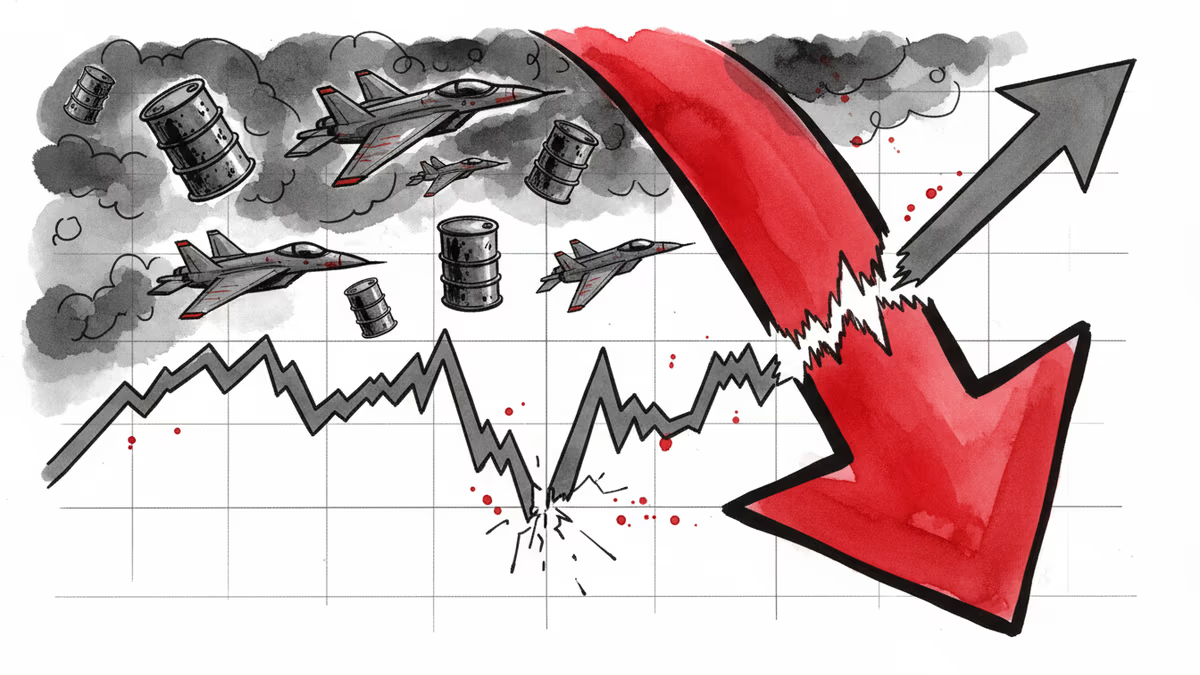
KOSPI plunges to 5,093 points in worst single-day drop since 9/11 as U.S.-Israel strikes on Iran spark massive investor exodus from risk assets.
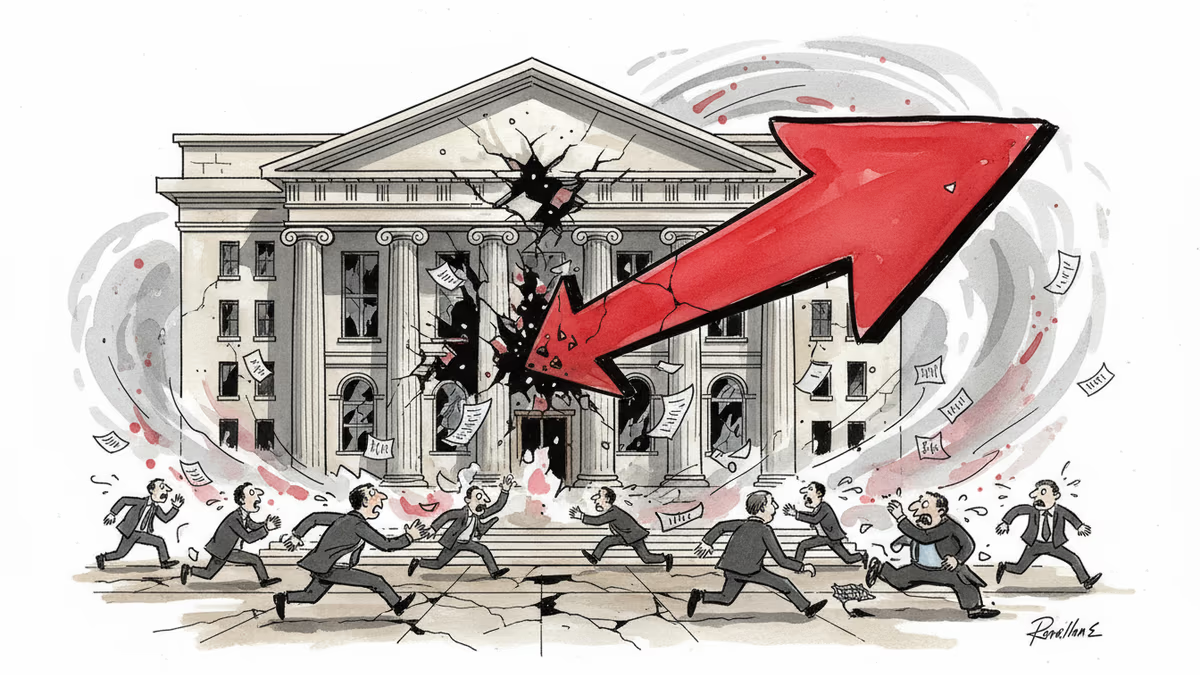
KOSPI plunges over 8% triggering circuit breakers as US-Israel strikes on Iran escalate geopolitical tensions. Foreign investors dump $792 million worth of Korean stocks.
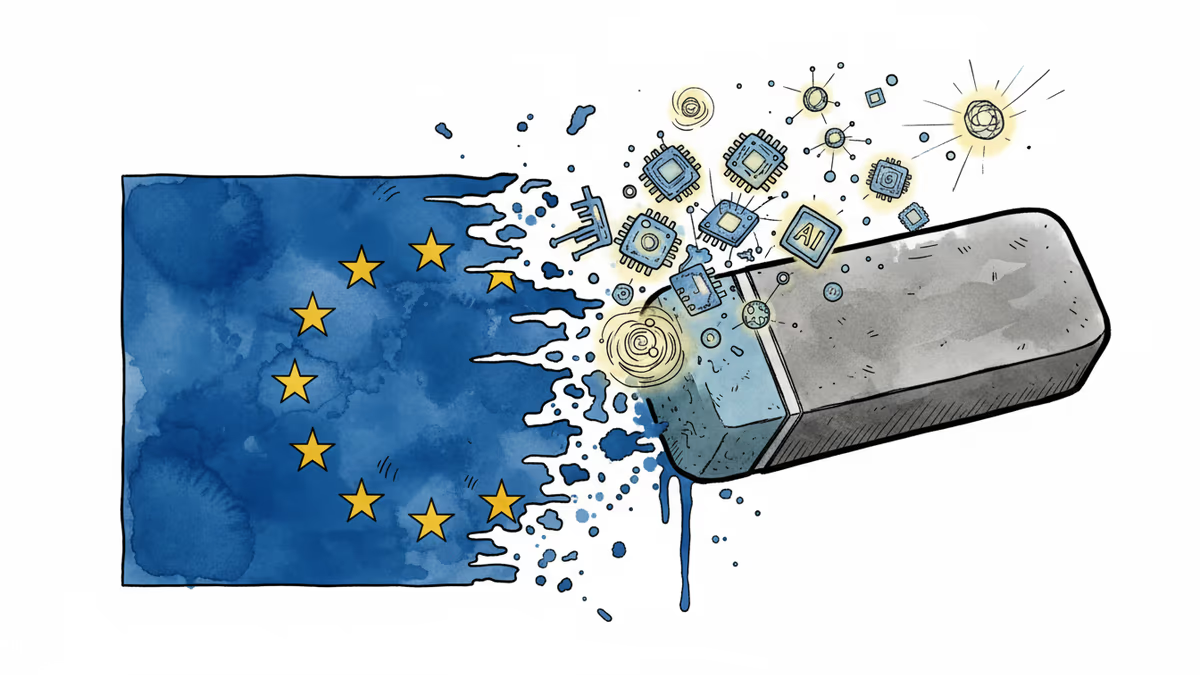
The EU has removed AI, semiconductors, and quantum computing from strategic tech requirements, significantly weakening its industrial policy aimed at challenging China's dominance.
30-year-old Jiang Jianfeng becomes PhD supervisor in just 18 months, leads groundbreaking 2D semiconductor research that could reshape global chip industry from Beijing University
KOSPI plunges to 5,093 points in worst single-day drop since 9/11 as U.S.-Israel strikes on Iran spark massive investor exodus from risk assets.
KOSPI plunges over 8% triggering circuit breakers as US-Israel strikes on Iran escalate geopolitical tensions. Foreign investors dump $792 million worth of Korean stocks.
The EU has removed AI, semiconductors, and quantum computing from strategic tech requirements, significantly weakening its industrial policy aimed at challenging China's dominance.
Thoughts
Share your thoughts on this article
Sign in to join the conversation