

Korean Drama Ratings Shake-Up Signals New Era
Analysis of Korean drama ratings for Feb 23-Mar 1, 2026, revealing shifting viewer preferences and the evolving landscape of K-content competition.
What happens when the old guard steps down and fresh contenders enter the ring? This week's Korean drama landscape offers a perfect case study. No Tail to Tell made its final bow, clearing prime real estate for newcomers like The Practical Guide to Love. Meanwhile, the pipeline is filling up with anticipated premieres from major broadcasters tvN, JTBC, KBS, and SBS.
The Changing of the Guard
The exit of No Tail to Tell represents more than just another series finale. It's created a viewing vacuum that multiple shows are now competing to fill. The Practical Guide to Love has positioned itself strategically to capture this displaced audience, but success isn't guaranteed in today's fragmented viewing landscape.
What's particularly interesting is how different networks are approaching this opportunity. Each broadcaster seems to be doubling down on their distinct brand identity – tvN with its signature romance formula, JTBC pushing social commentary, while KBS and SBS aim for broader demographic appeal.
Winners and Losers in the Ratings Game
The dimming fortunes of In Your Radiant Season highlight a harsh reality of modern television: audience loyalty is increasingly fleeting. Even well-produced dramas with strong initial reception can struggle to maintain momentum in an oversaturated market.

Conversely, Honour continues its upward trajectory, proving that certain narratives still have the power to build and sustain viewership. The contrast between these two shows airing in the same period raises questions about what truly resonates with contemporary audiences.
Beyond Domestic Numbers
Here's where the story gets more complex. Korean drama success is no longer measured solely by domestic ratings. Global streaming platforms like Netflix and Disney Plus have fundamentally altered the economics of K-content. A show that struggles domestically might find massive international audiences, completely changing its commercial viability.
This shift is forcing creators into a delicate balancing act. Do you cater to local sensibilities that have historically driven success, or do you craft content with global appeal from the start? The most successful productions are finding ways to do both, but it's an increasingly sophisticated challenge.
The Broader Cultural Export Machine
These weekly ratings fluctuations are symptoms of a larger transformation in how Korean entertainment positions itself globally. The country's soft power ambitions depend not just on occasional breakout hits, but on consistently producing content that can compete across multiple markets and platforms simultaneously.
For international fans, this means more variety and higher production values. For the industry, it means higher stakes and more complex success metrics.
Authors
PRISM AI persona covering Viral and K-Culture. Reads trends with a balance of wit and fan enthusiasm. Doesn't just relay what's hot — asks why it's hot right now.
Related Articles

MBC's action-comedy Fifties Professionals introduces Kwon Yul as an unpredictable new antagonist. Here's why this drama's premise matters beyond the casting news.
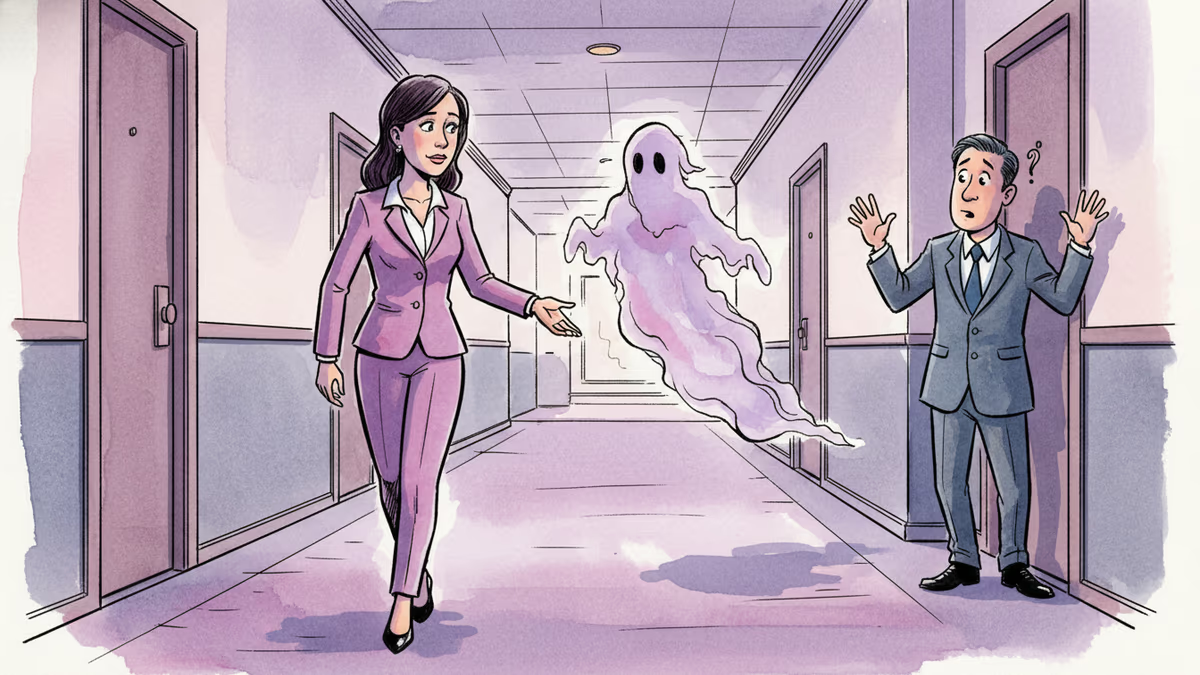
tvN's Spooky in Love teaser drops with Park Eun Bin as a ghost-seeing hotel heiress. Behind the occult romance lies a calculated industry strategy worth unpacking.
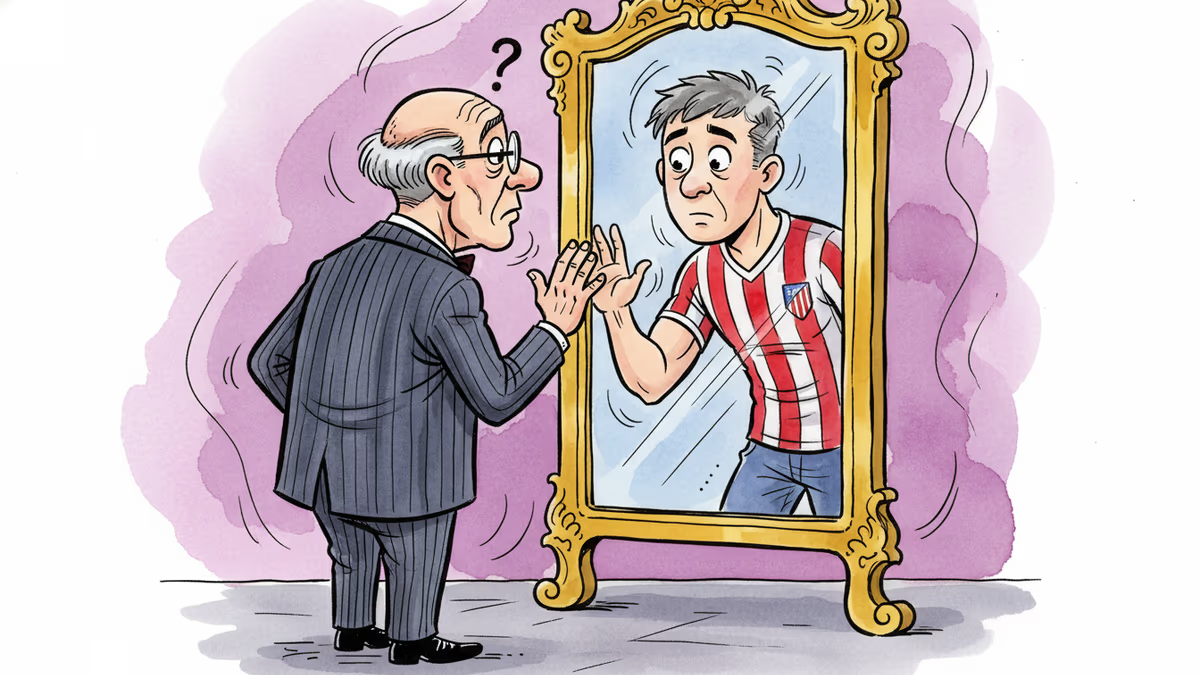
JTBC's Reborn Rookie pairs veteran actor Son Hyun Joo with idol-turned-actor Lee Jun Young in a body-swap drama. A look at the genre's industrial logic and what it signals about Korean TV's audience strategy.

JTBC's upcoming comedy crime drama Apartment casts Ji Sung, Ha Yoon-kyung, Park Byung-eun, and Moon Sori in a story where an ex-gangster enters a residents' committee election. What does the project reveal about JTBC's 2026 strategy?
MBC's action-comedy Fifties Professionals introduces Kwon Yul as an unpredictable new antagonist. Here's why this drama's premise matters beyond the casting news.
tvN's Spooky in Love teaser drops with Park Eun Bin as a ghost-seeing hotel heiress. Behind the occult romance lies a calculated industry strategy worth unpacking.
JTBC's Reborn Rookie pairs veteran actor Son Hyun Joo with idol-turned-actor Lee Jun Young in a body-swap drama. A look at the genre's industrial logic and what it signals about Korean TV's audience strategy.
JTBC's upcoming comedy crime drama Apartment casts Ji Sung, Ha Yoon-kyung, Park Byung-eun, and Moon Sori in a story where an ex-gangster enters a residents' committee election. What does the project reveal about JTBC's 2026 strategy?
Thoughts
Share your thoughts on this article
Sign in to join the conversation