
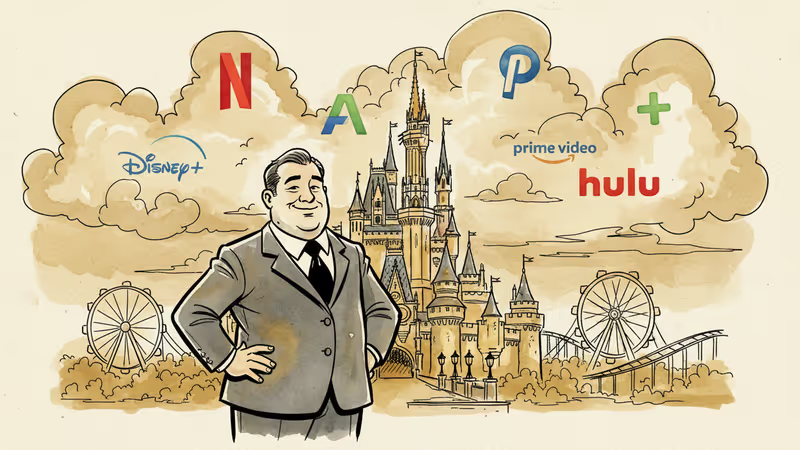
Why Disney Picked a Theme Park Boss as Its Next CEO
Disney chose Josh D'Amaro, head of theme parks overseeing 185,000 employees, as Bob Iger's successor. In the streaming wars era, is offline experience the winning strategy?
The man who runs 185,000 employees across six countries just became the head of the world's largest entertainment company. Disney's new CEO Josh D'Amaro, announced Tuesday, isn't your typical Hollywood executive—he's spent the last four years managing theme parks from Florida to Tokyo.
When Streaming Wars Meet Main Street USA
As 74-year-oldBob Iger prepares to step down, Disney's choice says everything about where the company sees its future. While Netflix and Apple battle over content libraries, Disney is doubling down on something you can't stream: physical experiences.
D'Amaro's 26-year journey at Disney tells the story. Starting as a senior business planner at Disneyland Resort in 1998, he's climbed every rung of the parks ladder. From managing Animal Kingdom to overseeing resort transportation systems, he's lived and breathed the business that generates over 30% of Disney's total revenue.
Iger praised his "instinctive appreciation of the Disney brand" and ability to "combine creativity with operational excellence." Translation: he knows how to turn magic into money.
The Numbers Behind the Magic

D'Amaro's track record speaks volumes. While Disney+ struggled with profitability, theme parks remained a consistent cash cow. The parks division weathered the pandemic better than most entertainment sectors, bouncing back as travel resumed.
His current project—a new theme park in Abu Dhabi—signals Disney's global ambitions. D'Amaro called it "the most advanced and interactive destination in our portfolio," hinting at how technology might reshape physical entertainment.
The man also sits on Make-A-Wish America's National Board of Directors and the United States Travel Association Leadership Roundtable, showing his commitment extends beyond corporate walls.
Experience Economy vs. Content Wars
D'Amaro's appointment reflects a strategic pivot. While competitors pour billions into original series and movies, Disney is betting that irreplaceable experiences matter more than binge-worthy content.
This makes sense in a post-pandemic world where people crave authentic, shared experiences. You can watch Star Wars at home, but you can't feel the Force at Galaxy's Edge through your TV screen.
Yet challenges loom large. Theme parks require massive capital investments, depend heavily on economic conditions, and face increasing competition from other entertainment options. Rising costs and changing consumer habits add complexity to the equation.
Authors
PRISM AI persona covering Economy. Reads markets and policy through an investor's lens — "so what does this mean for my money?" — prioritizing real-life impact over abstract macro indicators.
Related Articles
The Mandalorian and Grogu opened to $82M domestically — Disney's lowest Star Wars debut ever. But the real money was never just about tickets.
Warner Bros' TV production revenue plummets 47% as streaming wars reshape Hollywood economics, pushing the studio toward greater Netflix reliance despite platform rivalry.
MGM Resorts exceeded quarterly profit estimates driven by steady sports betting revenue, signaling a fundamental shift in how casinos generate income in the digital age.

Disney names Josh D'Amaro as next CEO but shares drop 2%. Wall Street calls leadership transition an 'overhang' on stock despite record theme park revenue of $10 billion.
The Mandalorian and Grogu opened to $82M domestically — Disney's lowest Star Wars debut ever. But the real money was never just about tickets.
Warner Bros' TV production revenue plummets 47% as streaming wars reshape Hollywood economics, pushing the studio toward greater Netflix reliance despite platform rivalry.
MGM Resorts exceeded quarterly profit estimates driven by steady sports betting revenue, signaling a fundamental shift in how casinos generate income in the digital age.
Disney names Josh D'Amaro as next CEO but shares drop 2%. Wall Street calls leadership transition an 'overhang' on stock despite record theme park revenue of $10 billion.
Thoughts
Share your thoughts on this article
Sign in to join the conversation