
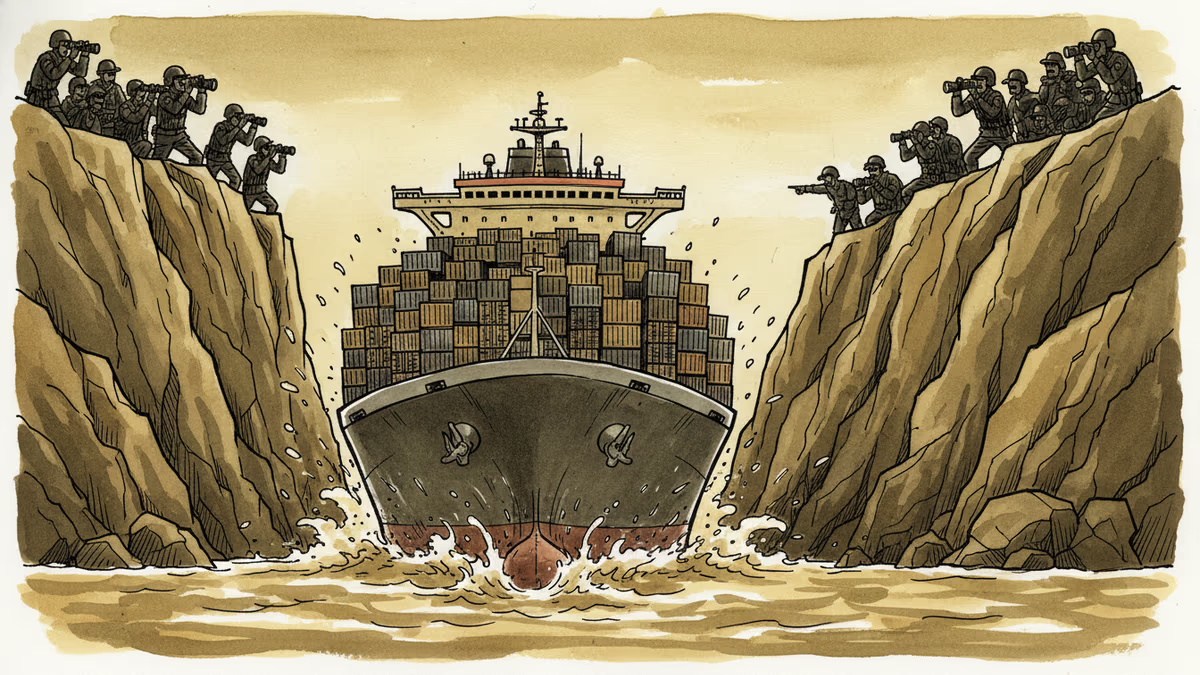
The 55-Kilometer Chokepoint That Could Reshape the Global Economy
The Iran war isn't just a regional conflict. It's a stress test for every supply chain, energy market, and poverty reduction target on the planet. Here's what's at stake.
17 million barrels of oil pass through a waterway narrower than the English Channel every single day. Now that waterway sits at the center of a shooting war.
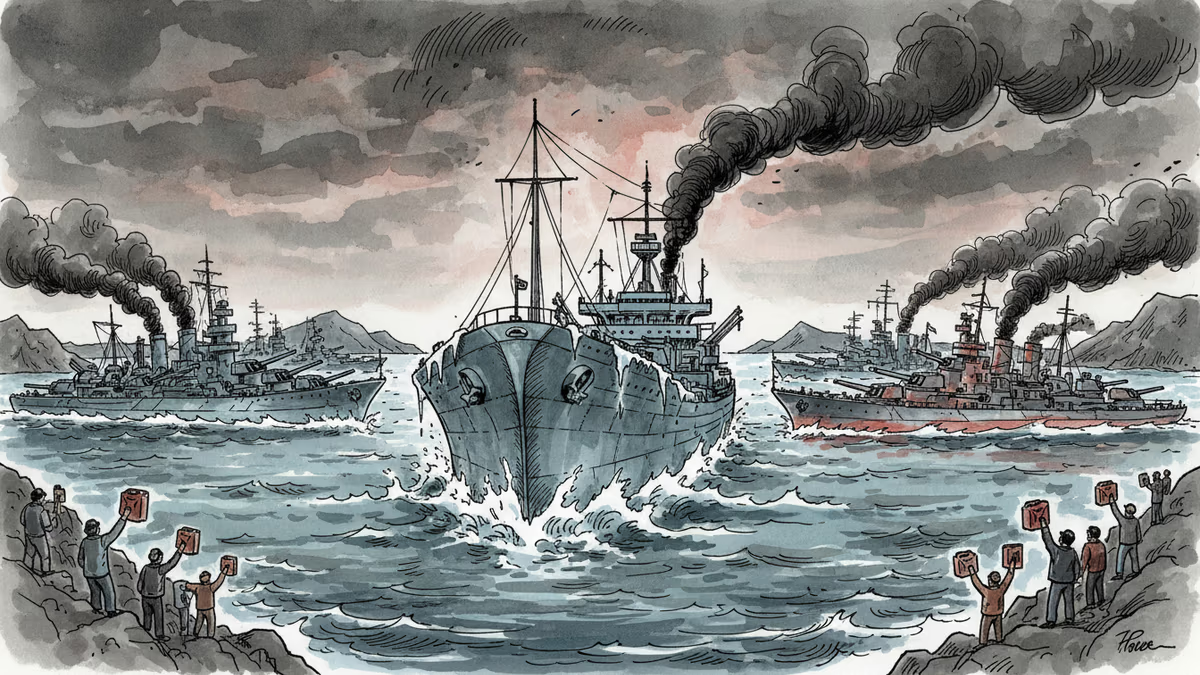
The Strait of Hormuz—just 55 kilometers wide at its narrowest point—carries roughly 20% of the world's seaborne oil trade. As the Iran war escalates through spring 2026, that geography has become the single most consequential variable in global energy markets, supply chains, and the economic fate of hundreds of millions of people who have never heard a shot fired.
What the War Is Actually Doing to Energy Markets
Iran accounts for roughly 4% of global oil production—significant, but not dominant. The real leverage isn't in the barrels Iran pumps; it's in the coastline Iran controls. Tehran sits on the northern shore of the Strait, giving it the physical capacity to harass, mine, or blockade one of the world's most critical shipping lanes.
This isn't hypothetical. Iran has deployed this threat repeatedly—during the 2012 nuclear sanctions crisis, during the 2019 tanker attacks in the Gulf of Oman. Each time, oil markets flinched. This time, the context is war, not coercive diplomacy, and the stakes are correspondingly higher.
The International Energy Agency has estimated that even a two-week closure of the Strait would trigger a severe short-term supply shock. Saudi Arabia and the UAE maintain overland pipeline capacity that bypasses the Strait, but those routes can handle only a fraction of normal throughput. Strategic petroleum reserves exist precisely for this scenario, but they buy time—not solutions.
For now, markets are pricing in a risk premium without full disruption. The question traders are sitting with: how long before the risk becomes reality?
The People Who Can't Hedge
Oil traders have tools—futures contracts, options, diversified portfolios. Most of the world doesn't.
The asymmetry of an energy shock is brutal. Wealthier, energy-diverse economies absorb higher prices through inflation and slower growth. Lower-income, import-dependent economies face something closer to a fiscal crisis. When fuel costs spike, governments that subsidize energy—and across sub-Saharan Africa, most do—face an impossible arithmetic: absorb the cost and blow up the budget, or pass it on and watch citizens who spend 40–60% of their income on food and transport fall below the poverty line.
The World Bank has previously estimated that a $20 per barrel increase in oil prices reduces average GDP growth in low-income countries by 0.5 to 1 percentage point. That may sound abstract. It isn't. Each percentage point of lost growth in a developing economy translates directly into slower job creation, reduced tax revenue for schools and clinics, and millions of people whose exit from poverty gets deferred—or reversed.

The UN's 2030 poverty reduction targets were already under pressure before this war. A prolonged energy shock could make them functionally unreachable.
China: Positioned to Win, Exposed to Lose
On the surface, China looks like a beneficiary. As Iran's largest oil customer, Beijing has been purchasing Iranian crude at steep discounts throughout the sanctions era. A war that deepens Iran's isolation could push Tehran further into China's orbit, locking in cheap supply.
But the calculus is more complicated. China's economy is deeply dependent on Middle Eastern oil broadly—not just Iranian barrels. A Strait closure hits Saudi, Kuwaiti, and Iraqi shipments too. China's strategic petroleum reserves are estimated at roughly 90 days of consumption. Sufficient for a short disruption; potentially inadequate for a prolonged one.
More structurally: China's manufacturing competitiveness is built on the assumption of stable, affordable energy. A sustained price spike adds downward pressure to an economy already navigating a property sector hangover, weak domestic consumption, and slowing export growth. The geopolitical opportunity of cheap Iranian oil may be smaller than the economic risk of expensive oil overall.
Supply Chains Haven't Forgotten 2024
The Iran war arrives just as global supply chains were finishing their recovery from the Houthi attacks on Red Sea shipping in 2024—attacks that forced hundreds of vessels to reroute around the Cape of Good Hope, adding two to three weeks to transit times and significantly inflating freight costs.
The lesson from that episode: supply chain fragility isn't a pandemic-era anomaly. It's a persistent structural feature of a global economy that routes critical goods through a small number of maritime chokepoints. Semiconductors, automotive components, pharmaceutical ingredients—all of it moves by sea, and sea routes are increasingly contested.
A Hormuz disruption would be categorically larger than the Red Sea crisis. The Strait is not a detour problem; there is no viable alternative route for Persian Gulf exports. The question for logistics professionals and procurement officers isn't whether to hedge—it's whether the hedges they built after 2024 are deep enough.
Is Iran's Economy Actually Breaking?
Western policy has long operated on the assumption that economic pressure will eventually destabilize the Iranian government. The track record of that assumption is mixed at best.
Iran has spent decades developing workarounds to sanctions: informal trading networks, cryptocurrency channels, barter arrangements with Russia and China. The economy is distorted and its citizens bear real hardship—the rial has lost the vast majority of its value over the past decade, and chronic inflation has hollowed out middle-class purchasing power.
But war, paradoxically, can also consolidate regimes. The rallying effect of external conflict is well-documented. And if oil prices spike globally, Iran—which continues to sell oil through unofficial channels—actually collects more revenue per barrel, even under sanctions. The economic pressure that is supposed to end the war may, in some scenarios, help fund it.
This content is AI-generated based on source articles. While we strive for accuracy, errors may occur. We recommend verifying with the original source.
Related Articles
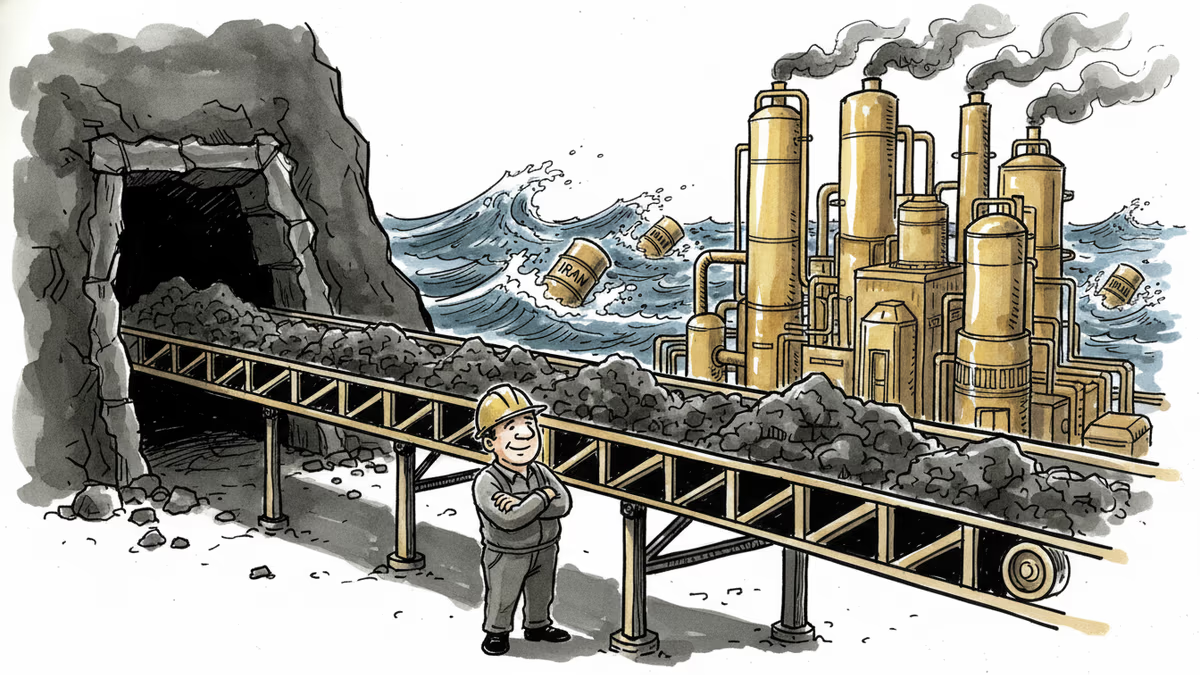
As the Iran war disrupts global oil and chemical supplies, China's coal-chemical industry in Xinjiang is moving fast to fill the void. A ground-level look at the opportunity—and its contradictions.
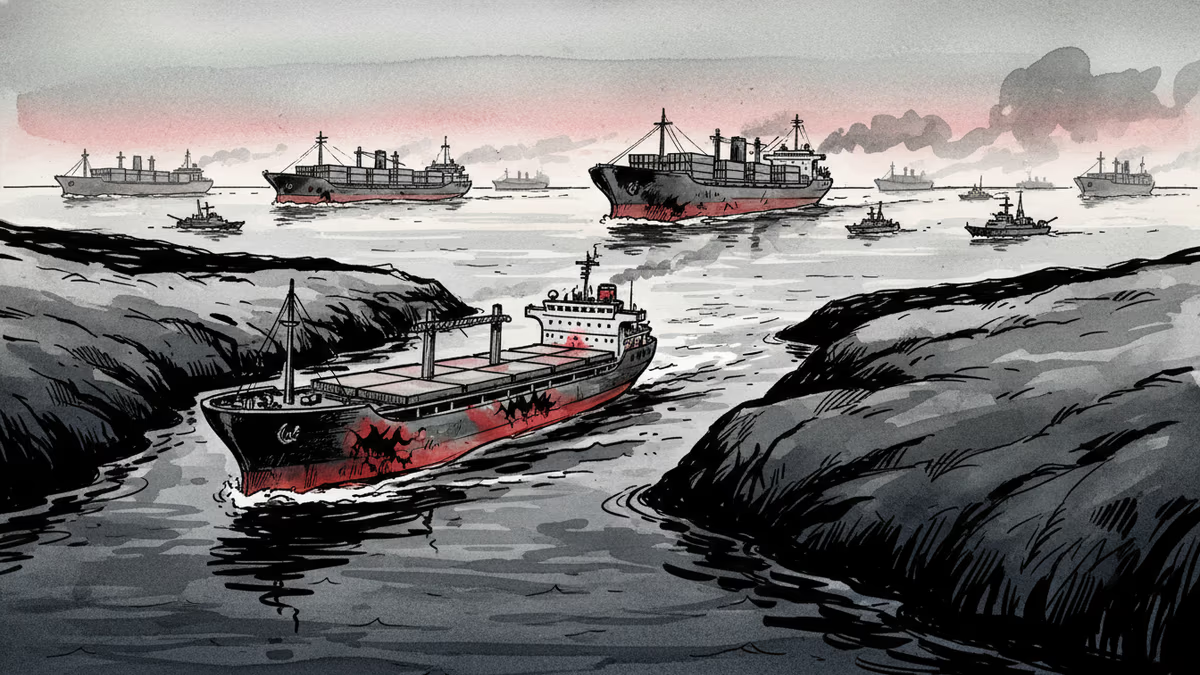
Trump publicly blamed Iran for attacking an HMM cargo vessel, framing it as the consequence of South Korea skipping the U.S.-led Strait of Hormuz escort mission. The incident puts Seoul's energy security and alliance calculus under pressure.
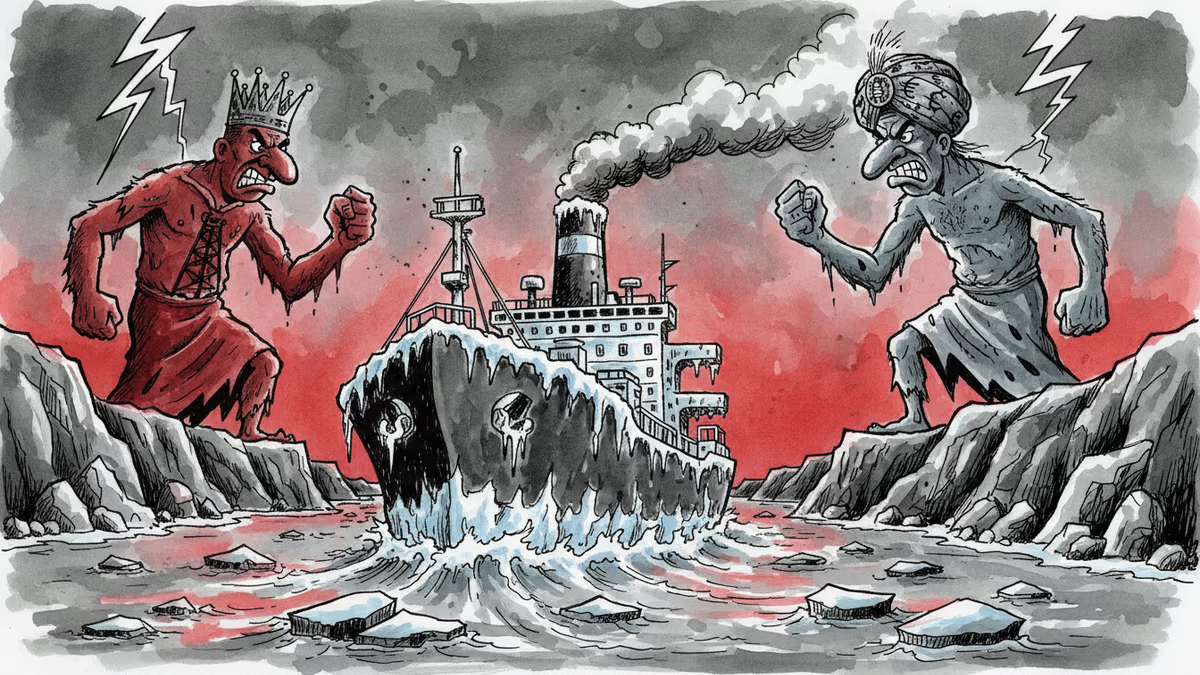
Trump's 15-point ultimatum to Iran isn't being read as a diplomatic opening. Analysts warn of nightmare escalation scenarios with global economic consequences.
As US-Iran tensions escalate and military options are openly discussed, analysts warn of catastrophic economic fallout. But the real question may be harder than it looks.
As the Iran war disrupts global oil and chemical supplies, China's coal-chemical industry in Xinjiang is moving fast to fill the void. A ground-level look at the opportunity—and its contradictions.
Trump publicly blamed Iran for attacking an HMM cargo vessel, framing it as the consequence of South Korea skipping the U.S.-led Strait of Hormuz escort mission. The incident puts Seoul's energy security and alliance calculus under pressure.
Trump's 15-point ultimatum to Iran isn't being read as a diplomatic opening. Analysts warn of nightmare escalation scenarios with global economic consequences.
As US-Iran tensions escalate and military options are openly discussed, analysts warn of catastrophic economic fallout. But the real question may be harder than it looks.
Thoughts
Share your thoughts on this article
Sign in to join the conversation