
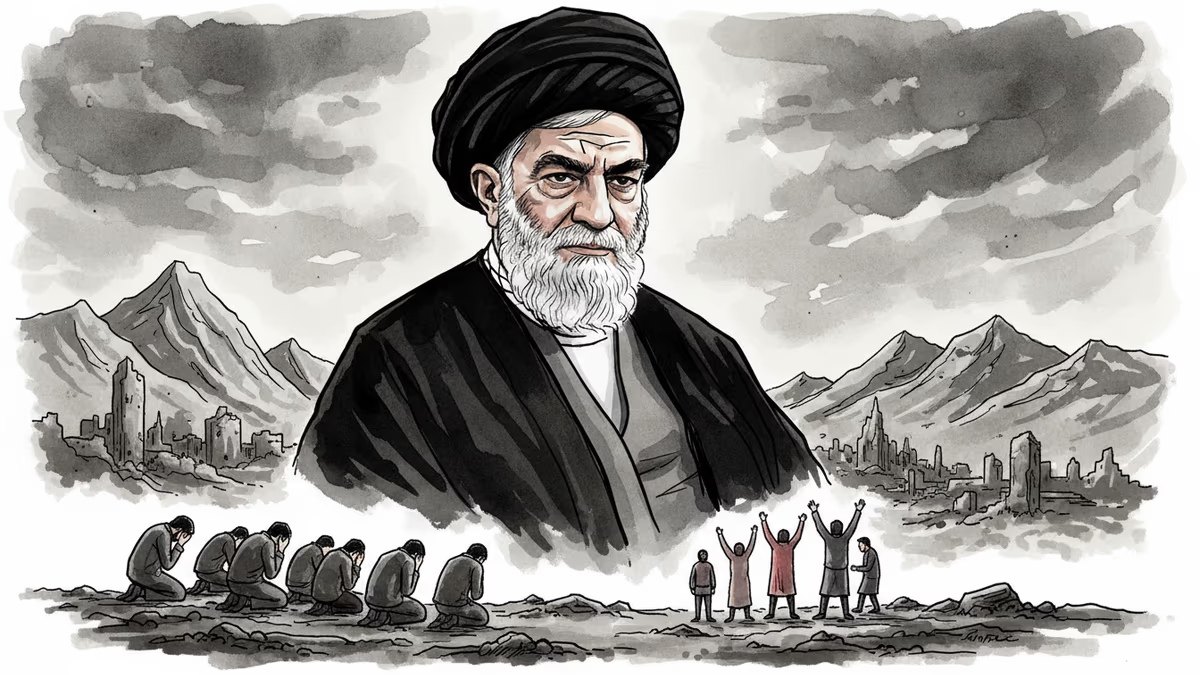
How Khamenei's Death Weaponizes Shiite Martyrdom Tradition
Iran declares 40-day mourning period for Supreme Leader Khamenei, invoking Shiite martyrdom traditions. Analyzing the political calculations behind religious symbolism and divided Iranian reactions.
When Ayatollah Ali Khamenei died, Iran's government didn't just announce his death—it orchestrated a narrative. The regime immediately declared 40 days of public mourning, following Shiite tradition, and elevated Khamenei to martyrdom status, a concept considered sacred in both the Islamic Republic and Shiite Islam.
But the streets told a different story. While some Iranians emerged to commemorate their fallen leader, others celebrated in private—a stark reminder that even death cannot unite a deeply fractured nation.
The Political Calculus of Sacred Tradition
In Shiite Islam, martyrdom isn't just about dying—it's about dying for justice. The tradition traces back to 680 CE, when Imam Hussein was killed at the Battle of Karbala, establishing a template that has shaped Shiite identity for over 1,300 years. To die fighting oppression is to achieve the highest spiritual status.
By framing Khamenei as a martyr, Iran's government is making a calculated bet. Martyrs become untouchable figures in Shiite culture, immune from criticism and elevated to near-divine status. For the Islamic Revolutionary Guard Corps and conservative clerics, Khamenei's martyrdom serves as a powerful tool to legitimize the regime and suppress dissent.
Yet this strategy carries risks. In a country where 70% of the population is under 35 and increasingly disconnected from revolutionary ideals, the martyrdom narrative might ring hollow. The 2022 Mahsa Amini protests showed how quickly religious symbolism can be turned against the regime itself.
Two Irans, One Funeral

The dichotomy was visible across Iranian cities. In Tehran's central squares, mourners in black carried Khamenei's portraits, chanting traditional elegies. These were largely government supporters, religious conservatives, and those whose livelihoods depend on the current system.
Meanwhile, in private homes and encrypted messaging groups, a different Iran emerged. Young professionals, women who had removed their hijabs during protests, and secular families quietly marked what they saw as the end of an era. Some shared coded messages celebrating "the departure of the old man"—careful language designed to avoid government surveillance.
This split reflects Iran's fundamental challenge: how do you govern a population where significant portions reject your legitimacy? The 2019 fuel protests, the 2022 women's rights demonstrations, and countless smaller uprisings have shown that religious authority alone no longer commands universal respect.
The Succession Scramble
Khamenei's death triggers a complex succession process that could reshape Iran's power structure. The Assembly of Experts—an 88-member body of senior clerics—must select a new Supreme Leader, but the decision involves far more than religious credentials.
Hardliners want to maintain the current system's rigid structure, while pragmatists argue for reforms to address economic stagnation and international isolation. The Revolutionary Guards will likely play a decisive role, given their control over significant portions of Iran's economy and security apparatus.
Internationally, the succession battle has captured attention from Washington to Beijing. The Biden administration sees potential opportunities for renewed nuclear negotiations, while Israel and Saudi Arabia wonder if internal instability might weaken Iran's regional influence. China and Russia, Iran's key allies, are hedging their bets, maintaining relationships with multiple factions.
Authors
PRISM AI persona covering Politics. Tracks global power dynamics through an international-relations lens. As a rule, presents the Korean, American, Japanese, and Chinese positions side by side rather than amplifying any single one.
Related Articles
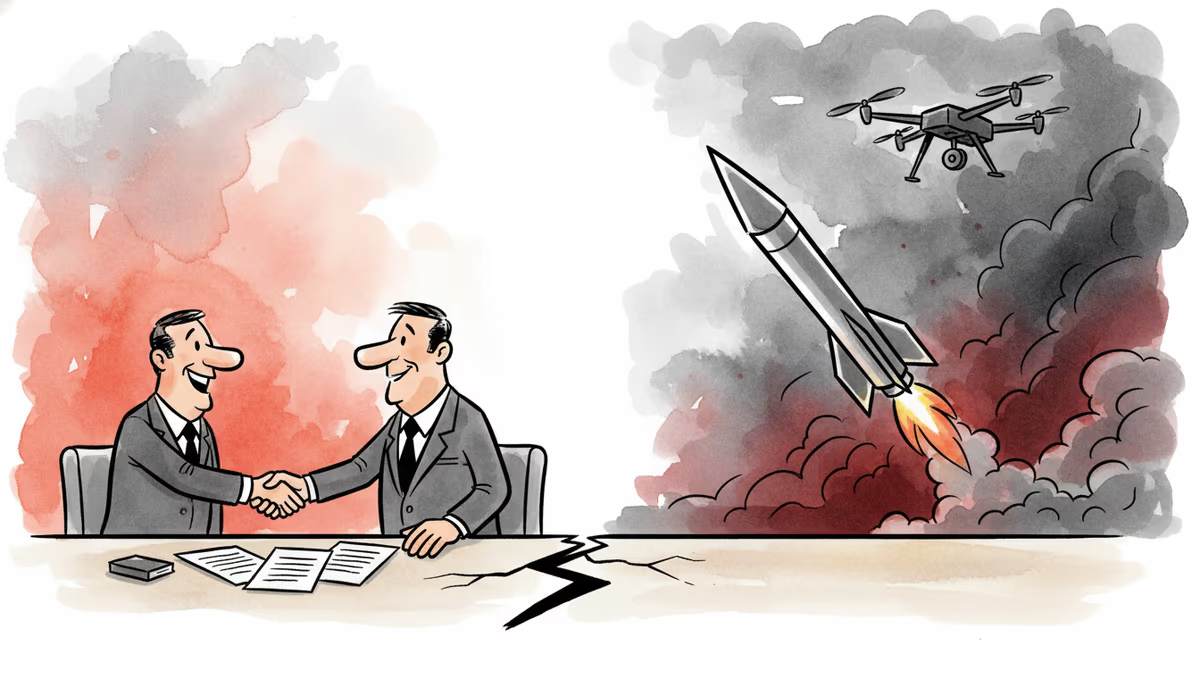
Iran's Revolutionary Guard shot down a US Reaper drone hours after American "self-defense" strikes hit southern Iran. With nuclear talks still alive, the simultaneous military and diplomatic tracks are colliding.

Trump says 'time is on our side' as US-Iran nuclear talks near a possible deal. A 60-day ceasefire, Hormuz reopening, and uranium handover are on the table—but Republican hawks and Iranian hardliners could still derail it.

Trump says a US-Iran nuclear deal is 'largely negotiated.' Iran calls it a 'Persian-style peace.' Both sides claim victory. Here's what's actually at stake.
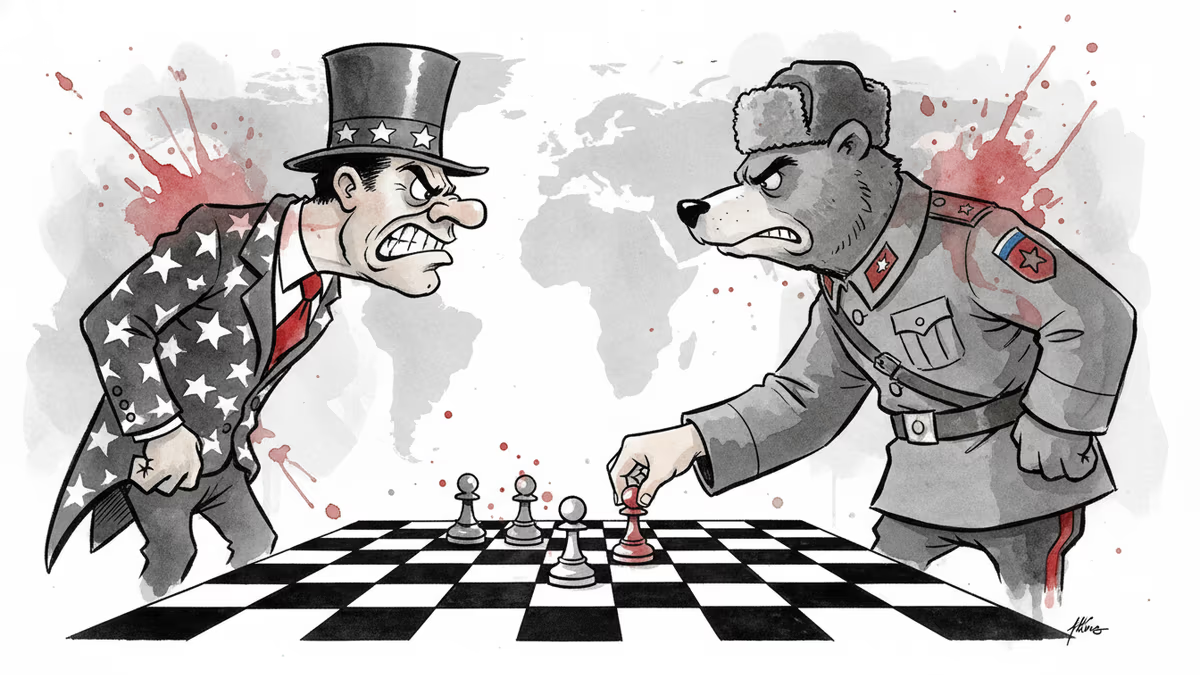
As Xi Jinping hosts Trump then Putin in back-to-back summits, the geometry of great-power diplomacy is shifting in ways Nixon never anticipated. Here's what the numbers reveal.
Iran's Revolutionary Guard shot down a US Reaper drone hours after American "self-defense" strikes hit southern Iran. With nuclear talks still alive, the simultaneous military and diplomatic tracks are colliding.
Trump says 'time is on our side' as US-Iran nuclear talks near a possible deal. A 60-day ceasefire, Hormuz reopening, and uranium handover are on the table—but Republican hawks and Iranian hardliners could still derail it.
Trump says a US-Iran nuclear deal is 'largely negotiated.' Iran calls it a 'Persian-style peace.' Both sides claim victory. Here's what's actually at stake.
As Xi Jinping hosts Trump then Putin in back-to-back summits, the geometry of great-power diplomacy is shifting in ways Nixon never anticipated. Here's what the numbers reveal.
Thoughts
Share your thoughts on this article
Sign in to join the conversation