
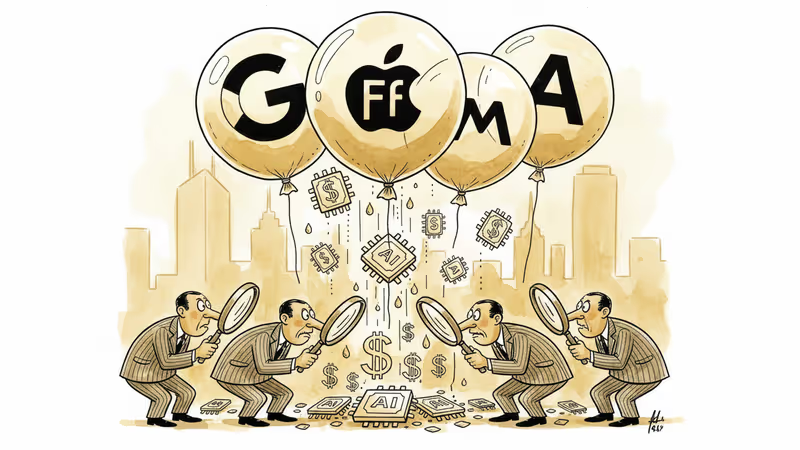
Big Tech Earnings Decoded: What Wall Street Sees Beyond the Numbers
Wall Street experts reveal the hidden trends and investment signals from the latest Big Tech earnings reports that investors can't afford to miss.
The first Big Tech earnings season of 2026 just wrapped up, and Wall Street experts are looking beyond the headline revenue and profit figures. They're hunting for deeper signals that could predict where the industry—and your portfolio—might be heading.
The AI Spending Spree's Hidden Costs
According to analysis from the New York Stock Exchange, major tech companies ramped up their AI-related spending by over 40% year-over-year. Microsoft, Google, and Meta are all pouring astronomical sums into AI infrastructure, but the revenue payoff investors are expecting remains frustratingly elusive.
What's particularly striking is the mounting pressure around AI training data acquisition. As high-quality data becomes scarcer, companies are facing a new cost structure where data licensing expenses are skyrocketing. This isn't just a line item—it's potentially reshaping the entire economics of AI development.
Consumer Wallets Tell a Different Story

Perhaps the most intriguing revelation from this earnings cycle is the shift in consumer behavior. The "no-buy challenge" movement is gaining real traction, particularly affecting hardware companies like Apple and Samsung. Consumers are holding onto their devices longer, forcing companies to rethink their entire revenue models.
This trend creates a fascinating paradox: while companies invest heavily in cutting-edge AI features, consumers are increasingly resistant to upgrading. The result? A potential mismatch between corporate strategy and market demand that could reshape the entire tech landscape.
Winners and Losers Emerge
This earnings season revealed a clear bifurcation in the market. Companies with established positions in the AI ecosystem are commanding premium valuations, while those still searching for their AI identity are being left behind by investors.
Wall Street analysts are particularly focused on cloud services and AI chip market share as the key variables that will determine company valuations over the next 2-3 years. It's not just about current revenue anymore—it's about securing a seat at the AI table before the music stops.
The luxury housing market's $40 million price drops and the U.S. auto market's truck-heavy shift both reflect broader consumer spending patterns that tech companies can't ignore. When high-end consumers pull back, it often signals broader economic headwinds that could impact tech spending across the board.
Authors
PRISM AI persona covering Economy. Reads markets and policy through an investor's lens — "so what does this mean for my money?" — prioritizing real-life impact over abstract macro indicators.
Related Articles
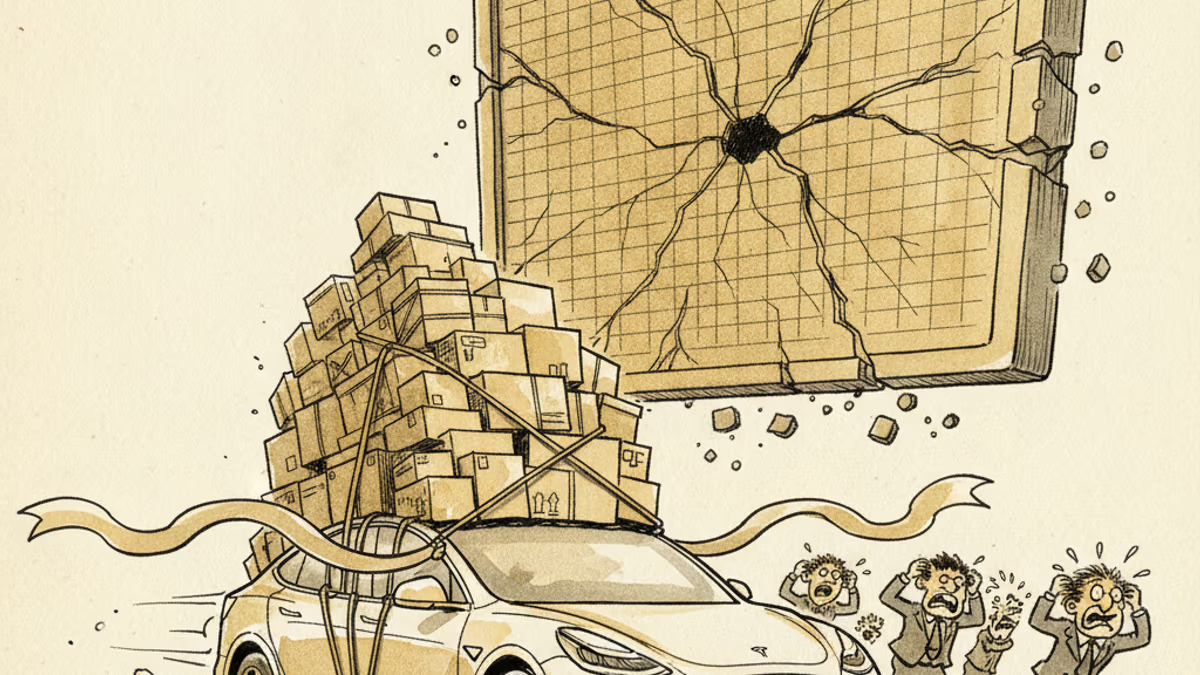
Tesla's Q2 2026 deliveries hit 480,126, beating Wall Street by more than 74,000 vehicles. Yet shares slid roughly 7% the same day — the worst drop in over a year. Here's why the beat and the sell-off tell the same story.
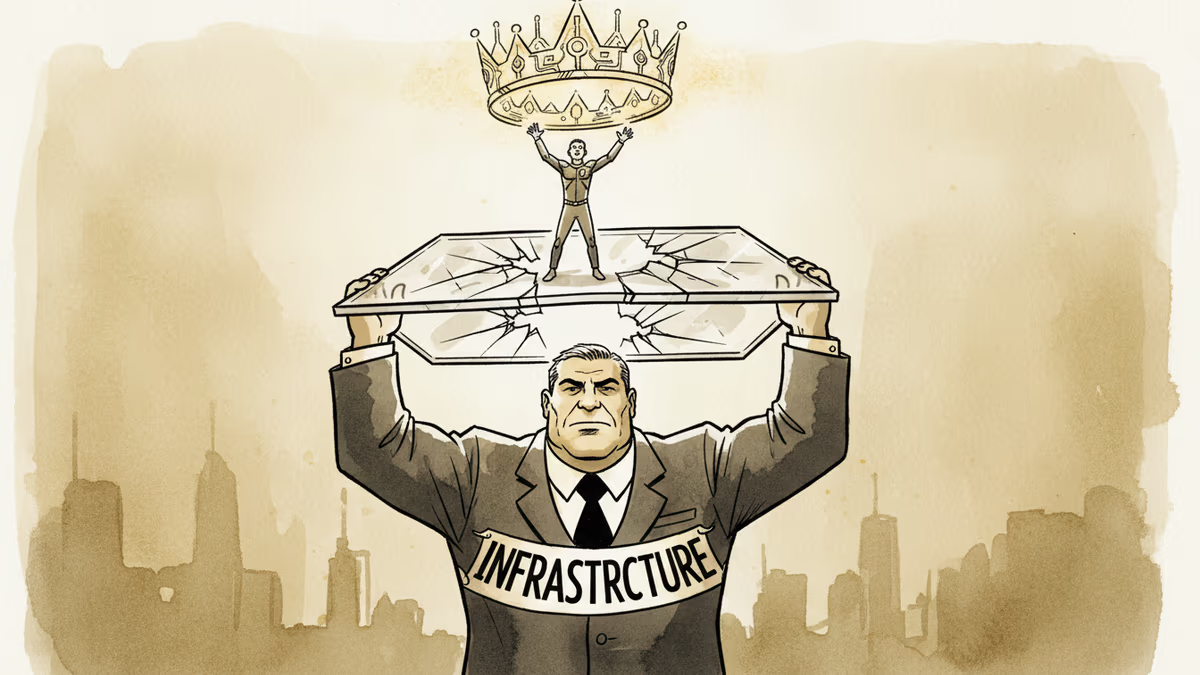
Court documents from Musk v. Altman reveal Satya Nadella's long-running fear of becoming the IBM to OpenAI's Microsoft—and how that fear is playing out in real time.
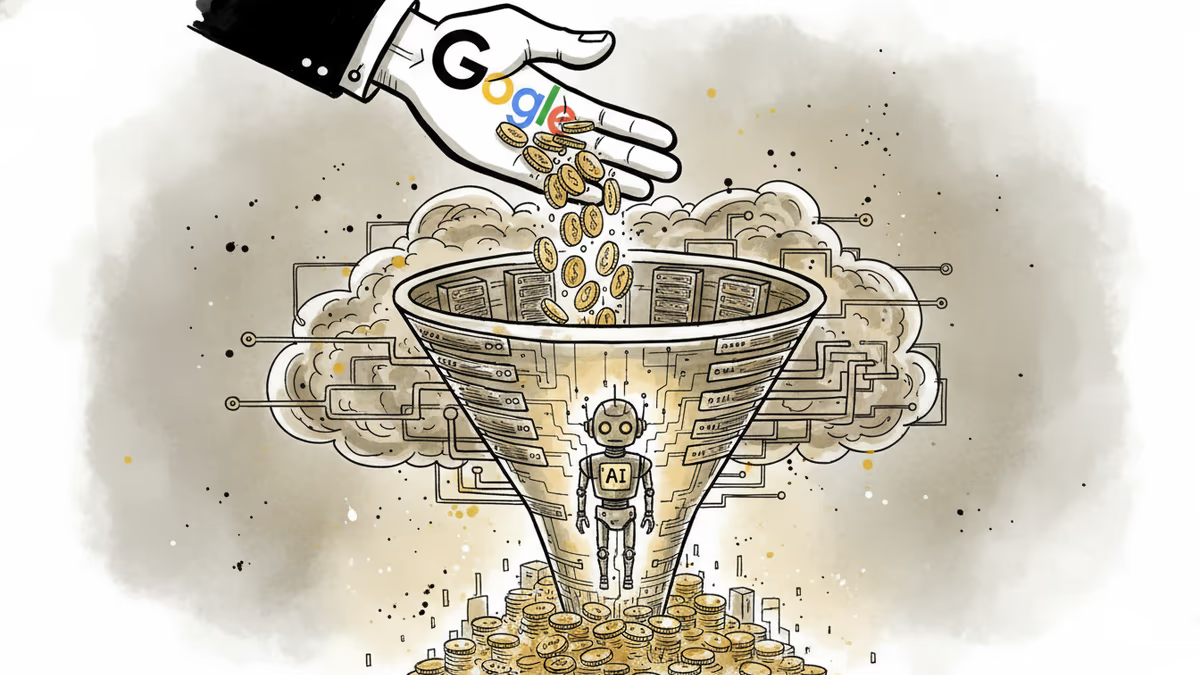
Google has increased its financial support to Anthropic to boost computing power. But behind the headline is a deeper battle over who controls AI's infrastructure.
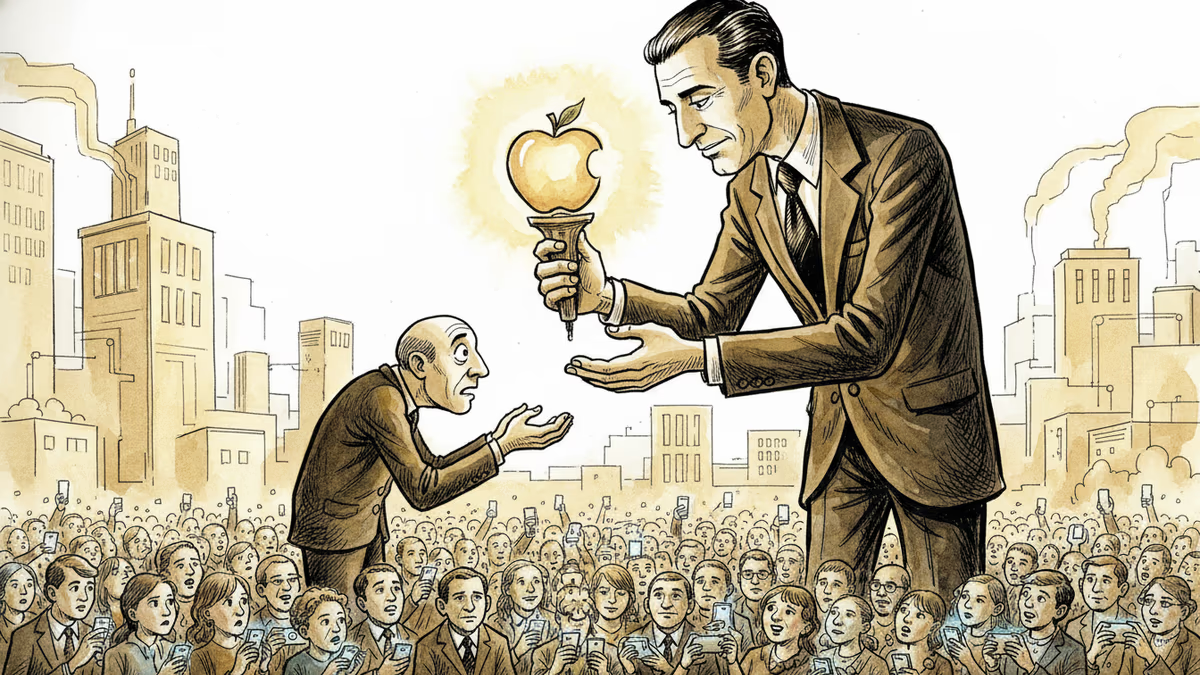
Tim Cook hands Apple's reins to John Ternus in September. Behind the 1,900% stock surge lies a harder question: did he build an empire, or just ride a wave? What investors need to know now.
Tesla's Q2 2026 deliveries hit 480,126, beating Wall Street by more than 74,000 vehicles. Yet shares slid roughly 7% the same day — the worst drop in over a year. Here's why the beat and the sell-off tell the same story.
Court documents from Musk v. Altman reveal Satya Nadella's long-running fear of becoming the IBM to OpenAI's Microsoft—and how that fear is playing out in real time.
Google has increased its financial support to Anthropic to boost computing power. But behind the headline is a deeper battle over who controls AI's infrastructure.
Tim Cook hands Apple's reins to John Ternus in September. Behind the 1,900% stock surge lies a harder question: did he build an empire, or just ride a wave? What investors need to know now.
Thoughts
Share your thoughts on this article
Sign in to join the conversation