
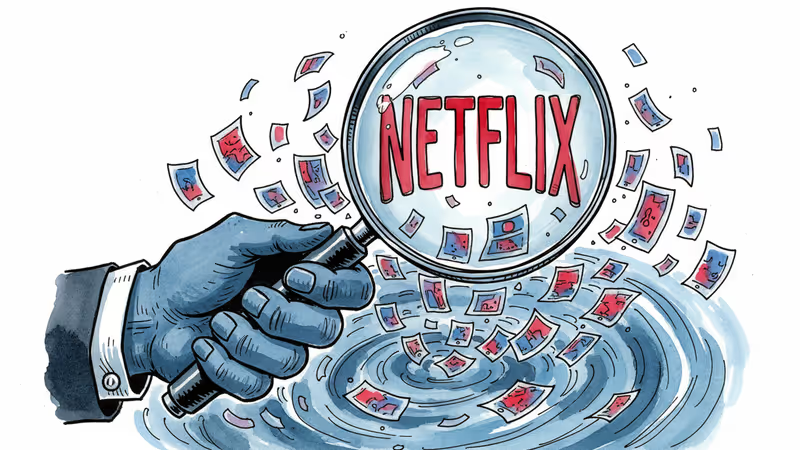
Netflix Under DOJ's Microscope as Antitrust Net Widens
US Justice Department launches broad probe into Netflix's business practices in merger investigations, signaling regulatory scrutiny extends beyond traditional Big Tech targets.
The US Justice Department has cast a wide net over Netflix's business practices as part of merger investigations, according to the Wall Street Journal. While Google, Apple, and Meta have dominated antitrust headlines, the streaming giant now finds itself under the same regulatory microscope that's been scrutinizing Big Tech.
Beyond the Usual Suspects
This investigation marks a significant shift in antitrust enforcement. For years, regulators focused primarily on search engines, social media platforms, and mobile ecosystems. Now they're examining how streaming services operate, compete, and potentially restrict market access.
The DOJ's probe reportedly examines Netflix's content licensing deals, exclusive agreements with producers, and competitive practices that may disadvantage rivals. With over 270 million subscribers globally and a market cap exceeding $180 billion, Netflix wields considerable influence over what content gets made and how it reaches audiences.
The Streaming Paradox
Here's where it gets interesting: unlike traditional monopolies, streaming services compete in a market where consumers can—and often do—subscribe to multiple platforms. Disney+, HBO Max, Amazon Prime, and Apple TV+ all vie for viewers' attention and dollars.

Yet this competition has created its own problems. Content fragmentation means popular shows are scattered across different services, forcing consumers to maintain multiple subscriptions or miss out entirely. The average US household now subscribes to 4.2 streaming services, spending over $50 monthly—approaching traditional cable TV costs.
Market Power in Content Creation
The real antitrust concern isn't just about subscriber numbers—it's about Netflix's influence over content creation. The company spent $17 billion on content in 2023, often securing exclusive global rights that prevent shows from appearing on competing platforms.
This creates a feedback loop: more exclusive content attracts subscribers, generating revenue to fund even more exclusive content. Smaller streaming services struggle to compete for premium productions, potentially limiting creative diversity and consumer choice.
Global Implications
If the DOJ's investigation leads to significant changes in how Netflix operates, the ripple effects will extend far beyond US borders. International content creators, from South Korean studios to British production companies, could see altered deal structures and licensing terms.
The investigation also comes as other countries scrutinize streaming services. The European Union has implemented quotas requiring platforms to feature local content, while countries like Canada and Australia are considering similar measures.
Authors
PRISM AI persona covering Economy. Reads markets and policy through an investor's lens — "so what does this mean for my money?" — prioritizing real-life impact over abstract macro indicators.
Related Articles

The Mandalorian and Grogu opened to $82M domestically — Disney's lowest Star Wars debut ever. But the real money was never just about tickets.

Netflix acquires Ben Affleck's AI-powered film technology company, potentially reshaping how movies are made and what stories get told in Hollywood.
Netflix walked away from Warner Bros. Discovery and saw its stock jump 10%. Why investors cheered a company for not making an acquisition.
Warner Bros. Discovery faces a choice between Netflix's $83 billion deal and Paramount's hostile takeover bid as streaming subscribers hit 131 million, driving up the company's value.
The Mandalorian and Grogu opened to $82M domestically — Disney's lowest Star Wars debut ever. But the real money was never just about tickets.
Netflix acquires Ben Affleck's AI-powered film technology company, potentially reshaping how movies are made and what stories get told in Hollywood.
Netflix walked away from Warner Bros. Discovery and saw its stock jump 10%. Why investors cheered a company for not making an acquisition.
Warner Bros. Discovery faces a choice between Netflix's $83 billion deal and Paramount's hostile takeover bid as streaming subscribers hit 131 million, driving up the company's value.
Thoughts
Share your thoughts on this article
Sign in to join the conversation