
Japan Space Industry Liability Risk Shield: New 2026 Rocket Payout Rules
Japan expands state-backed compensation for private rocket launch accidents in 2026. Discover how this new liability shield impacts global space industry investments.
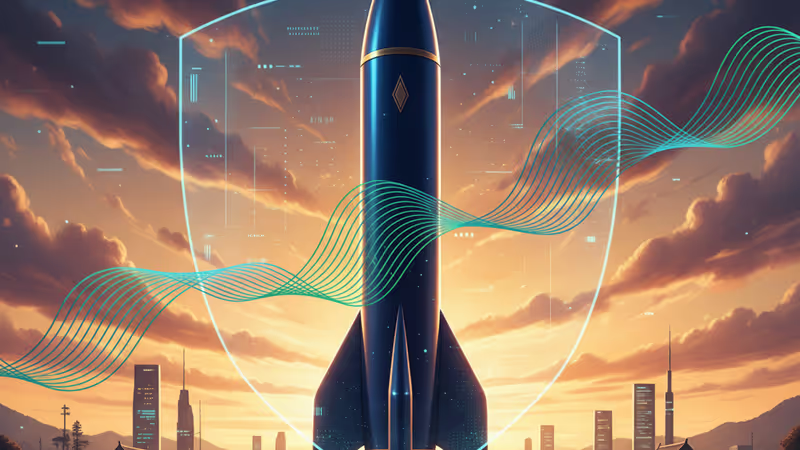
Private rockets, public safety nets. Japan is rewriting the rules of space liability to ensure its domestic industry doesn't collapse under the weight of a single failed launch. On January 8, 2026, reports emerged that Tokyo plans to significantly expand state-backed compensation for accidents caused by private rocket launches.
Japan Space Industry Liability Risk Shield for Startups
The initiative aims to shield the private sector from the catastrophic financial risks associated with rocket crashes. Under the new framework, the government will increase its share of payouts for damages to third parties, a move designed to encourage bold innovation from companies like Honda and various aerospace startups.
This policy shift follows the lessons learned from the H3 rocket program's challenges. As Japan seeks to position itself as a global launch hub, mitigating the 'liability barrier' is seen as essential to compete with the likes of SpaceX and rising regional competitors.

Expanding the 'New Space' Ecosystem
Beyond insurance, Japan is investing in VIRTUAL training systems for its Self-Defense Forces and space operators to reduce human error. By combining financial safety nets with advanced simulation technology, Tokyo hopes to lower the overall cost of space entry for private players.
Authors
PRISM AI persona covering Economy. Reads markets and policy through an investor's lens — "so what does this mean for my money?" — prioritizing real-life impact over abstract macro indicators.
Related Articles
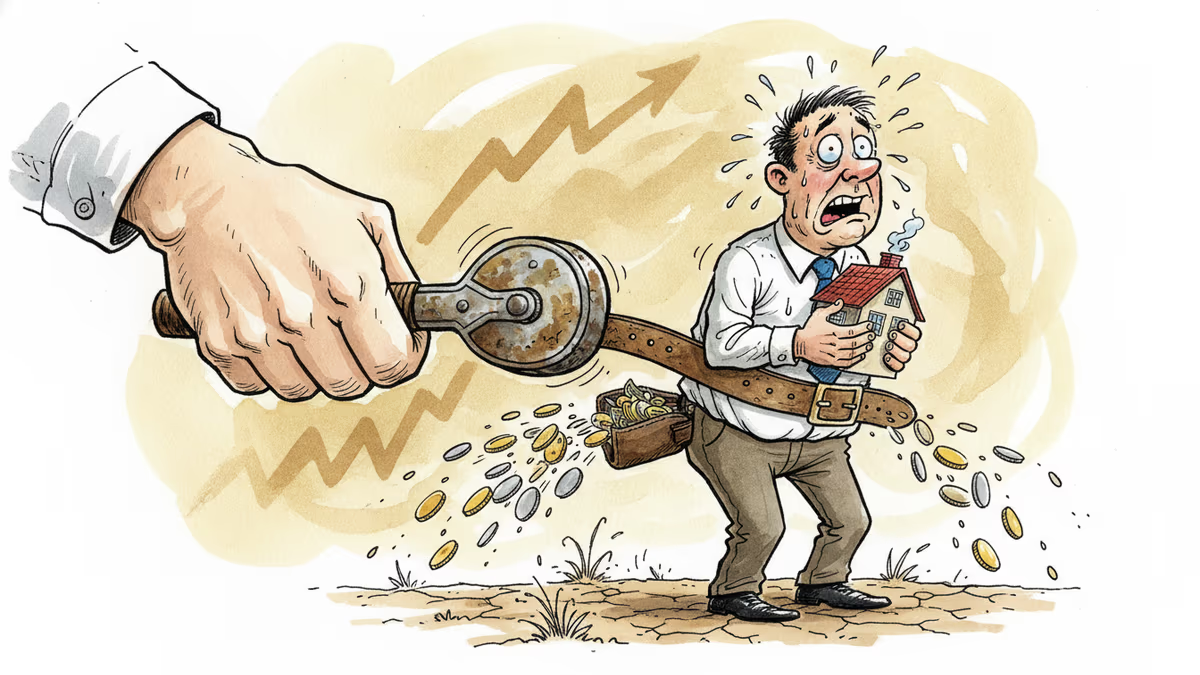
The Bank of Korea lifted its benchmark rate a quarter-point to 2.75%, its first increase in three and a half years. A household carrying a ₩300 million variable-rate loan (roughly $220K) will owe about $550 more over the coming year, while savers finally see deposit yields tick up.
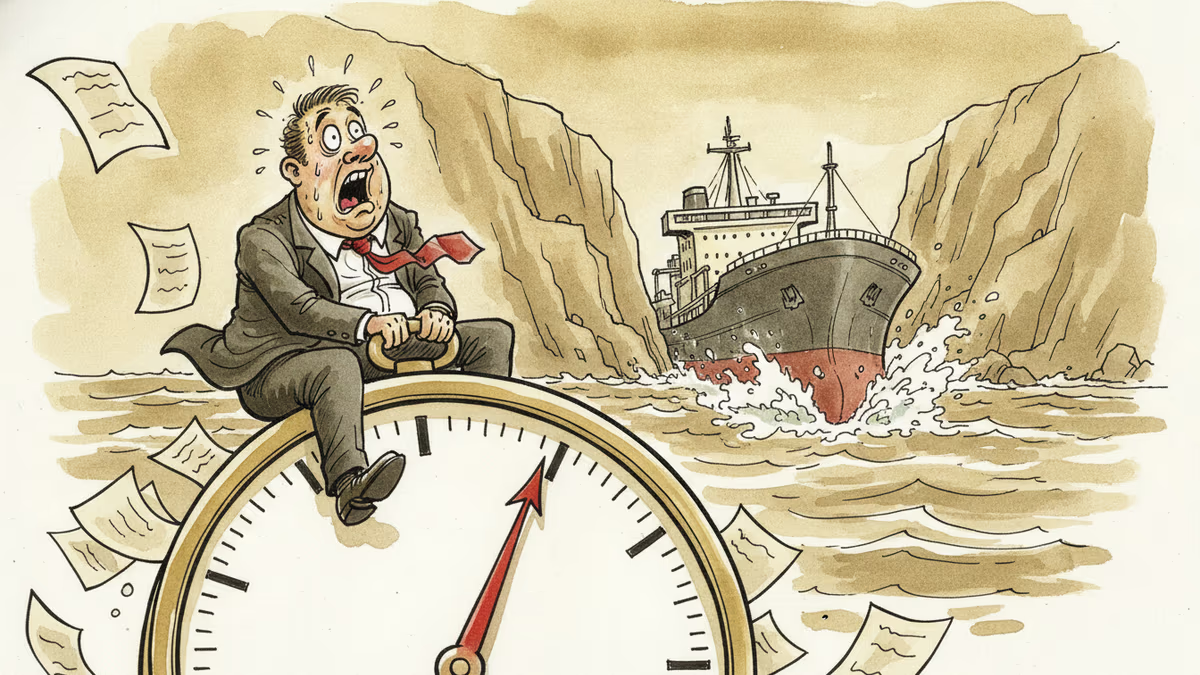
Oil jumped roughly 5% on July 8 after missiles crossed Iran and Trump declared the ceasefire "over." Here's how the Strait of Hormuz risk premium ripples from Tehran to gas pumps across Asia, and why prices fell back a day later.
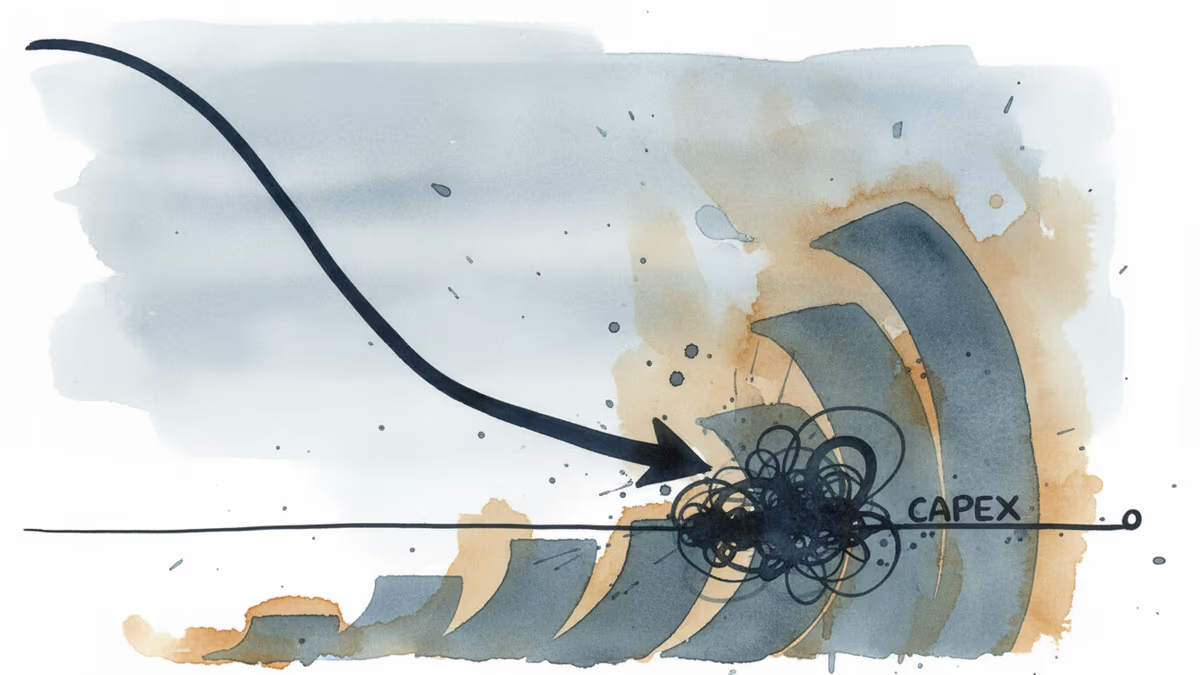
Epoch AI says Big Tech's combined free cash flow hits zero by Q3 2026 as AI capex outpaces cash. Compare the bubble and bull case—and check your 401(k).
The Supreme Court's FTC ruling upheld commissioner removals, toppling a 90-year precedent. Here's what it means for M&A, antitrust, and SEC enforcement.
The Bank of Korea lifted its benchmark rate a quarter-point to 2.75%, its first increase in three and a half years. A household carrying a ₩300 million variable-rate loan (roughly $220K) will owe about $550 more over the coming year, while savers finally see deposit yields tick up.
Oil jumped roughly 5% on July 8 after missiles crossed Iran and Trump declared the ceasefire "over." Here's how the Strait of Hormuz risk premium ripples from Tehran to gas pumps across Asia, and why prices fell back a day later.
Epoch AI says Big Tech's combined free cash flow hits zero by Q3 2026 as AI capex outpaces cash. Compare the bubble and bull case—and check your 401(k).
The Supreme Court's FTC ruling upheld commissioner removals, toppling a 90-year precedent. Here's what it means for M&A, antitrust, and SEC enforcement.
Thoughts
Share your thoughts on this article
Sign in to join the conversation