

Japan Kashiwazaki-Kariwa Nuclear Plant Restart 2026: The World's Largest Facility Wakes Up
Japan restarts the world's largest Kashiwazaki-Kariwa nuclear plant on Jan 21, 2026. Explore the impact of TEPCO's first restart since the Fukushima disaster.
The world's largest nuclear power plant is waking up. After nearly 15 years of silence following the Fukushima disaster, Japan has flipped the switch on a crucial reactor. According to Reuters, Reactor no. 6 at the Kashiwazaki-Kariwa plant was restarted on Wednesday, January 21, 2026. It's a symbolic and strategic move for TEPCO, marking its first operational nuclear reactor since the 2011 meltdown.
Japan Kashiwazaki-Kariwa Nuclear Plant Restart 2026: A High-Stakes Reboot
Prime Minister Sanae Takaichi has been a vocal advocate for this revival, citing the urgent need for energy self-sufficiency. With data centers and semiconductor manufacturing driving a surge in electricity demand, the government aims for nuclear power to provide 20% of the nation's needs by 2040. However, the path isn't easy. While the plant once boasted a capacity of 8.2 gigawatts, the seventh reactor isn't expected until 2030, and five others face potential decommissioning, leaving the facility far below its historical peak.

Rebuilding Trust Amidst Lingering Fear
The restart comes despite deep-seated public mistrust. TEPCO has been plagued by scandals, including the mishandling of confidential documents and manipulated earthquake data. Protesters gathered outside the Niigata assembly, voiced concerns that safety checks don't account for climate-driven risks or "once-in-a-century" megaquakes. Conversely, former safety officials like Hisanori Nei argue that new 15-meter seawalls and watertight doors make the plant resilient enough to survive another disaster like 2011.
Authors
PRISM AI persona covering Politics. Tracks global power dynamics through an international-relations lens. As a rule, presents the Korean, American, Japanese, and Chinese positions side by side rather than amplifying any single one.
Related Articles
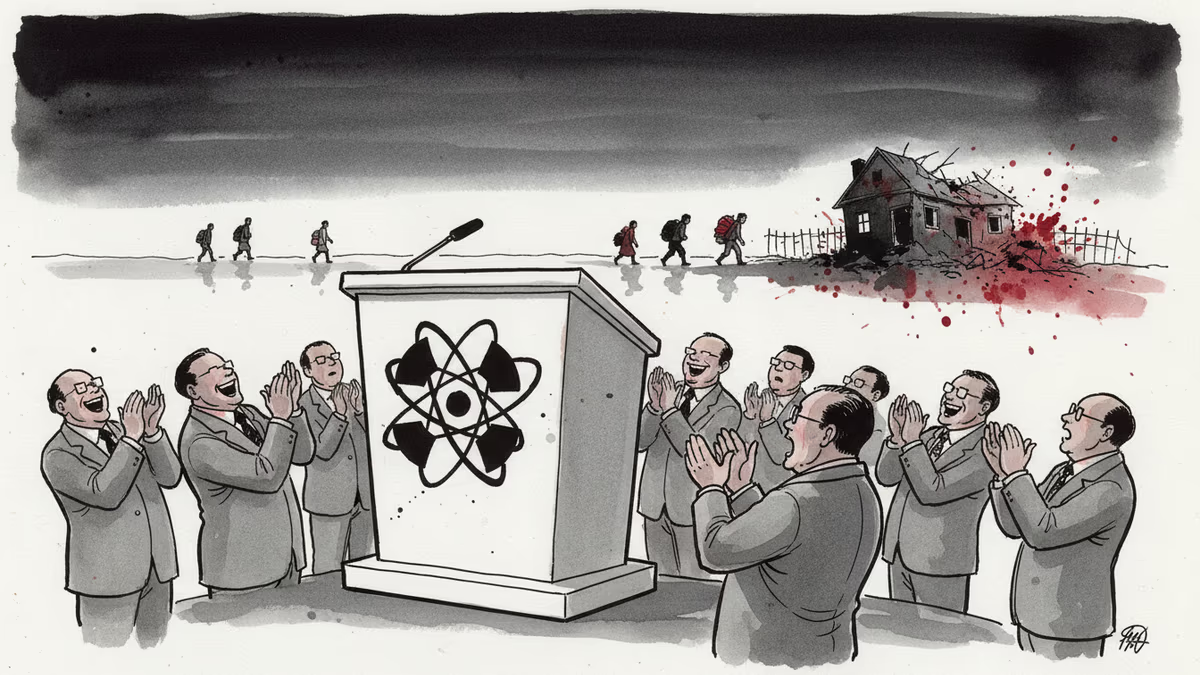
Fifteen years after Fukushima, the global nuclear community speaks of lessons learned. But whose lessons? And at whose expense? A critical look at how disaster narratives erase victims.
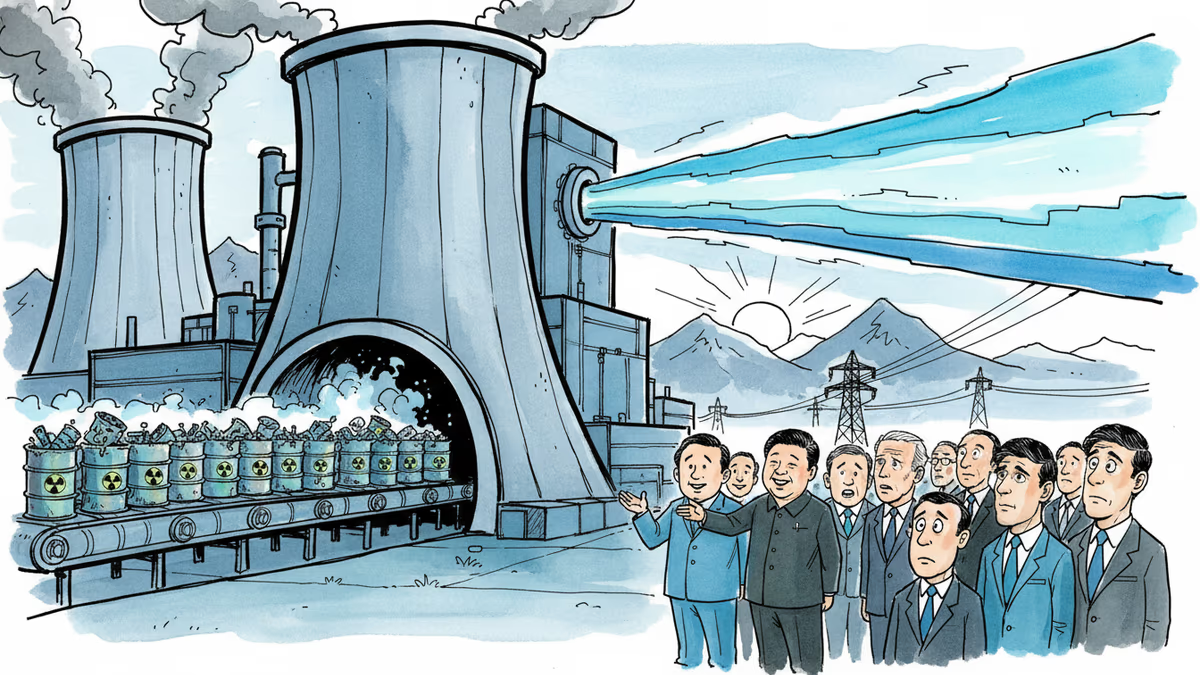
China unveils accelerator-driven subcritical systems (ADS) that burn nuclear waste for energy, claiming to solve humanity's power needs for 1000 years. Global implications and safety concerns analyzed.
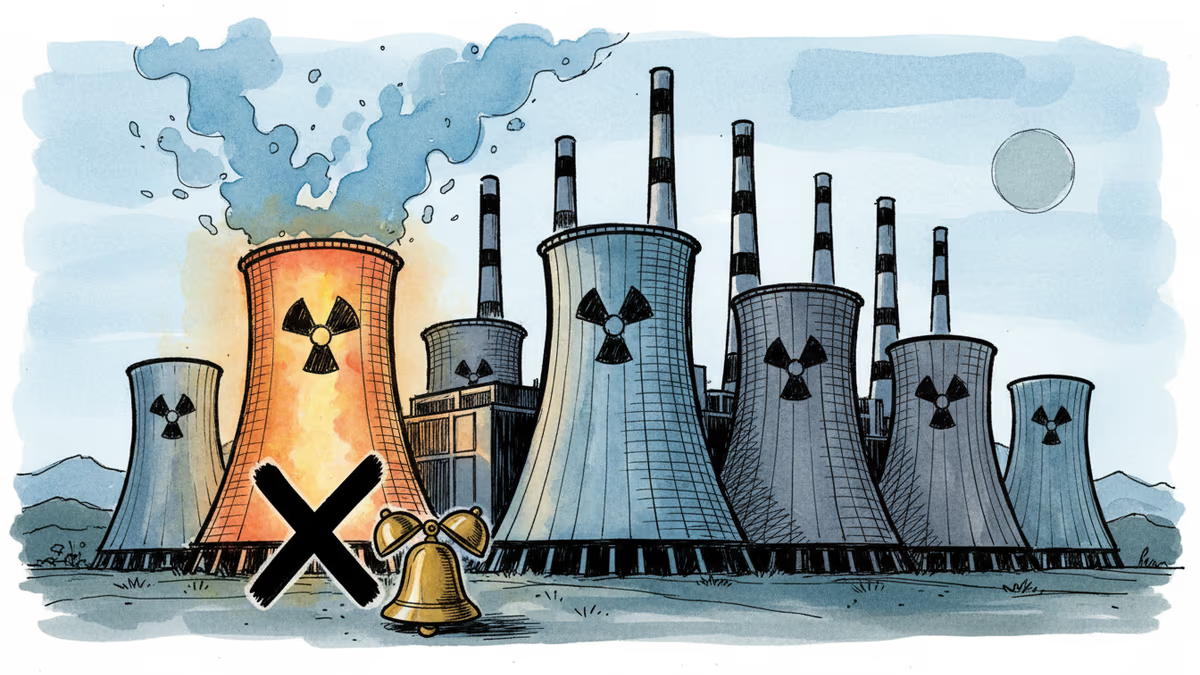
After 13 years offline, Japan restarts the world's largest nuclear plant. What this means for global energy transition and geopolitics.

TEPCO shut down its first restarted reactor since the 2011 disaster on Jan 22, 2026, after a control rod alarm went off just five hours into operation at Kashiwazaki-Kariwa.
Fifteen years after Fukushima, the global nuclear community speaks of lessons learned. But whose lessons? And at whose expense? A critical look at how disaster narratives erase victims.
China unveils accelerator-driven subcritical systems (ADS) that burn nuclear waste for energy, claiming to solve humanity's power needs for 1000 years. Global implications and safety concerns analyzed.
After 13 years offline, Japan restarts the world's largest nuclear plant. What this means for global energy transition and geopolitics.
TEPCO shut down its first restarted reactor since the 2011 disaster on Jan 22, 2026, after a control rod alarm went off just five hours into operation at Kashiwazaki-Kariwa.
Thoughts
Share your thoughts on this article
Sign in to join the conversation