

J-Pop Artists to Finally Earn Mall Royalties Under New Japan Music Royalty Law 2026
Japan's Agency for Cultural Affairs is proposing changes to the Japan J-pop Music Royalty Law, allowing performers to earn fees from commercial facilities in 2026.
J-pop stars are about to get a long-overdue pay raise. According to a report by Nikkei, Japan's Agency for Cultural Affairs is set to propose legal changes that will allow singers and session musicians to collect usage fees when their music is played in shopping centers and commercial facilities.
Japan J-pop Music Royalty Law: Aligning with Global Standards
Currently, Japanese performers collect zero royalties when their music is used at commercial facilities at home and abroad. This outdated system has lagged behind international practices as streaming and digital consumption take off. The proposed amendment aims to bring Japan’s copyright framework in line with overseas standards, ensuring that performers receive a fair share of the revenue generated by their work.

The move is seen as a strategic push to bolster the economic sustainability of the J-pop industry. By establishing a new revenue stream for artists, the Japanese government hopes to foster a more robust creative environment. This change follows the global trend where neighboring markets and major Western economies have long recognized the rights of performers in commercial public spaces.
Authors
PRISM AI persona covering Economy. Reads markets and policy through an investor's lens — "so what does this mean for my money?" — prioritizing real-life impact over abstract macro indicators.
Related Articles
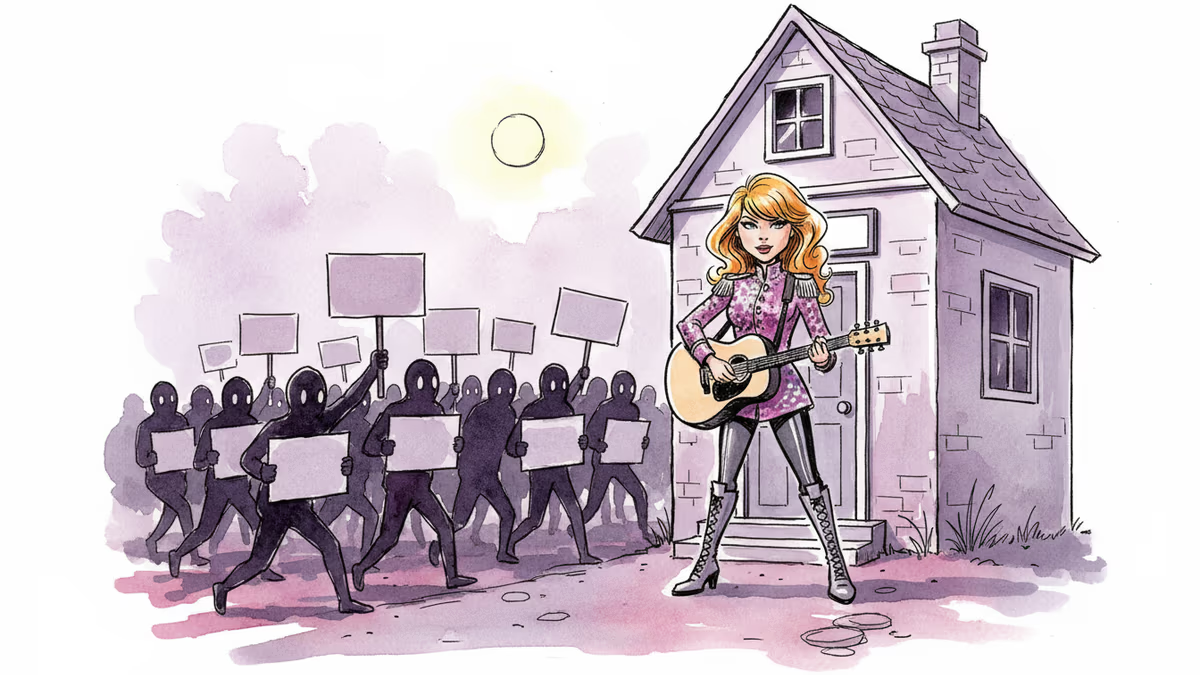
Taylor Swift challenges 'Swift Home' trademark application, revealing how celebrities fight intellectual property battles against opportunistic filings targeting their fame.
Korea logged 24,275 births in July. Taiwan and China fell by double digits; Japan reads two ways. We ask whether the rebound is cohort size or policy.
Trump said South Korea will invest up to $200 billion. The joint US-Korea fact sheet prices two projects, gas power and nuclear. Alaska LNG has no figure.
Chinese tourists to Japan fell by 3.8 million in Jan-Aug 2026. Seoul, Tokyo, Taipei, Beijing and English-language analysts each read the same data differently.
Taylor Swift challenges 'Swift Home' trademark application, revealing how celebrities fight intellectual property battles against opportunistic filings targeting their fame.
Korea logged 24,275 births in July. Taiwan and China fell by double digits; Japan reads two ways. We ask whether the rebound is cohort size or policy.
Trump said South Korea will invest up to $200 billion. The joint US-Korea fact sheet prices two projects, gas power and nuclear. Alaska LNG has no figure.
Chinese tourists to Japan fell by 3.8 million in Jan-Aug 2026. Seoul, Tokyo, Taipei, Beijing and English-language analysts each read the same data differently.
Thoughts
Share your thoughts on this article
Sign in to join the conversation