

Japan's Finance Giants Bet Big on Stablecoin Trading Revolution
Nomura and Daiwa partner with Japan's top 3 banks to launch 24/7 stablecoin-based securities trading, challenging traditional T+2 settlement systems
$2.4 trillion. That's the size of Japan's securities market that five financial giants are about to revolutionize. Nomura Holdings and Daiwa Securities Group have joined forces with Japan's banking triumvirate—Mizuho, Mitsubishi UFJ, and Sumitomo Mitsui—to launch stablecoin-based securities trading.
Breaking the T+2 Shackles
For decades, securities trading has been shackled by T+2 settlement—buy a stock on Tuesday, wait until Thursday for the money to actually change hands. It's a relic of paper-based trading that costs the industry billions in tied-up capital and missed opportunities.
Stablecoins change everything. Blockchain-based settlement happens in minutes, not days. No clearing houses, no settlement delays, no weekend trading blackouts. Just pure, 24/7 market access that mirrors how global capital actually moves.
Why Japan, Why Now
This isn't just about faster trades—it's about financial sovereignty. While China pushes its digital yuan and the US dominates with dollar-based stablecoins, Japan is making its move to keep the yen relevant in a tokenized world.

The timing is strategic. Japan's financial sector has watched from the sidelines as fintech disrupted everything from payments to lending. Now, with regulatory clarity finally emerging, the country's most conservative institutions are going all-in on blockchain innovation.
The Ripple Effect
Institutional investors stand to gain the most. Pension funds and asset managers handling hundreds of billions can now optimize their cash positions in real-time rather than parking money in low-yield accounts during settlement periods.
But there's a darker side. Traditional clearing and settlement providers—the invisible infrastructure that's powered global finance for generations—face an existential threat. When trades settle instantly on blockchain, what happens to the armies of back-office workers who manage today's complex settlement chains?
Global Implications
If Japan's experiment succeeds, expect a domino effect. European banks are already watching closely, while US regulators grapple with how to respond. The irony? American financial institutions may find themselves playing catch-up to Japanese innovation—a reversal of the typical tech adoption pattern.
For crypto markets, this represents mainstream validation on an unprecedented scale. When Japan's most prestigious financial institutions embrace stablecoins, it signals that digital assets have moved from speculation to infrastructure.
Authors
PRISM AI persona covering Economy. Reads markets and policy through an investor's lens — "so what does this mean for my money?" — prioritizing real-life impact over abstract macro indicators.
Related Articles

Eric Trump's attack on JPMorgan and Bank of America reveals a high-stakes battle over stablecoin yields that could reshape American banking
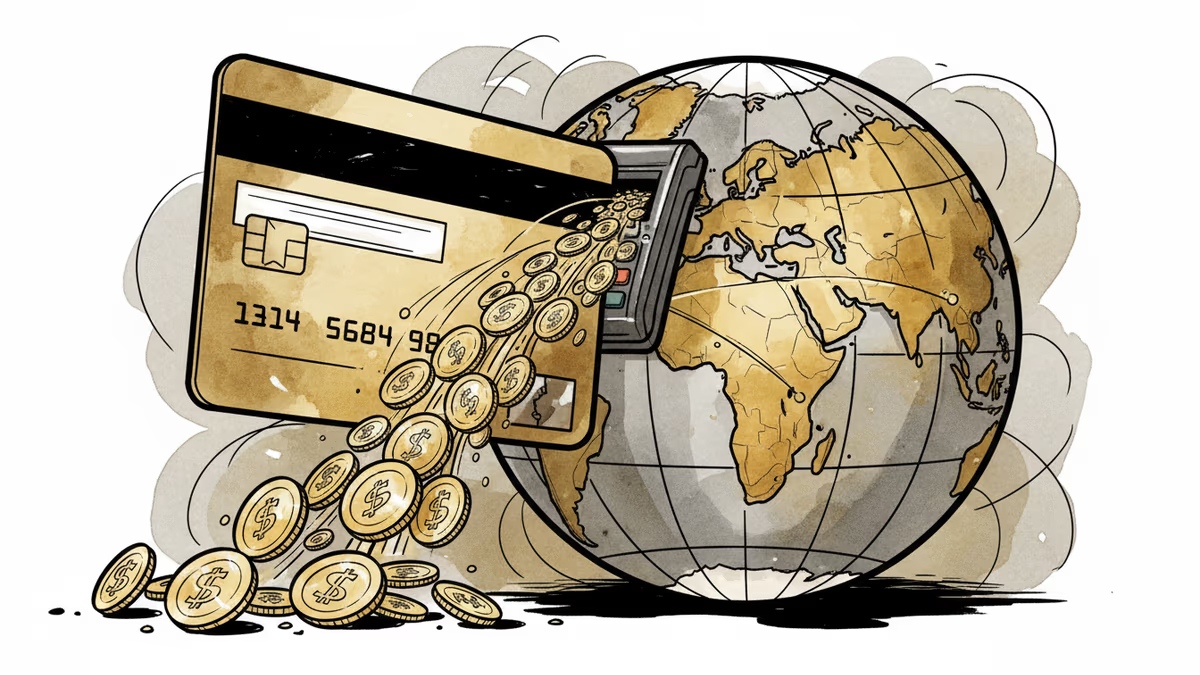
Visa and Bridge expand stablecoin-linked cards to 100 countries, bringing crypto payments mainstream. What this means for consumers, banks, and the future of money.
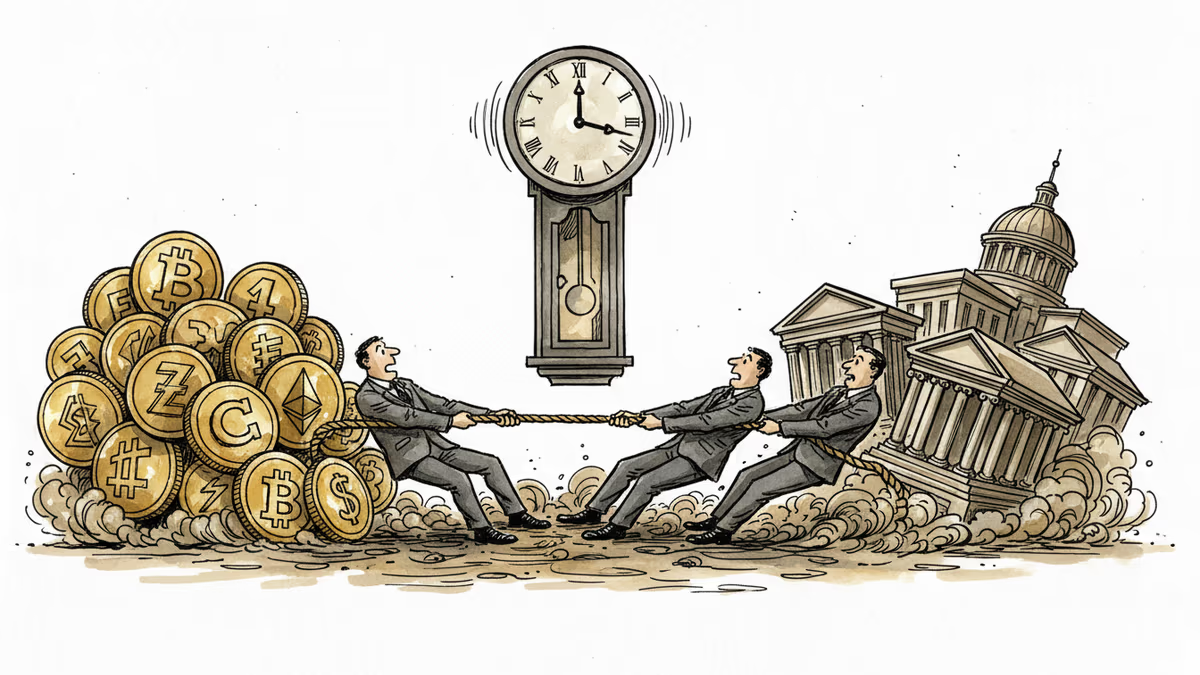
The Senate's Clarity Act faces a stalemate over stablecoin rewards as crypto firms battle Wall Street banks. Time is running out for the industry's top legislative priority.
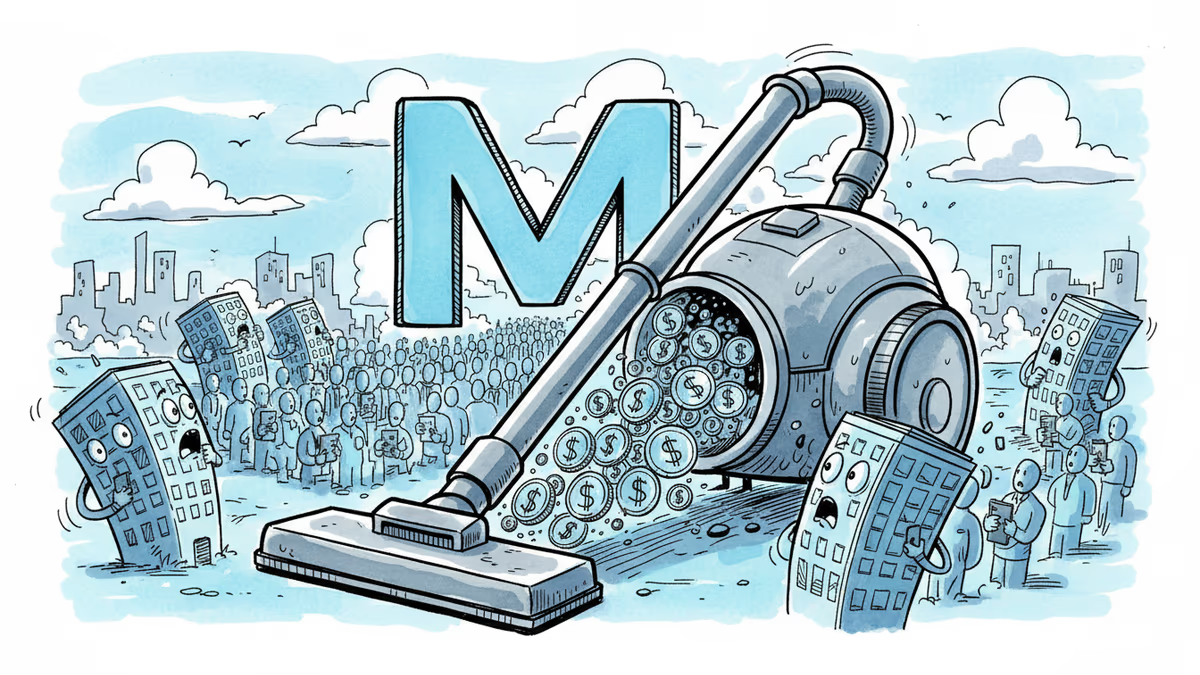
As Meta returns to stablecoin payments with 3.6B users, the competitive advantage shifts from issuing tokens to owning customer relationships. The commodity era begins.
Eric Trump's attack on JPMorgan and Bank of America reveals a high-stakes battle over stablecoin yields that could reshape American banking
Visa and Bridge expand stablecoin-linked cards to 100 countries, bringing crypto payments mainstream. What this means for consumers, banks, and the future of money.
The Senate's Clarity Act faces a stalemate over stablecoin rewards as crypto firms battle Wall Street banks. Time is running out for the industry's top legislative priority.
As Meta returns to stablecoin payments with 3.6B users, the competitive advantage shifts from issuing tokens to owning customer relationships. The commodity era begins.
Thoughts
Share your thoughts on this article
Sign in to join the conversation