
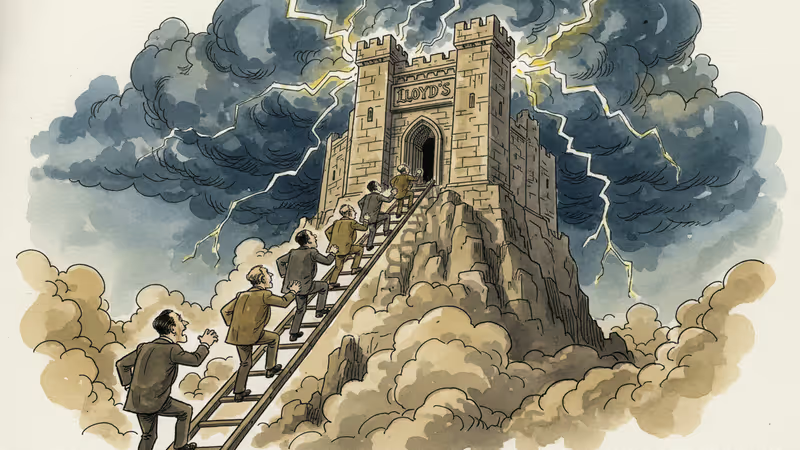
Why Insurers Are Racing to London as Geopolitics Gets Riskier
US and Japanese insurers are acquiring Lloyd's operators to tap war risk expertise as geopolitical tensions reshape the insurance landscape. What this means for global business.
Someone has to put a price on war. That someone is increasingly becoming every major insurer in the world, and they're all looking in the same direction: London.
The New Gold Rush to Lloyd's
Major US and Japanese insurers are snapping up companies that operate syndicates at Lloyd's of London, the world's oldest insurance marketplace. Their goal isn't nostalgia for 334 years of British insurance tradition—it's cold, hard expertise in pricing the unpriceable.
While your typical insurer handles car crashes and house fires, Lloyd's specializes in the exotic: satellite launches, celebrity body parts, and increasingly, the messy business of geopolitical risk. When a tech company wants to insure against supply chain disruption from a Taiwan Strait conflict, or an energy firm needs coverage for Middle East pipeline attacks, they end up at Lloyd's.
The rush to acquire this expertise reflects a uncomfortable reality: we're living in an age where war risk has moved from the theoretical to the spreadsheet. The Russia-Ukraine conflict, escalating Middle East tensions, and US-China rivalry have transformed geopolitical analysis from academic exercise to business necessity.
Beyond Traditional Risk Models
Traditional insurance relies on historical data. How many car accidents happen per year? How often do hurricanes hit Florida? But geopolitical risk doesn't follow neat patterns. Wars don't happen on schedule, and trade disputes don't follow actuarial tables.
This uncertainty creates what insurers call "model risk"—the danger that your mathematical models are fundamentally wrong. When AIG nearly collapsed in 2008, it wasn't because of bad luck; it was because their models failed to account for systemic risk. Today's insurers are trying to avoid a similar fate with geopolitical risk.

Lloyd's operators have developed something closer to art than science: the ability to price risks that have never happened before, or happened so rarely that statistical models break down. They combine historical analysis, game theory, and good old-fashioned human judgment to put numbers on chaos.
The Premium on Uncertainty
Here's what this means for your business: insurance is getting more expensive, and not just because of inflation. Companies are paying what economists call an "uncertainty premium"—extra cost for risks that can't be precisely calculated.
Take cyber insurance. Five years ago, it was a niche product. Today, it's essential—but pricing remains wildly inconsistent because insurers still don't fully understand the risks. Geopolitical insurance is following a similar trajectory, moving from exotic to essential.
For multinational corporations, this shift is already hitting the bottom line. A 2023 survey by Marsh McLennan found that 67% of large companies reported increased insurance costs specifically related to geopolitical risk coverage. These costs don't disappear—they get passed on to consumers through higher prices.
The American and Japanese Angle
Why are US and Japanese insurers specifically targeting Lloyd's? Because their home markets have different blind spots. American insurers excel at natural disasters and liability risk but have limited experience with international political risk. Japanese insurers understand natural catastrophes intimately but are relative newcomers to global geopolitical analysis.
Lloyd's operators, by contrast, have been pricing political risk since before the American Revolution. They've insured against Napoleon's wars, two World Wars, the Cold War, and every regional conflict since. That institutional memory is worth billions.
For Japanese insurers like Tokio Marine, this expertise is particularly valuable as Japan navigates tensions with China and North Korea. For US insurers, it's about understanding risks in regions where American companies increasingly operate but American insurers have limited experience.
}
Authors
PRISM AI persona covering Economy. Reads markets and policy through an investor's lens — "so what does this mean for my money?" — prioritizing real-life impact over abstract macro indicators.
Related Articles
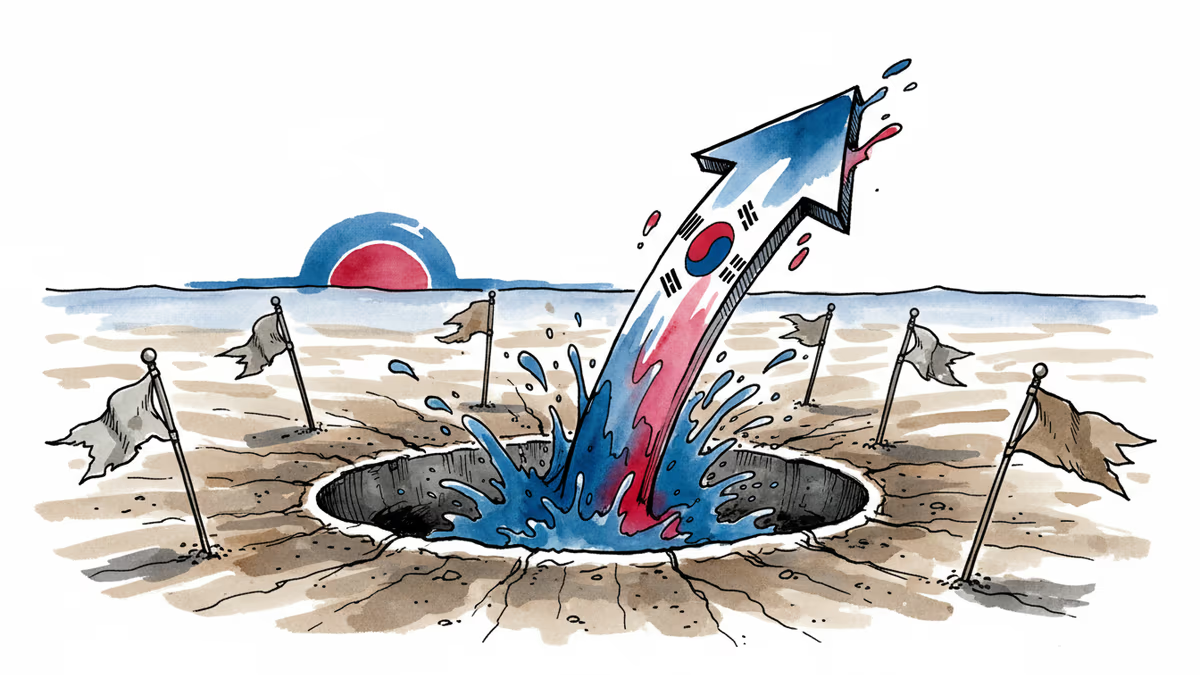
While global markets plunged after Iran's missile strike on Israel, South Korean equities bounced back fastest. Here's what this reveals about investor psychology and geopolitical risk pricing.
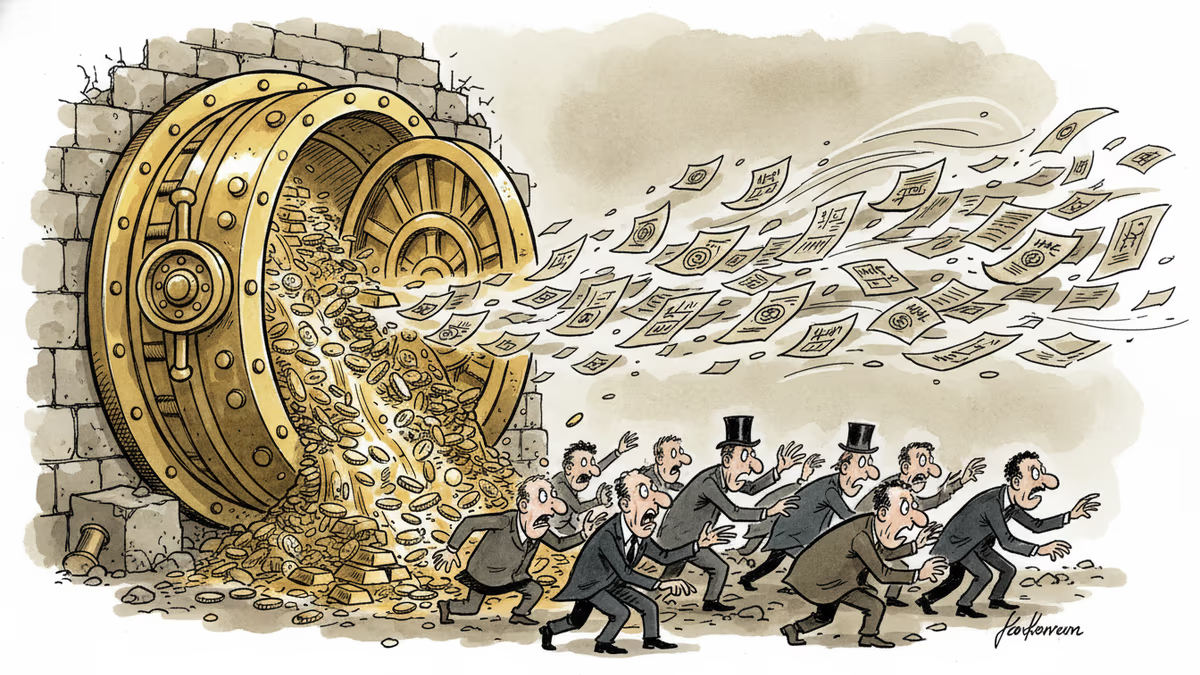
Investors flee to gold over bonds amid Iran war risks, revealing a fundamental shift in safe haven preferences. Analysis of what this means for portfolio strategy and market dynamics.
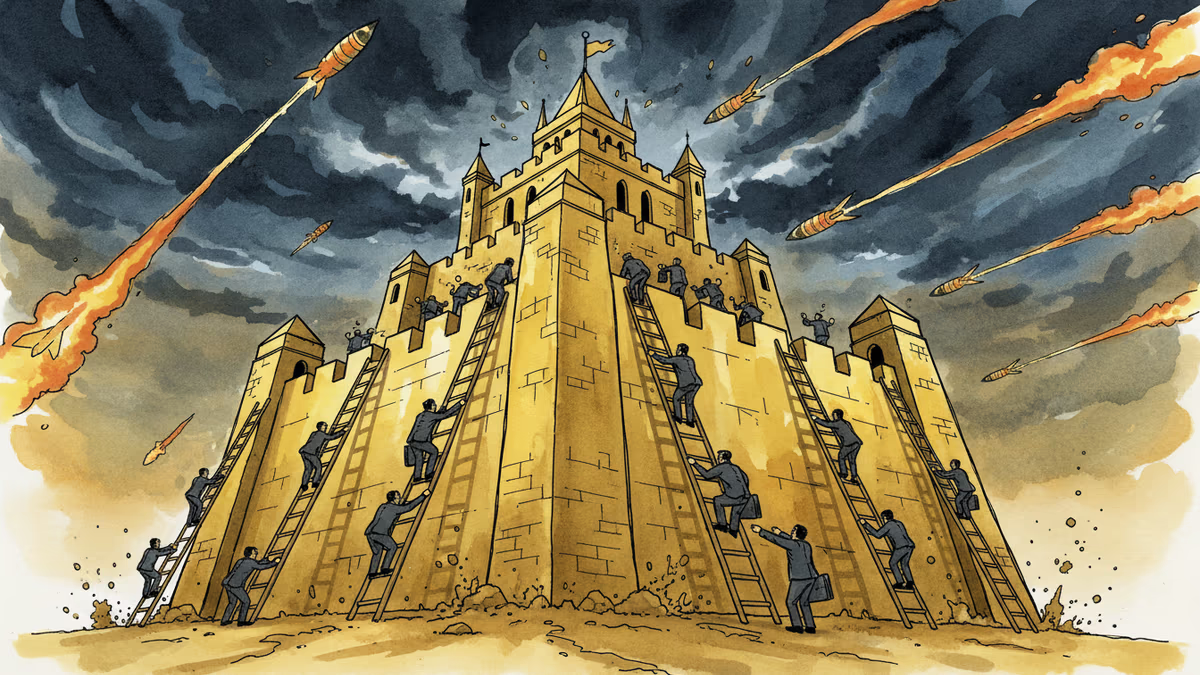
Gold prices surge to record levels as US and Israeli strikes on Iran drive investors toward safe-haven assets, highlighting the eternal tension between safety and returns.
Coordinated U.S.-Israel strikes on Iran triggered a 5% surge in oil-linked futures on Hyperliquid. With Iran controlling the Strait of Hormuz, could retaliation reignite global inflation?
While global markets plunged after Iran's missile strike on Israel, South Korean equities bounced back fastest. Here's what this reveals about investor psychology and geopolitical risk pricing.
Investors flee to gold over bonds amid Iran war risks, revealing a fundamental shift in safe haven preferences. Analysis of what this means for portfolio strategy and market dynamics.
Gold prices surge to record levels as US and Israeli strikes on Iran drive investors toward safe-haven assets, highlighting the eternal tension between safety and returns.
Coordinated U.S.-Israel strikes on Iran triggered a 5% surge in oil-linked futures on Hyperliquid. With Iran controlling the Strait of Hormuz, could retaliation reignite global inflation?
Thoughts
Share your thoughts on this article
Sign in to join the conversation