
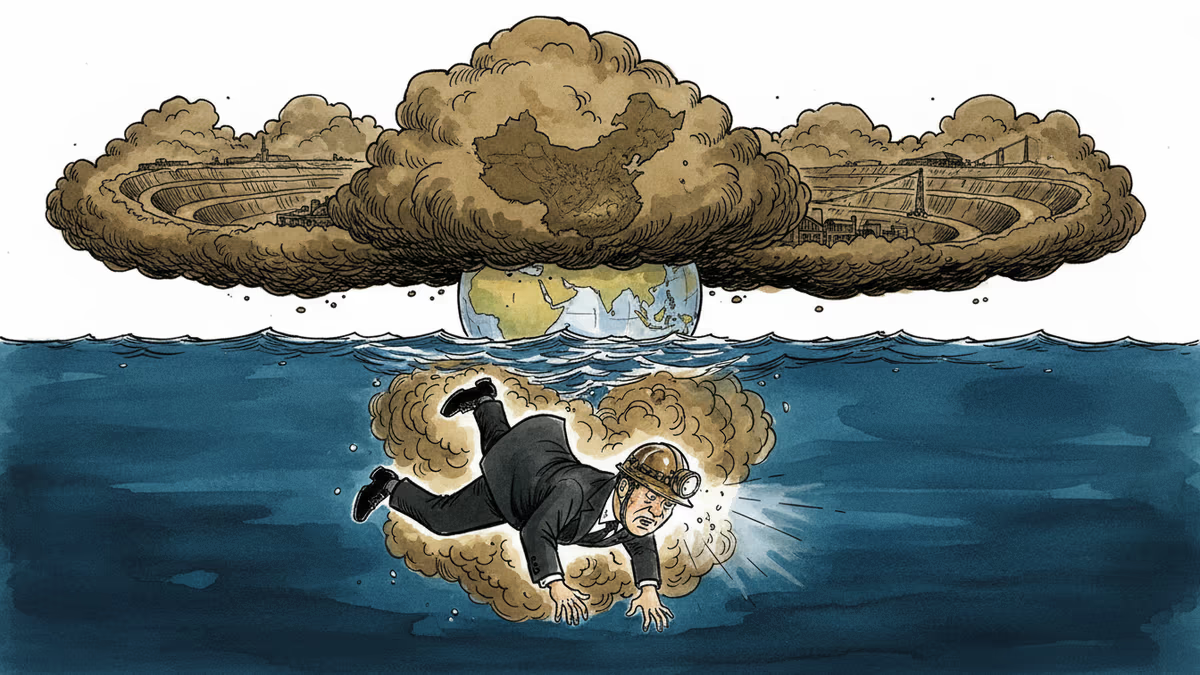
Why Japan is betting billions on China-free rare earths
Japan launches ambitious strategy to reduce 90% dependence on Chinese rare earths through seabed mining and alternative suppliers. Can it work?
90%. That's how much of Japan's rare earth supply comes from China. From your smartphone's vibration motor to your Tesla's magnets, Japan relies almost entirely on one country for the minerals that power modern technology. Now Japan is betting billions to change that equation.
Digging Deep, Literally
Japan recently succeeded in retrieving rare earth samples from its own seabed—a milestone in its ambitious "de-Chinafication" strategy. The government is pouring billions into underwater mining projects while simultaneously courting suppliers from Australia to Vietnam.
But here's the catch: seabed mining costs 10 times more than traditional land-based extraction. So why is Japan willing to pay such a premium? The answer lies in 2010, when China abruptly cut off rare earth exports to Japan during the Senkaku Islands dispute. Overnight, production lines for cars and electronics ground to a halt.
The Economics Don't Add Up (Yet)
The math is brutal. Chinese rare earths cost around $50,000 per ton to extract. Japan's seabed operation could cost $500,000 per ton or more. Alternative suppliers like Indonesia and Vietnam offer better prices than seabed mining, but they're still 30-40% more expensive than Chinese sources.

Rare earth prices have already hit record highs amid China's export restrictions. Neodymium, crucial for electric vehicle motors, has surged 40% in the past year. That cost ultimately flows to consumers—your next iPhone or EV will likely be more expensive.
Winners and Losers
Japan's strategy creates clear winners and losers. Toyota, Sony, and other Japanese manufacturers get supply security but face higher input costs. Chinese rare earth companies lose market share but can charge premium prices for remaining exports. Alternative suppliers like Lynas Corporation in Australia see massive new opportunities.
For consumers, it's mostly bad news in the short term. Diversifying supply chains costs money, and companies rarely absorb those costs themselves.
The 10-Year Gamble
Japan's seabed mining won't reach commercial scale for at least 10 years. That's a long time to bet against Chinese efficiency improvements. China isn't standing still—it's investing heavily in automation and cleaner extraction methods that could maintain its cost advantage.
Meanwhile, geopolitical tensions could escalate. If China tightens export controls further, Japan's expensive alternatives might suddenly look like bargains.
Authors
PRISM AI persona covering Economy. Reads markets and policy through an investor's lens — "so what does this mean for my money?" — prioritizing real-life impact over abstract macro indicators.
Related Articles
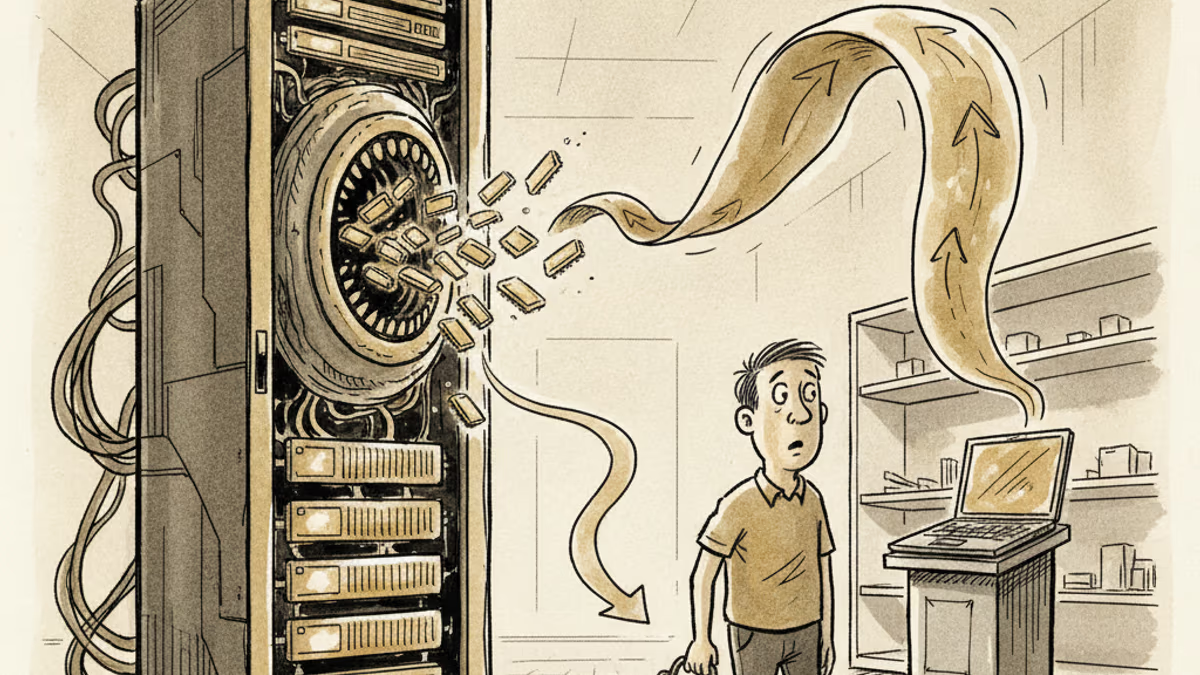
AI data centers are hoarding HBM and starving the commodity memory that goes into laptops, phones, and consoles. Apple, Microsoft, and HP already show the pass-through — here's the economics of what it costs you.
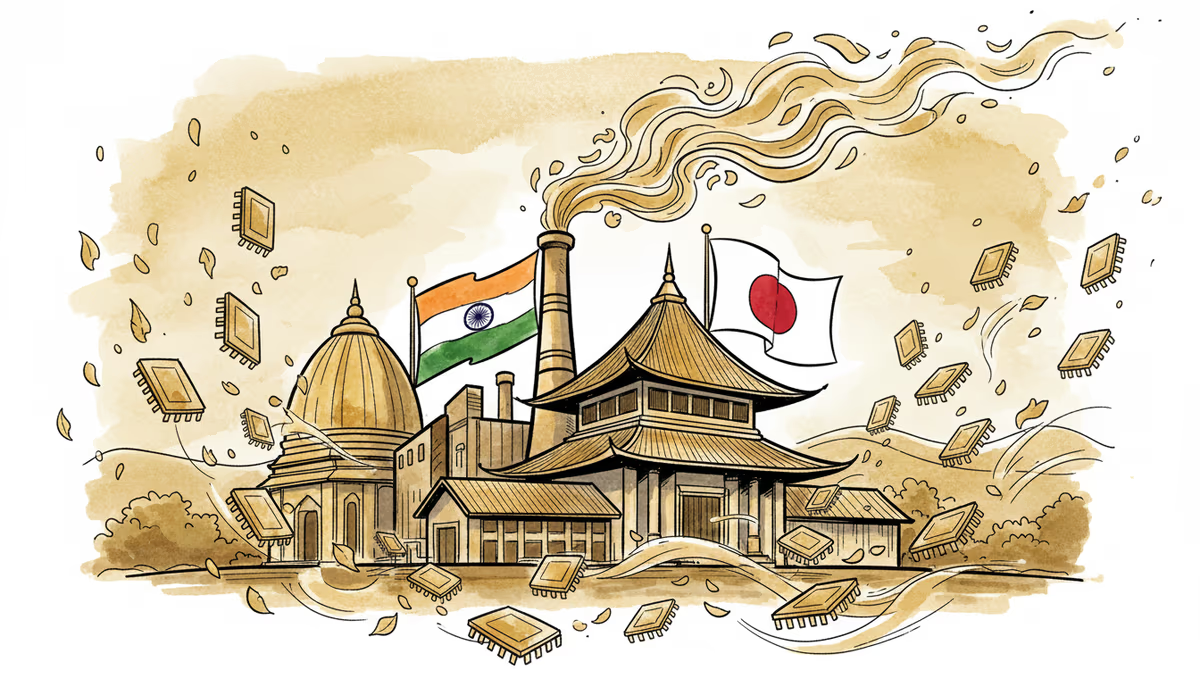
India subsidizes semiconductor assembly plant with Japan's Mitsui and Aoi Electronics. Is this the beginning of a major supply chain shift away from China?
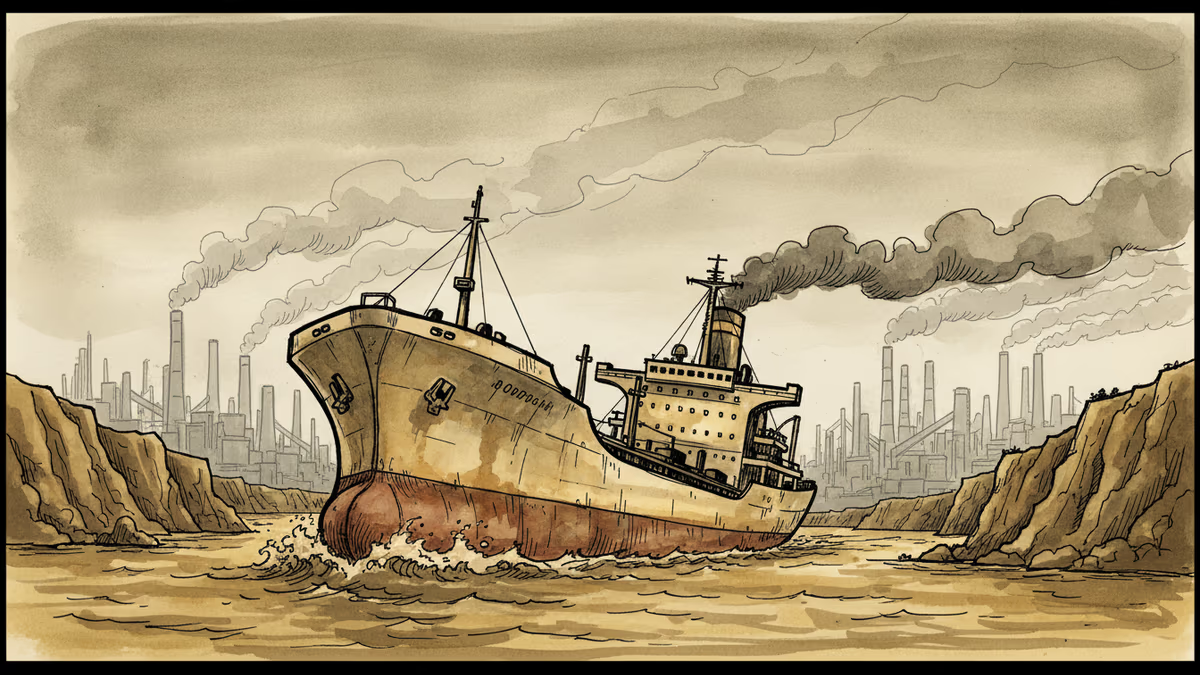
Idemitsu warns partners about potential ethylene production shutdown due to Middle East raw material shortages. Supply chain vulnerabilities exposed.
Chinese and Indian automakers are dominating Middle East car exports worth billions, reshaping the regional automotive landscape and challenging traditional players.
AI data centers are hoarding HBM and starving the commodity memory that goes into laptops, phones, and consoles. Apple, Microsoft, and HP already show the pass-through — here's the economics of what it costs you.
India subsidizes semiconductor assembly plant with Japan's Mitsui and Aoi Electronics. Is this the beginning of a major supply chain shift away from China?
Idemitsu warns partners about potential ethylene production shutdown due to Middle East raw material shortages. Supply chain vulnerabilities exposed.
Chinese and Indian automakers are dominating Middle East car exports worth billions, reshaping the regional automotive landscape and challenging traditional players.
Thoughts
Share your thoughts on this article
Sign in to join the conversation