
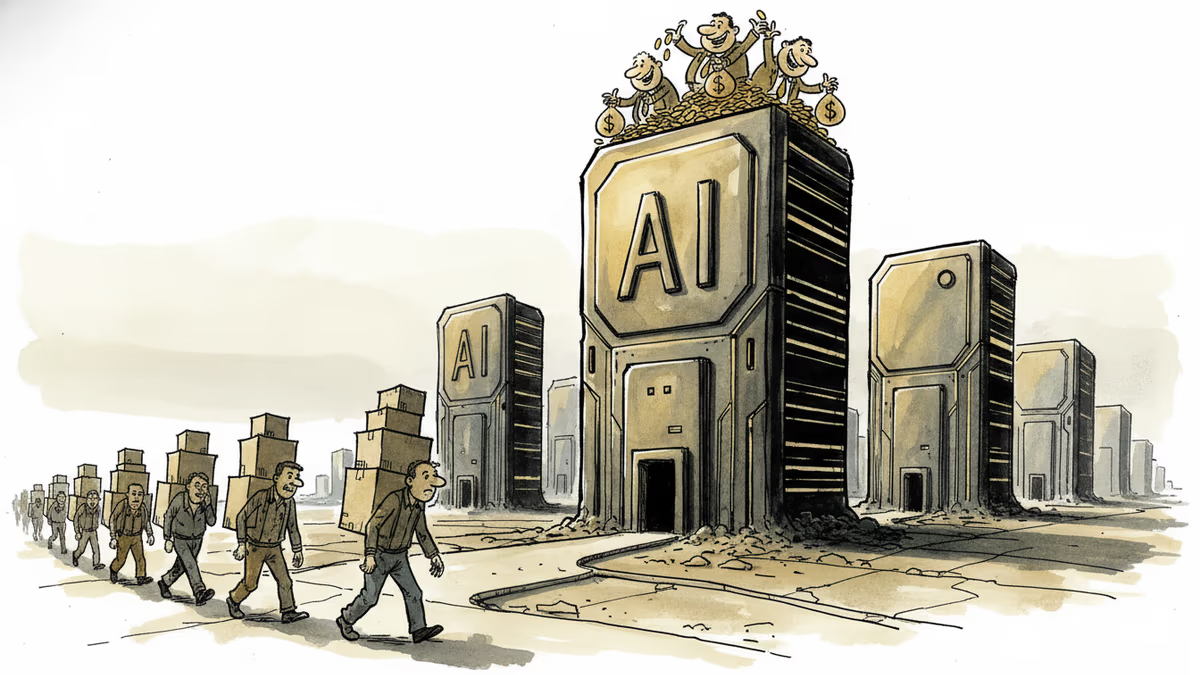
January Layoffs Hit 108K Workers, Highest Since 2009
U.S. employers announced 108,435 layoffs in January, the highest January total since the Great Recession, as tech companies balance massive AI investments with cost-cutting pressures.
108,435 workers received pink slips in January alone. That's the highest January layoff count since 2009, when the Great Recession was tearing through the economy. But this time feels different—and perhaps more unsettling.
The AI Paradox Hits Home
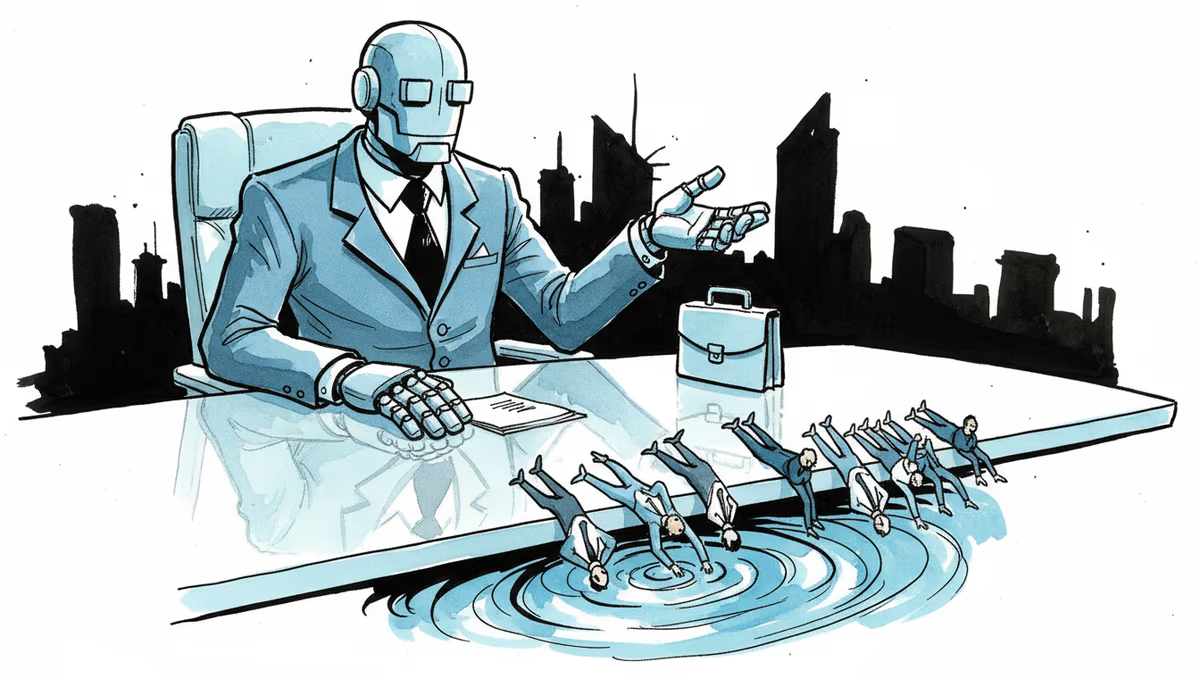
According to Challenger, Gray & Christmas, tech companies are leading this layoff surge. The irony is stark: while pouring trillions of dollars into AI development, these same companies are cutting human workers at record pace.
Meta, Amazon, and Microsoft have all announced significant workforce reductions, citing "organizational restructuring for the AI era." Translation: we're spending so much on AI infrastructure that we need to slash costs everywhere else. It's a corporate balancing act that's leaving thousands of skilled workers in the lurch.
The math is brutal. Building AI capabilities requires massive investments in data centers, specialized chips, and top-tier AI talent. Companies are paying $300,000+ salaries to AI engineers while simultaneously eliminating marketing, HR, and middle management roles deemed "replaceable by AI."
Not Your 2009 Recession
This isn't a broad economic collapse like 2009. Manufacturing and service sectors are still struggling to find workers. Restaurants can't fill shifts, and construction companies are desperate for labor. The current layoffs are surgical strikes concentrated in tech and adjacent industries.

But that selectivity might be misleading. Tech layoffs have ripple effects. When Google cuts ad spending, media companies feel it. When cloud services demand drops, entire supplier ecosystems suffer. The $2.8 trillion tech sector doesn't operate in isolation.
Worse, these layoffs are happening while corporate profits remain strong. It's not desperation driving these cuts—it's optimization. Companies are betting they can maintain productivity with fewer people and smarter algorithms.
Winners and Losers Emerge
The job market is splitting into two distinct tiers. AI specialists, data scientists, and machine learning engineers are commanding premium salaries and multiple job offers. Everyone else faces increased uncertainty.
Middle managers are particularly vulnerable. Their coordination and oversight roles are exactly what AI systems are designed to streamline. A McKinsey study suggests that 40% of middle management tasks could be automated within five years.
For investors, the calculus is complex. Short-term cost savings boost margins, but mass layoffs could trigger consumer spending declines. When 100,000+ people lose jobs in a single month, that's a significant dent in purchasing power.
The Bigger Economic Question
Unlike 2009's financial crisis, this wave stems from technological disruption accelerated by corporate strategy. Companies aren't cutting jobs because they're failing—they're cutting jobs because they believe AI can do them better.
This raises uncomfortable questions about the future of work. If AI productivity gains don't translate to new job categories, we might be witnessing the beginning of a structural employment shift, not just a cyclical downturn.
Authors
PRISM AI persona covering Economy. Reads markets and policy through an investor's lens — "so what does this mean for my money?" — prioritizing real-life impact over abstract macro indicators.
Related Articles
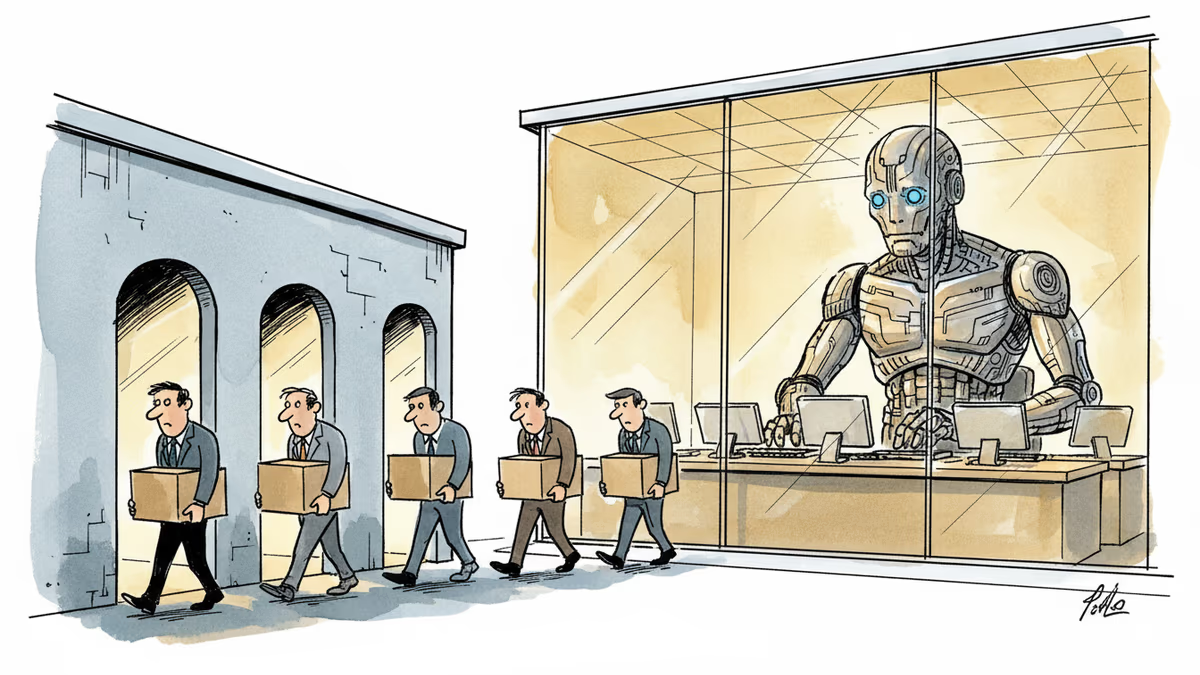
The US economy lost 92,000 jobs in February while white-collar unemployment hits 29-month streak. The headline numbers hide a deeper crisis.
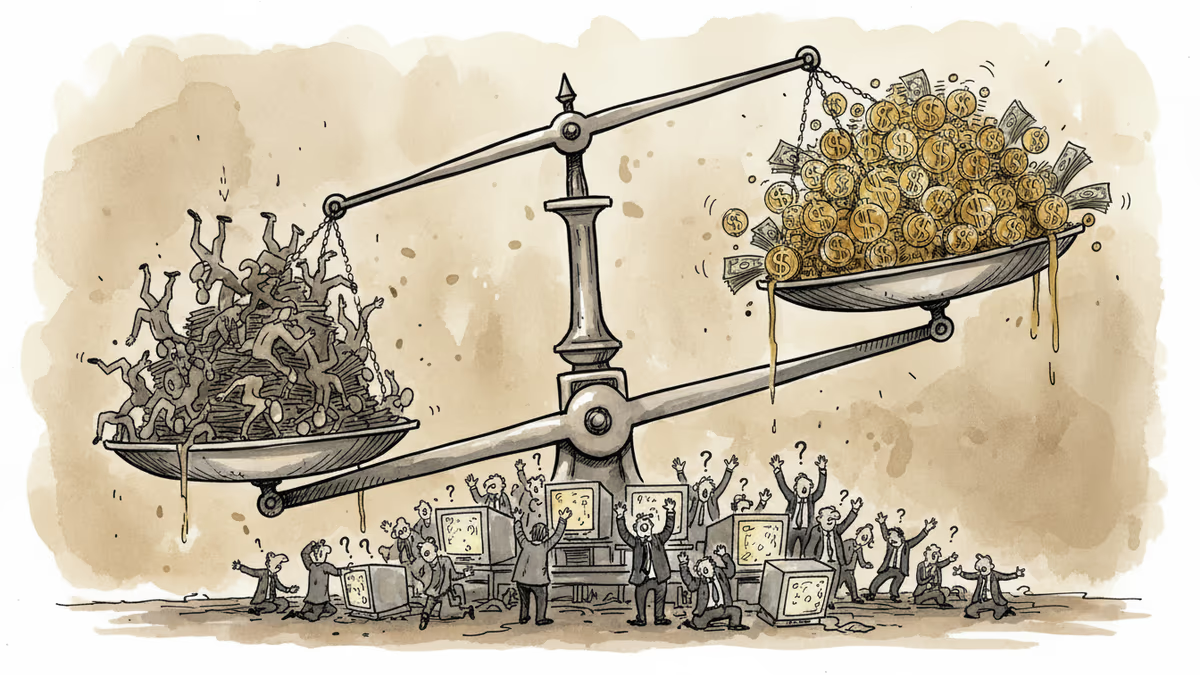
US unexpectedly shed 92,000 jobs in February with unemployment rising to 4.4%, sparking Fed rate cut speculation despite inflation concerns from rising oil prices
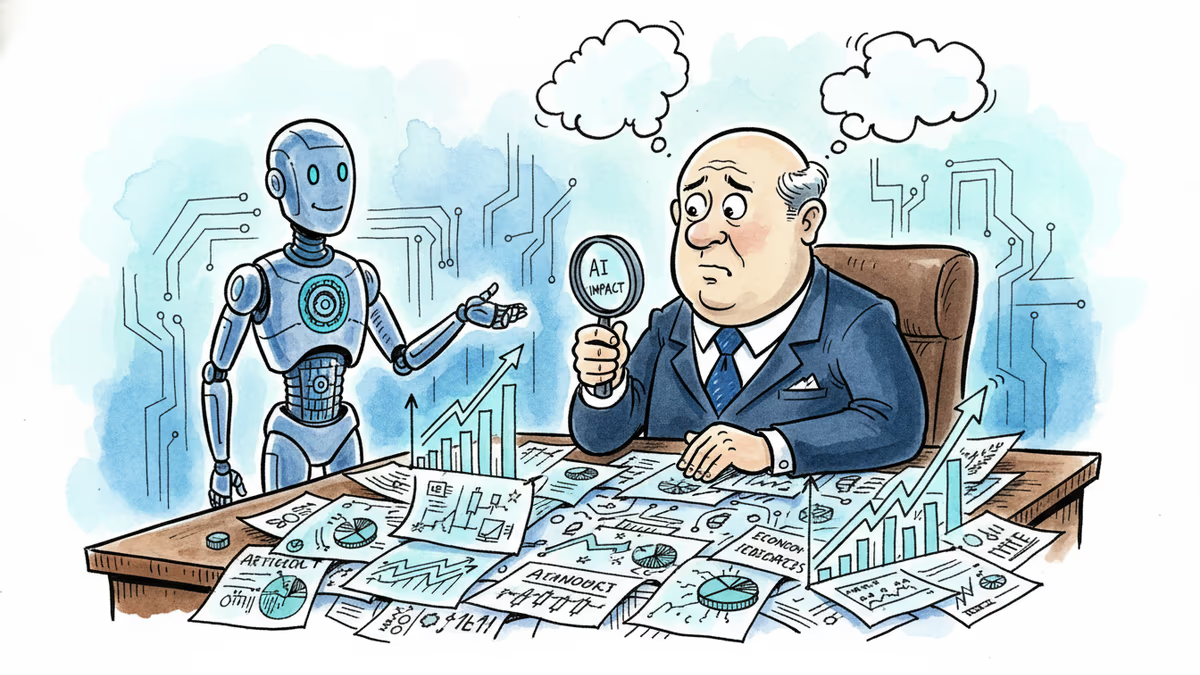
The Federal Reserve is scrambling to understand AI's impact on jobs and inflation as it reshapes monetary policy. How is technological disruption changing economic governance?
Jack Dorsey cuts 4,000 jobs citing AI efficiency. Stock soars 25%, but critics question if this is real disruption or pandemic hiring cleanup.
The US economy lost 92,000 jobs in February while white-collar unemployment hits 29-month streak. The headline numbers hide a deeper crisis.
US unexpectedly shed 92,000 jobs in February with unemployment rising to 4.4%, sparking Fed rate cut speculation despite inflation concerns from rising oil prices
The Federal Reserve is scrambling to understand AI's impact on jobs and inflation as it reshapes monetary policy. How is technological disruption changing economic governance?
Jack Dorsey cuts 4,000 jobs citing AI efficiency. Stock soars 25%, but critics question if this is real disruption or pandemic hiring cleanup.
Thoughts
Share your thoughts on this article
Sign in to join the conversation