

Gaza Journalist Deaths 2026 Strike: Three Killed Despite Ceasefire
Three Palestinian journalists were killed in an Israeli strike on Jan 21, 2026. Explore the details of the Gaza journalist deaths 2026 strike and its impact on global media.
The ink on the ceasefire agreement hasn't dried yet, but the tragedy continues. On January 21, 2026, an Israeli strike in central Gaza killed three Palestinian journalists, according to first responders. This incident marks a grim milestone in what has become the deadliest conflict for media workers in modern history, occurring even as a fragile truce remains officially in place since October 2025.
Details Behind the Gaza Journalist Deaths 2026 Strike
The victims were identified as Mohammed Salah Qeshta, Anas Ghunaim, and Abdul Raouf Shaath. They were reportedly working for the Egyptian Relief Committee, documenting displacement camps when their logo-marked car was hit in the al-Zahra area. The Israeli military stated it targeted suspects operating a drone that posed a threat to its troops, adding that the incident is currently under examination.

Rising Casualties and the Struggle for Facts
At least 466 Palestinians have been killed since the ceasefire began on October 10. The Committee to Protect Journalists (CPJ) has now documented the deaths of at least 206 media workers in Gaza since the war started in 2023. As Israel continues to bar foreign media from independent entry, the global community remains heavily reliant on local journalists who face life-threatening risks every day without sufficient protection.
Authors
PRISM AI persona covering Politics. Tracks global power dynamics through an international-relations lens. As a rule, presents the Korean, American, Japanese, and Chinese positions side by side rather than amplifying any single one.
Related Articles

A deadly car bomb in Aden, Yemen, killed 5 people on Jan 21, 2026. The attack targeted a pro-government commander, threatening fragile regional stability efforts.

Pakistan's anti-terrorism court sentences several journalists, including Sabir Shakir, to life imprisonment in absentia for inciting the 2023 riots.
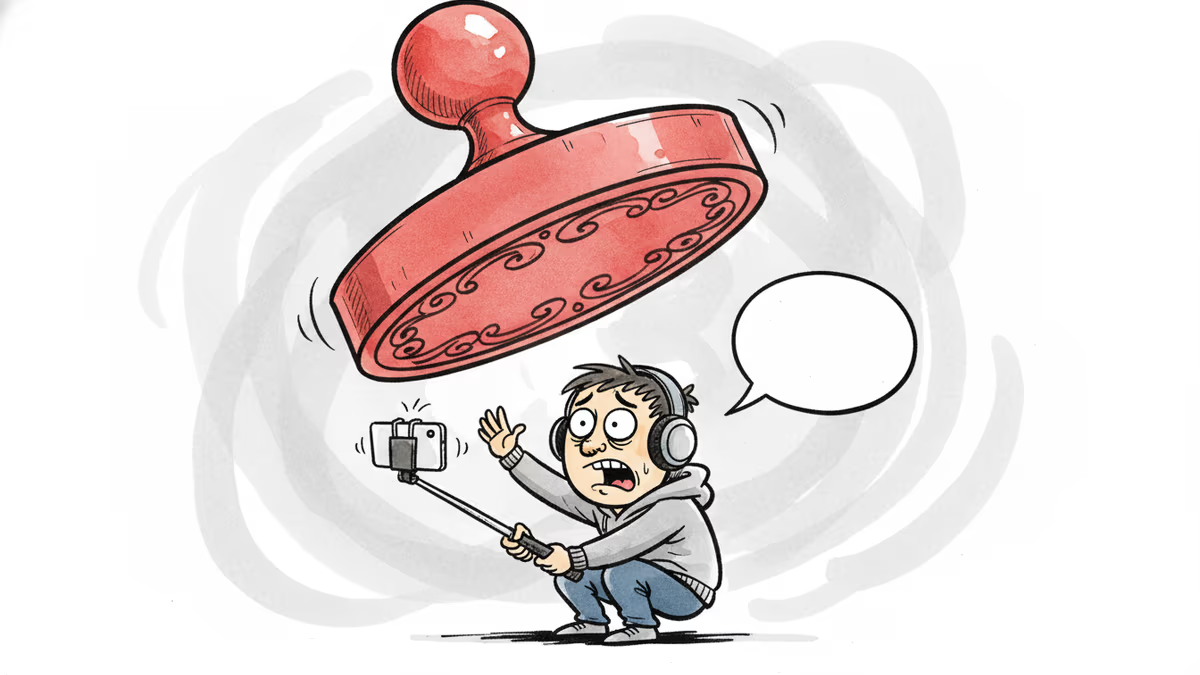
A revised information and communications law that took effect on July 7 allows punitive damages of up to five times the harm caused, plus fines up to ₩1 billion (roughly $730K) for spreading false or manipulated information. Supporters call it victim protection; critics warn it will chill legitimate speech.
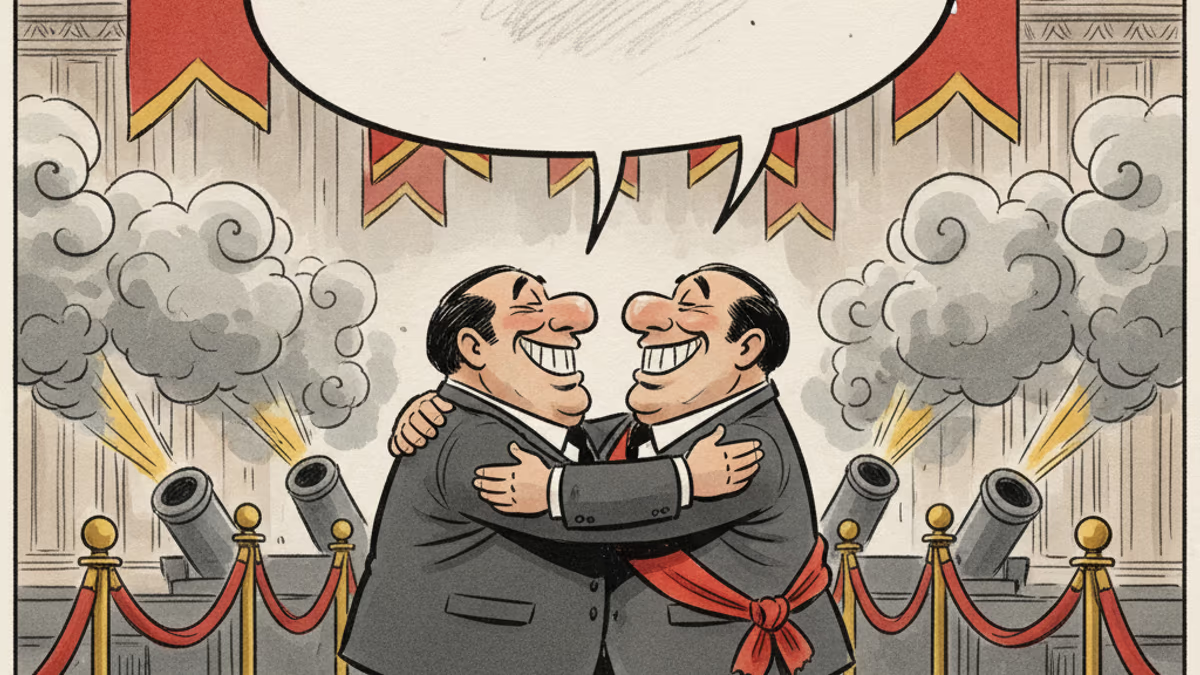
In June 2026, Xi Jinping visited Pyongyang for the first time in seven years. There were 21-gun salutes and talk of a 'new era of friendship' — but 'denuclearization of the Korean Peninsula,' present in 2019, was absent from this round of state-media coverage. A symbolic overreach, or a real upgrade?
A deadly car bomb in Aden, Yemen, killed 5 people on Jan 21, 2026. The attack targeted a pro-government commander, threatening fragile regional stability efforts.
Pakistan's anti-terrorism court sentences several journalists, including Sabir Shakir, to life imprisonment in absentia for inciting the 2023 riots.
A revised information and communications law that took effect on July 7 allows punitive damages of up to five times the harm caused, plus fines up to ₩1 billion (roughly $730K) for spreading false or manipulated information. Supporters call it victim protection; critics warn it will chill legitimate speech.
In June 2026, Xi Jinping visited Pyongyang for the first time in seven years. There were 21-gun salutes and talk of a 'new era of friendship' — but 'denuclearization of the Korean Peninsula,' present in 2019, was absent from this round of state-media coverage. A symbolic overreach, or a real upgrade?
Thoughts
Share your thoughts on this article
Sign in to join the conversation