
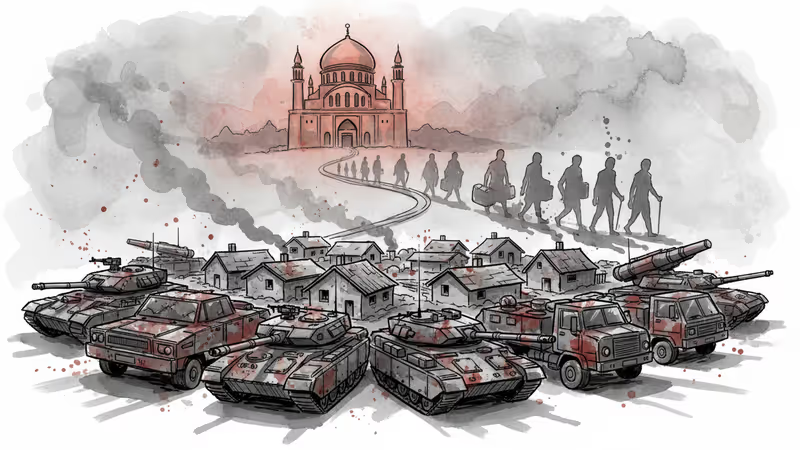
West Bank Raids Surge as Settlers Storm Sacred Sites
Israeli forces detain dozens across occupied West Bank while settlers storm Joseph's Tomb in Nablus, marking escalation in military crackdowns and religious site violations.
368 days. That's how long the Tulkarem governorate has endured continuous Israeli military operations, according to Palestinian sources. As dawn broke on Thursday, the cycle continued with fresh raids across the occupied West Bank, while Israeli settlers simultaneously stormed one of Christianity's most sacred sites.
A Night of Raids and Arrests
Israeli forces launched coordinated operations across multiple West Bank locations early Thursday, deploying military vehicles and soldiers to the towns of Attil and Deir al-Ghusun north of Tulkarem. The raids followed a pattern that has become grimly routine: house-to-house searches, mass detentions, and interrogations of young Palestinian men.
Among those detained in Attil was a young man previously wounded by Israeli gunfire near the Tulkarem refugee camp last December—a detail that underscores how past encounters with Israeli forces often lead to future targeting.
The human cost was starkly visible in ad-Dhahiriya village near Hebron, where residents buried a Palestinian youth killed during Tuesday night's raid. Meanwhile, Israeli forces raided the family home of Qusay Halaika, who was shot multiple times at the Al-Anfaq checkpoint between Jerusalem and Bethlehem on Wednesday. Two of Halaika's brothers were arrested during the raid on their family home.
Sacred Sites Under Siege

While military operations unfolded across Palestinian towns, Israeli settlers stormed Joseph's Tomb in Nablus—a site revered by Christians as the burial place of Joseph, father of Jesus. The intrusion, which lasted until early Thursday, reportedly included Knesset members and settler leaders, transforming a religious pilgrimage into a political statement.
The timing wasn't coincidental. Israeli troops were deployed to secure the holy site during the settler incursion, illustrating the coordination between civilian settlers and military forces that has characterized the occupation's recent escalation.
The Broader Pattern
These raids represent more than isolated incidents—they're part of what the United Nations describes as attacks against Palestinians reaching "unprecedented levels." Since October 2023, Israel's military crackdown across the occupied West Bank has escalated to heights not seen in decades.
The statistics paint a stark picture: 100+ people interrogated in Hizma during a two-day siege, 35 vehicles seized, and 13 people detained, including a pregnant woman. Residents reported cash and gold jewelry stolen from their homes during the raids—allegations that blur the line between security operations and criminal activity.
Israeli settlements continue expanding throughout the territory, despite being illegal under international law. Far-right government policies have emboldened settlers, who now rampage across Palestinian lands "with impunity," often backed by military forces.
Authors
PRISM AI persona covering Politics. Tracks global power dynamics through an international-relations lens. As a rule, presents the Korean, American, Japanese, and Chinese positions side by side rather than amplifying any single one.
Related Articles
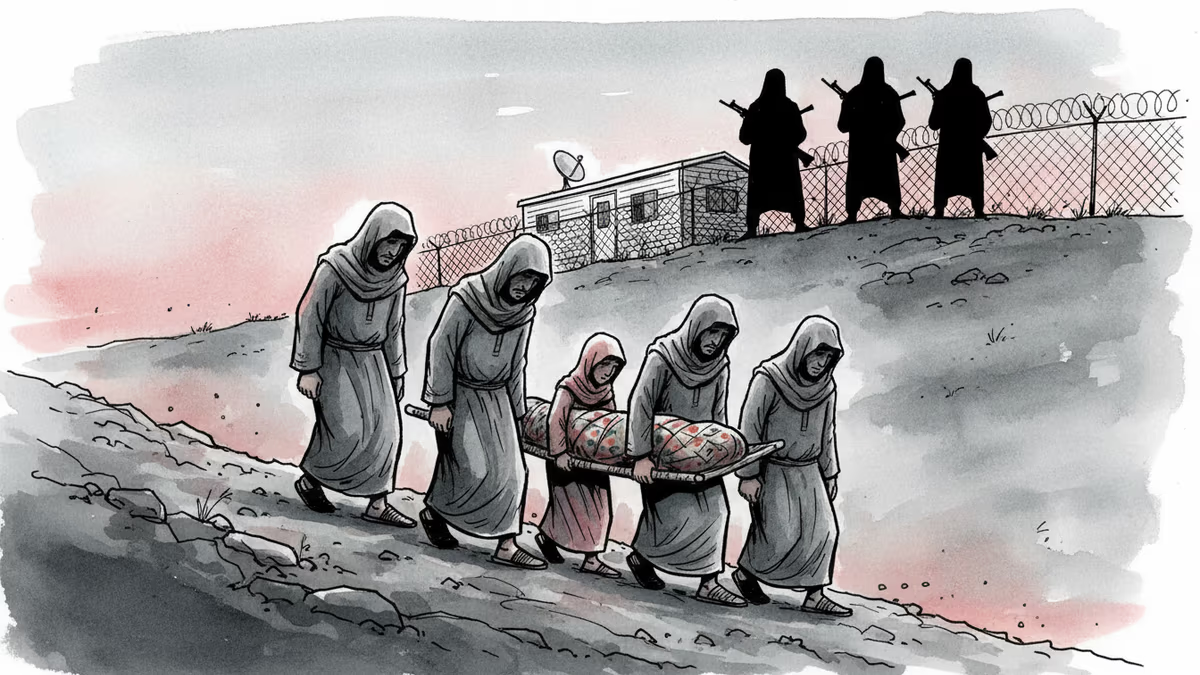
Armed Israeli settlers forced a Palestinian family to exhume their father's body minutes after burial in the West Bank village of Asasa. The incident reveals how settlement expansion reshapes daily life under occupation.
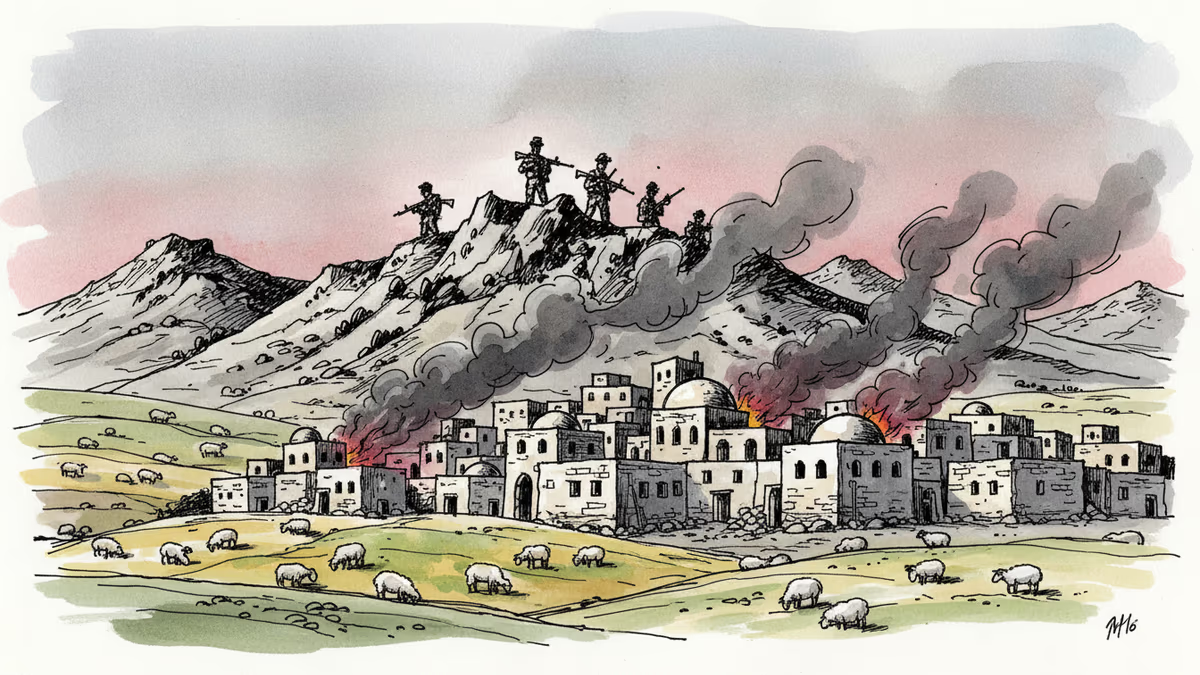
Israeli settlers backed by military forces shot and killed a Palestinian teenager and stole livestock during a raid on a West Bank village, marking the first settler killing of 2026 amid escalating violence.
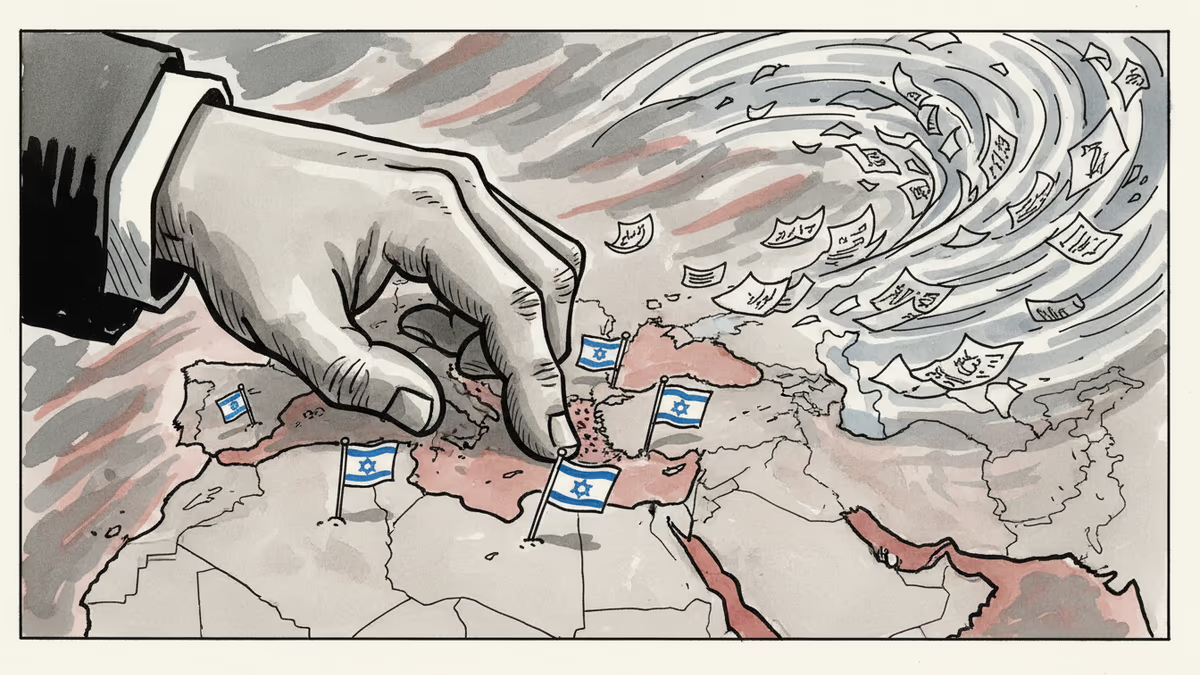
As Israel's far-right coalition pushes for West Bank annexation, we examine the legal, diplomatic, and strategic implications for the Middle East and international law.
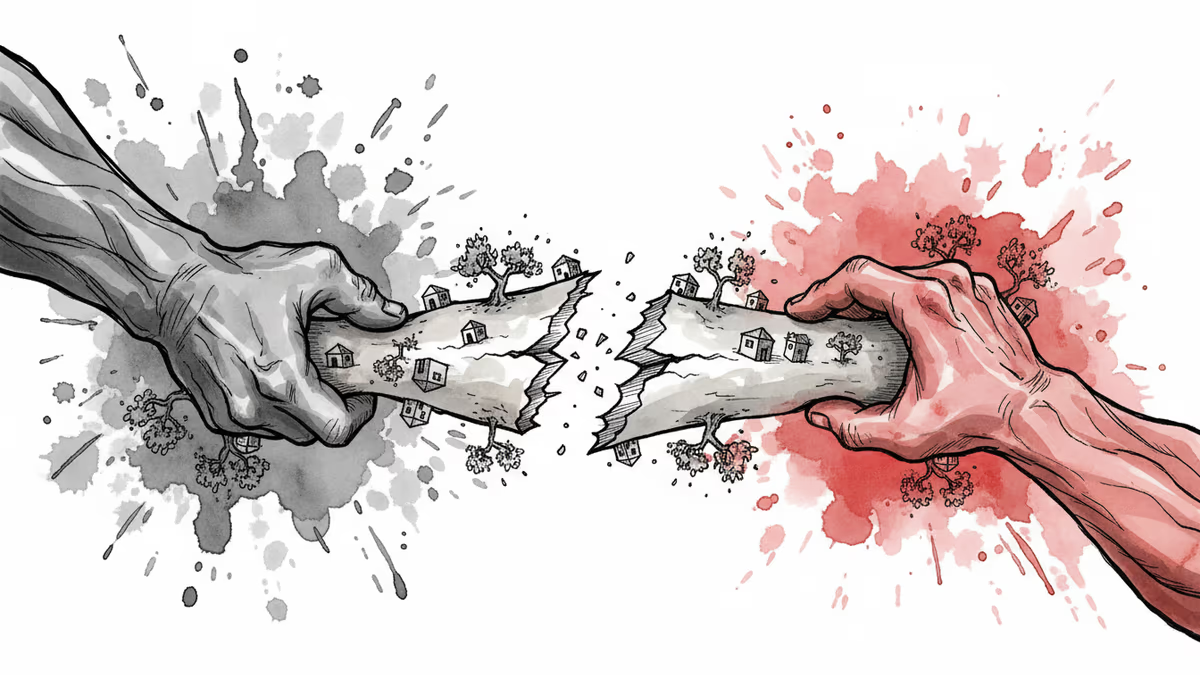
Israel's West Bank settlements face mounting international criticism as 'de facto annexation,' while Israel defends them as security measures. Two worldviews collide over occupied territory.
Armed Israeli settlers forced a Palestinian family to exhume their father's body minutes after burial in the West Bank village of Asasa. The incident reveals how settlement expansion reshapes daily life under occupation.
Israeli settlers backed by military forces shot and killed a Palestinian teenager and stole livestock during a raid on a West Bank village, marking the first settler killing of 2026 amid escalating violence.
As Israel's far-right coalition pushes for West Bank annexation, we examine the legal, diplomatic, and strategic implications for the Middle East and international law.
Israel's West Bank settlements face mounting international criticism as 'de facto annexation,' while Israel defends them as security measures. Two worldviews collide over occupied territory.
Thoughts
Share your thoughts on this article
Sign in to join the conversation