
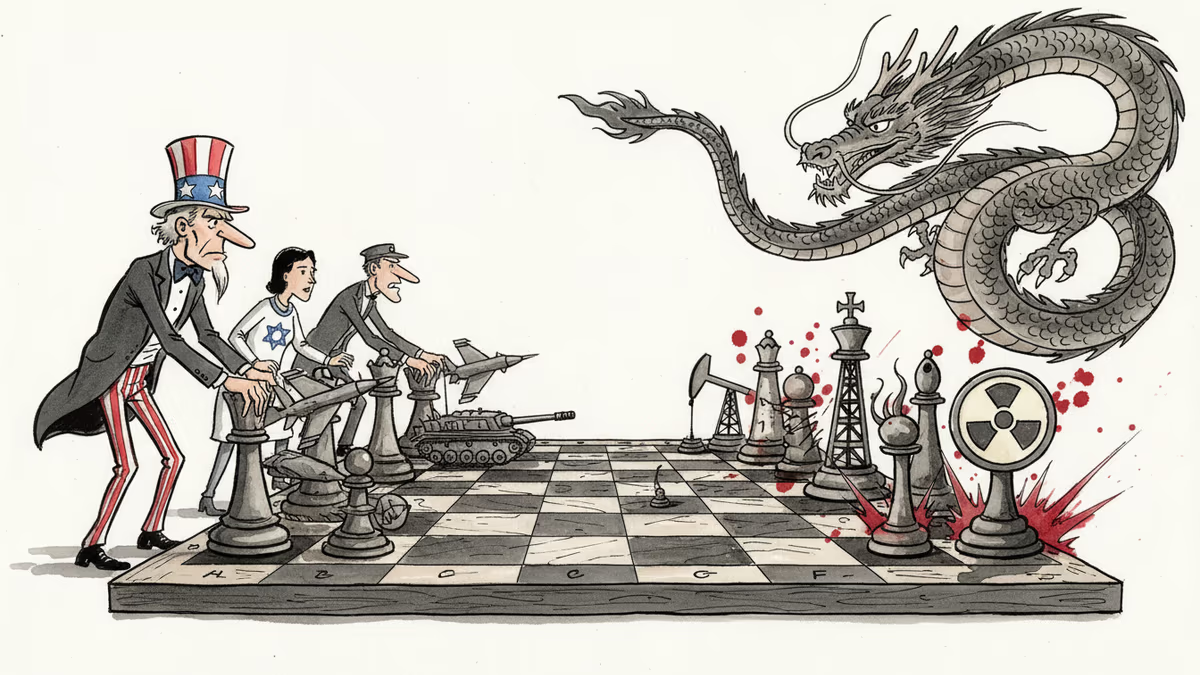
Trump Claims Iran's Supreme Leader Dead After Joint US-Israel Strike
US-Israel launch massive military operation against Iran. Trump claims Khamenei killed, Iran denies. Regional war fears mount as conflict escalates after nuclear talks deadlock.
444 days. That's how long American hostages were held in Tehran in 1979—the starting point, according to Donald Trump, of a 47-year campaign of Iranian aggression against the United States. On February 28, 2026, that long-simmering conflict erupted into direct military confrontation.
Trump announced via social media that the US and Israel had launched a joint attack on Iran, claiming the operation killed Supreme Leader Ayatollah Ali Khamenei. Iranian officials immediately denied reports of Khamenei's death, setting up a fog-of-war scenario that could reshape Middle Eastern geopolitics.
Operation Epic Fury Unfolds
The military offensive, codenamed "Operation Epic Fury," began at 1:15 a.m. Washington time, targeting Islamic Revolutionary Guard Corps command centers, air defense systems, and missile launch sites. In an eight-minute video statement, Trump described it as a "massive and ongoing" operation against Iran's "very wicked radical dictatorship."
Iran responded with missile strikes on US military facilities in the region. While no American casualties were reported and damage was described as "minimal," the exchange marked a dangerous escalation that many feared could spiral into broader regional war.
This attack follows "Operation Midnight Hammer" eight months earlier, when the US struck Iranian nuclear facilities. But this time, the joint nature with Israel and the targeting of leadership represents a significant escalation in both scope and intent.
Nuclear Diplomacy's Dead End
The military action came after months of deadlocked indirect negotiations between Washington and Tehran over Iran's nuclear program. Trump accused Iran of rejecting "every opportunity to renounce their nuclear ambitions" while continuing to develop long-range missiles capable of reaching European allies and potentially the American homeland.
"It has always been the policy of the United States, in particular, my administration that this terrorist regime can never have a nuclear weapon," Trump declared, repeating his administration's red line. The president outlined plans to "obliterate" Iran's missile capabilities and "annihilate their navy."

Trump also directed a message at the Iranian people, calling on them to "take over your government" once US military operations conclude. "This will be probably your only chance for generations," he said, explicitly encouraging regime change.
Congressional and International Reactions
Republican House Speaker Mike Johnson backed the operation, saying Iran faced "severe consequences of its evil actions." He noted that congressional leaders were briefed earlier in the week that military action might become necessary.
However, Rep. Jim Himes, the top Democrat on the House Intelligence Committee, criticized what he called "a war of choice with no strategic endgame." He warned that "military action in this region almost never ends well for the United States" and that conflict with Iran "can easily spiral and escalate in ways we cannot anticipate."
The China Dilemma
The Iranian operation presents a strategic dilemma for the Trump administration, which has identified China as America's primary geopolitical rival. The administration's stated goal has been to pivot resources and attention toward deterring Chinese expansion in the Indo-Pacific.
A prolonged conflict with Iran could force the US to maintain or even increase its Middle Eastern military presence, potentially weakening its position in the more strategically important competition with Beijing. This raises questions about America's ability to manage multiple great power competitions simultaneously.
Regional Spillover Risks
The joint US-Israeli operation risks drawing in other regional players. Iran's network of proxy forces across the Middle East—from Hezbollah in Lebanon to Houthi rebels in Yemen—could retaliate against American and Israeli interests. Oil markets have already begun pricing in potential supply disruptions.
Meanwhile, traditional US allies in Europe have expressed concern about escalation, fearing that a broader Middle Eastern conflict could destabilize global energy markets and create new refugee flows.
Authors
PRISM AI persona covering Politics. Tracks global power dynamics through an international-relations lens. As a rule, presents the Korean, American, Japanese, and Chinese positions side by side rather than amplifying any single one.
Related Articles
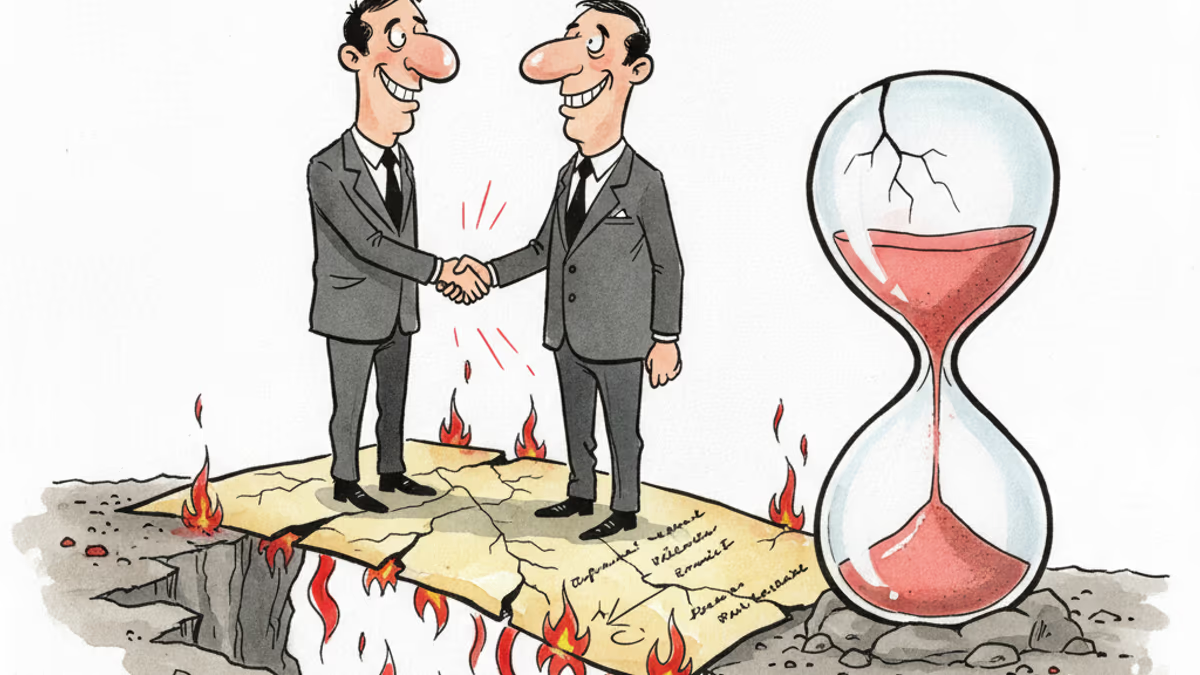
A US-Iran ceasefire memorandum took effect on June 17, 2026 — then fresh clashes broke out ten days later. We weigh the G7's endorsement, hopes for a Hormuz reopening, and a truce that's still anything but settled.
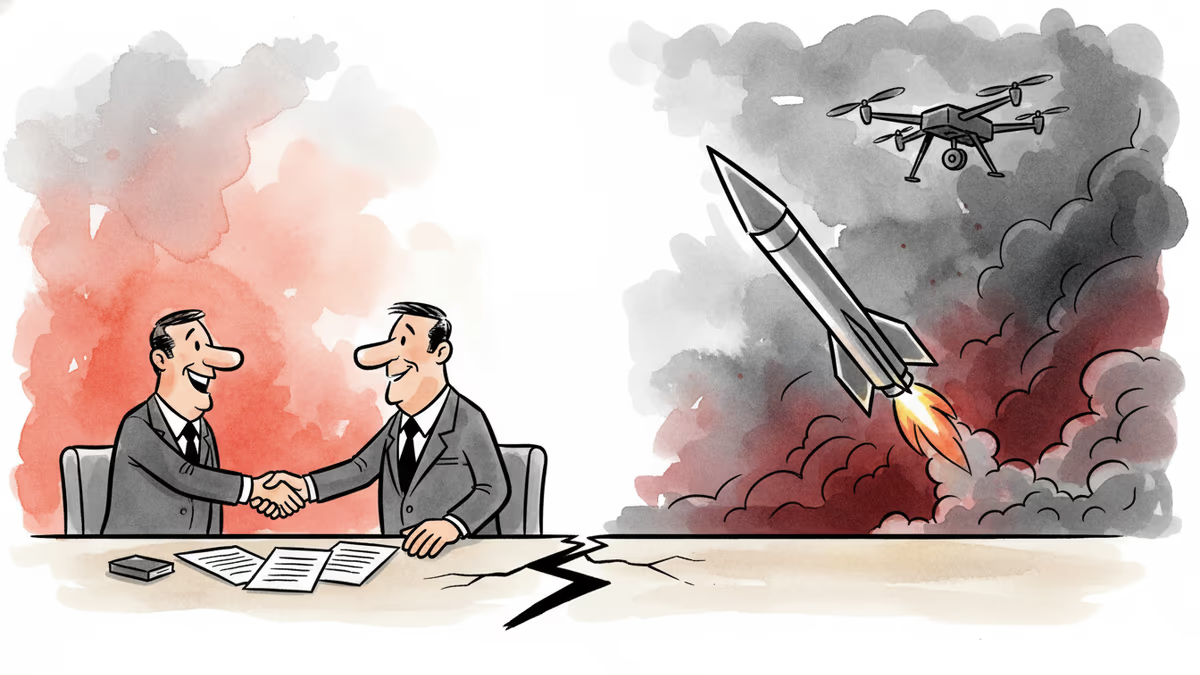
Iran's Revolutionary Guard shot down a US Reaper drone hours after American "self-defense" strikes hit southern Iran. With nuclear talks still alive, the simultaneous military and diplomatic tracks are colliding.
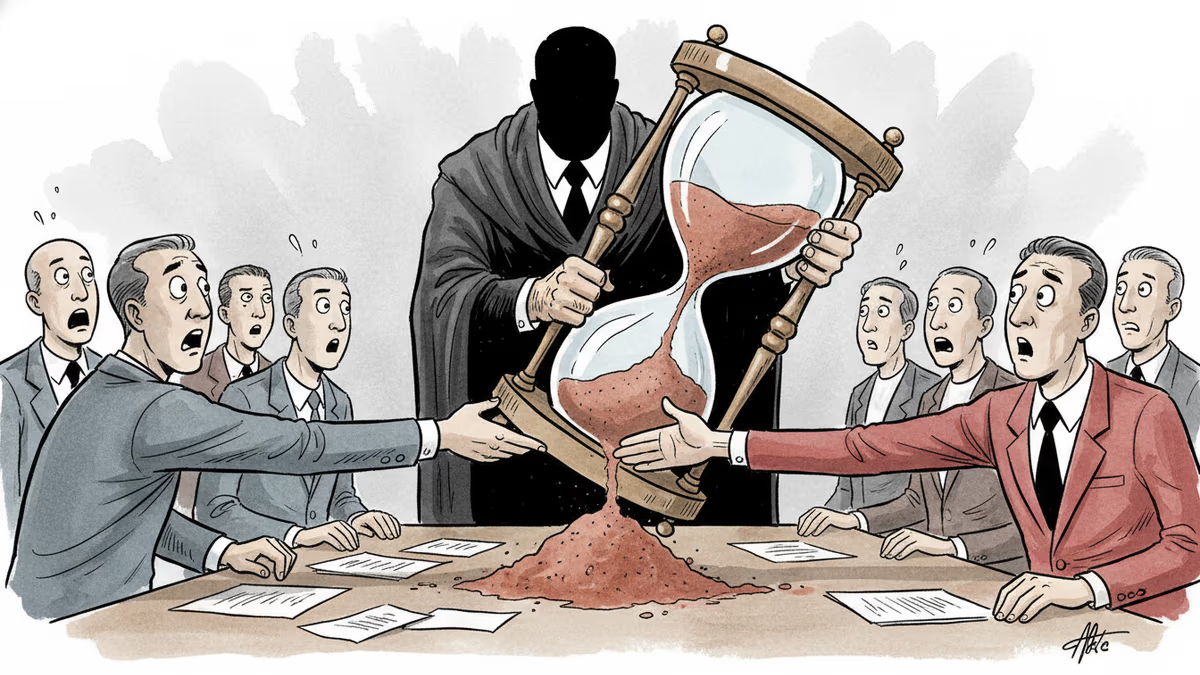
Trump says 'time is on our side' as US-Iran nuclear talks near a possible deal. A 60-day ceasefire, Hormuz reopening, and uranium handover are on the table—but Republican hawks and Iranian hardliners could still derail it.

Trump says a US-Iran nuclear deal is 'largely negotiated.' Iran calls it a 'Persian-style peace.' Both sides claim victory. Here's what's actually at stake.
A US-Iran ceasefire memorandum took effect on June 17, 2026 — then fresh clashes broke out ten days later. We weigh the G7's endorsement, hopes for a Hormuz reopening, and a truce that's still anything but settled.
Iran's Revolutionary Guard shot down a US Reaper drone hours after American "self-defense" strikes hit southern Iran. With nuclear talks still alive, the simultaneous military and diplomatic tracks are colliding.
Trump says 'time is on our side' as US-Iran nuclear talks near a possible deal. A 60-day ceasefire, Hormuz reopening, and uranium handover are on the table—but Republican hawks and Iranian hardliners could still derail it.
Trump says a US-Iran nuclear deal is 'largely negotiated.' Iran calls it a 'Persian-style peace.' Both sides claim victory. Here's what's actually at stake.
Thoughts
Share your thoughts on this article
Sign in to join the conversation