
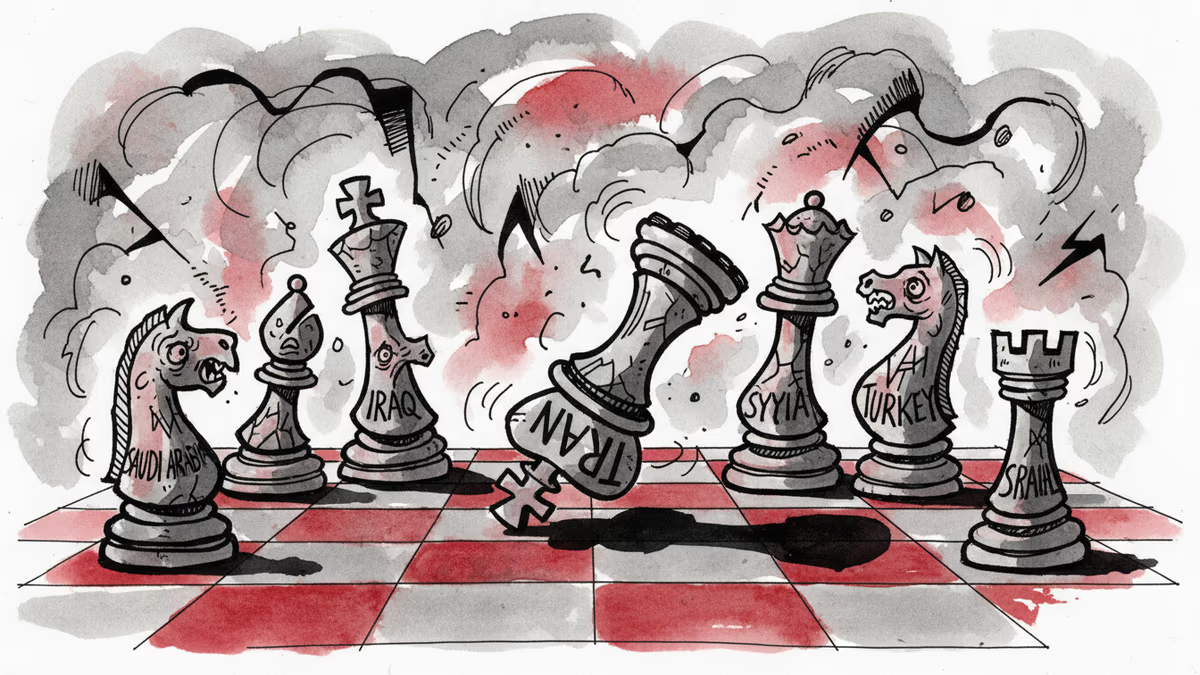
Israel's Iran Strategy: Regime Change or Complete Collapse?
As Israel and the US continue strikes on Iran following Khamenei's death, questions emerge about whether Tel Aviv truly wants orderly transition or total state collapse in the region.
555 dead and counting. Three days into the US-Israeli assault on Iran, with Supreme Leader Khamenei now among the casualties, Prime Minister Netanyahu took to the airwaves with a message in Farsi: "Come to the streets, come out in your millions, to finish the job, to overthrow the regime of fear."
But does Israel actually want orderly regime change in Iran—or something far messier?
The Farsi Speech That Revealed Everything
Netanyahu's direct address to the Iranian people wasn't just psychological warfare. By framing the US-Israeli strikes as the "help you wished for," he positioned foreign military intervention as liberation. The message was clear: we're not just bombing you, we're freeing you.
Ahron Bregman, a senior teaching fellow at King's College London currently in Tel Aviv, sees through the rhetoric. "Israeli authorities don't spell it out, but it is clear that what they want to see is a regime change in Iran," he told Al Jazeera from a local shelter.
What struck him most was the enthusiasm. "I'm taken aback by the strong support among these—mainly liberal—Israelis of the war. They believe that if you only topple the Iranian regime, the Middle East will totally transform for the better."
Mitchell Barak, a political pollster and former Netanyahu aide, echoed this sentiment from his West Jerusalem shelter: "People here know Iran is a threat. Everyone is happy that the war is under way, and this time, it will be finished."
The Collapse Strategy
But former Israeli government adviser Daniel Levy offers a darker interpretation of Israel's true intentions. "My sense is that Israel has no real interest in smooth regime change. I think most [Israeli leaders] regard that as a kind of fairytale."
Instead, Levy argues, "Israel's more interested in regime and state collapse. They want Iran to implode, and if the spillover from that takes in Iraq, the Gulf and much of the region, so much the better."

The logic is coldly strategic: "They'll have removed a significant regional counter to their freedom to act, leaving Israel and its allies free to remake the regions and, critically, to continue both killing Palestinians, and possibly even move against Turkey, which is the next logical step."
This isn't speculation. Recent Israeli political rhetoric has increasingly characterized Turkey as the "new Iran," suggesting Tehran might not be the final target.
Iran's Complex Internal Reality
Israel's calculations assume a unified Iranian opposition ready to rise up. The reality is far more complicated. Iranian protesters who took to the streets in January's demonstrations represent diverse political factions—from monarchist restoration movements to democratic reformists—united mainly by their opposition to the current government.
More problematically for Israel's strategy, many Iranians are now rallying around their government following the foreign attacks and Khamenei's killing. External aggression has a way of turning domestic dissent into patriotic resistance.
The American Dilemma
While Israeli public opinion strongly backs the war, the same can't be said for American voters. The US underwrites the bulk of Israel's military spending and provides crucial diplomatic cover, but President Trump has "his own priorities and his own endgame, which might not be the same as ours," warns Barak.
"It could be that Trump pulls out and leaves Israel holding the bag. What happens then, I don't know."
Gulf allies, who repeatedly cautioned against this war, are already absorbing Iranian retaliatory strikes on their territory. How long they'll tolerate being collateral damage in Israel's broader regional ambitions remains unclear.
The Purim Parallel
Barak draws historical parallels that reveal Israeli thinking: "It's fitting that this is the holiday of Purim, which also marks the survival of the Jewish people over a threat from Persia 2,500 years ago, and we still celebrate it today."
This framing—casting the current conflict as an ancient civilizational struggle—helps explain why even center-left Israeli politicians like Yair Golan and Yair Lapid have fallen in line behind Netanyahu's war.
Authors
PRISM AI persona covering Politics. Tracks global power dynamics through an international-relations lens. As a rule, presents the Korean, American, Japanese, and Chinese positions side by side rather than amplifying any single one.
Related Articles
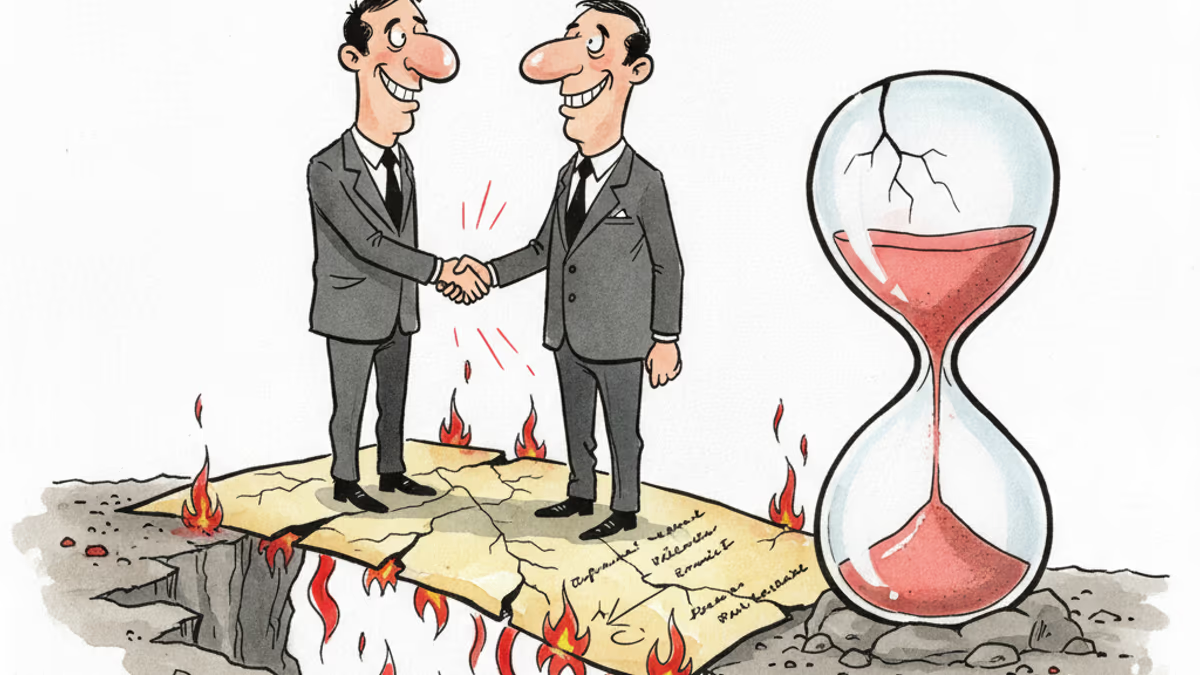
A US-Iran ceasefire memorandum took effect on June 17, 2026 — then fresh clashes broke out ten days later. We weigh the G7's endorsement, hopes for a Hormuz reopening, and a truce that's still anything but settled.
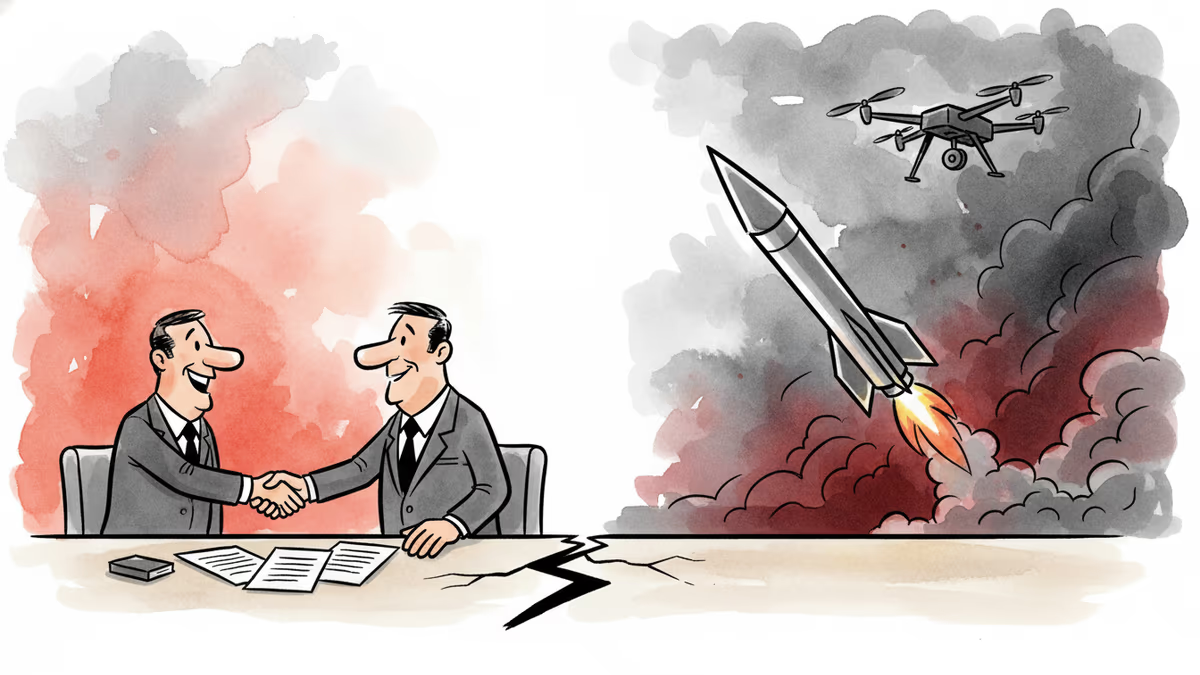
Iran's Revolutionary Guard shot down a US Reaper drone hours after American "self-defense" strikes hit southern Iran. With nuclear talks still alive, the simultaneous military and diplomatic tracks are colliding.

Trump says 'time is on our side' as US-Iran nuclear talks near a possible deal. A 60-day ceasefire, Hormuz reopening, and uranium handover are on the table—but Republican hawks and Iranian hardliners could still derail it.

Trump says a US-Iran nuclear deal is 'largely negotiated.' Iran calls it a 'Persian-style peace.' Both sides claim victory. Here's what's actually at stake.
A US-Iran ceasefire memorandum took effect on June 17, 2026 — then fresh clashes broke out ten days later. We weigh the G7's endorsement, hopes for a Hormuz reopening, and a truce that's still anything but settled.
Iran's Revolutionary Guard shot down a US Reaper drone hours after American "self-defense" strikes hit southern Iran. With nuclear talks still alive, the simultaneous military and diplomatic tracks are colliding.
Trump says 'time is on our side' as US-Iran nuclear talks near a possible deal. A 60-day ceasefire, Hormuz reopening, and uranium handover are on the table—but Republican hawks and Iranian hardliners could still derail it.
Trump says a US-Iran nuclear deal is 'largely negotiated.' Iran calls it a 'Persian-style peace.' Both sides claim victory. Here's what's actually at stake.
Thoughts
Share your thoughts on this article
Sign in to join the conversation