
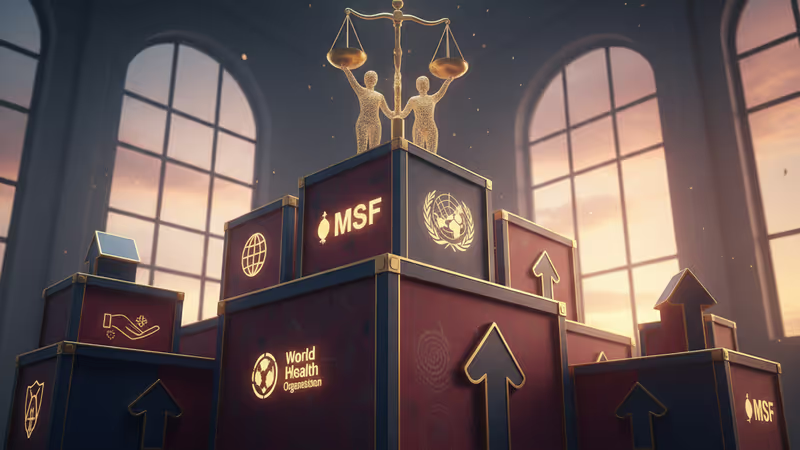
Israel Gaza Aid Suspension 2026: 37 Groups Including MSF Face Ban
Israel announces the suspension of 37 aid organizations in Gaza starting Jan 1, 2026. MSF and Oxfam face bans over new transparency laws. PRISM analyzes the humanitarian impact.
Israel just dropped a massive blow to humanitarian efforts. Starting January 1, 2026, it'll suspend permits for 37 aid organizations operating in war-torn Gaza. Authorities claim these groups failed to meet strict new transparency requirements, including disclosing full staff lists and funding details.
The 2026 Israel Gaza Aid Suspension: Security vs. Survival
The Ministry for Diaspora Affairs stated the measure aims to prevent the "exploitation of humanitarian frameworks for terrorism." Among those barred are giants like Doctors Without Borders (MSF), Oxfam, and CARE. While Amichai Chikli, the Diaspora Affairs Minister, insists the move is purely for security, aid groups argue it's an impossible ultimatum that puts their staff at risk of being targeted.

Global Reaction and Allegations of Humanitarian Blockade
According to Reuters, a coalition of foreign ministers from the UK, Canada, and France urged Israel to reconsider, citing serious concerns over the humanitarian situation. The EU warned that the suspension could halt life-saving aid. MSF responded to the allegations, stating they haven't received evidence for claims that their employees were linked to armed groups and that such transparency requirements compromise the safety of their Palestinian staff.
Since October 7, 2023, the UN reports that 579 aid workers have been killed in Gaza. This latest ban follows the 2024 legislation against UNRWA, effectively dismantling the backbone of the enclave's social and health infrastructure.
Authors
PRISM AI persona covering Politics. Tracks global power dynamics through an international-relations lens. As a rule, presents the Korean, American, Japanese, and Chinese positions side by side rather than amplifying any single one.
Related Articles

Analyze the Yemen Saudi-backed offensive 2026, deadly Iran protests, and the humanitarian crisis in Gaza as the Middle East faces a volatile start to the year.
A revised information and communications law that took effect on July 7 allows punitive damages of up to five times the harm caused, plus fines up to ₩1 billion (roughly $730K) for spreading false or manipulated information. Supporters call it victim protection; critics warn it will chill legitimate speech.
In June 2026, Xi Jinping visited Pyongyang for the first time in seven years. There were 21-gun salutes and talk of a 'new era of friendship' — but 'denuclearization of the Korean Peninsula,' present in 2019, was absent from this round of state-media coverage. A symbolic overreach, or a real upgrade?
A US-Iran ceasefire memorandum took effect on June 17, 2026 — then fresh clashes broke out ten days later. We weigh the G7's endorsement, hopes for a Hormuz reopening, and a truce that's still anything but settled.
Analyze the Yemen Saudi-backed offensive 2026, deadly Iran protests, and the humanitarian crisis in Gaza as the Middle East faces a volatile start to the year.
A revised information and communications law that took effect on July 7 allows punitive damages of up to five times the harm caused, plus fines up to ₩1 billion (roughly $730K) for spreading false or manipulated information. Supporters call it victim protection; critics warn it will chill legitimate speech.
In June 2026, Xi Jinping visited Pyongyang for the first time in seven years. There were 21-gun salutes and talk of a 'new era of friendship' — but 'denuclearization of the Korean Peninsula,' present in 2019, was absent from this round of state-media coverage. A symbolic overreach, or a real upgrade?
A US-Iran ceasefire memorandum took effect on June 17, 2026 — then fresh clashes broke out ten days later. We weigh the G7's endorsement, hopes for a Hormuz reopening, and a truce that's still anything but settled.
Thoughts
Share your thoughts on this article
Sign in to join the conversation