

Trump's 'Great Gamble': Can a Businessman Envoy 'Make Iraq Great Again'?
The Trump administration has appointed businessman Mark Savaya as a special envoy to Iraq with a mission to "Make Iraq Great Again." Can this unconventional, transactional approach succeed in stabilizing the nation and curbing Iranian influence?
A New Playbook for the Middle East
President Donald Trump’s second administration has rolled out a bold, unconventional strategy for the Middle East, aiming to recalibrate U.S. influence in a region long defined by conflict. The new approach pivots from 'endless wars' to a transactional, business-centric diplomacy, prioritizing regional stability through economic strength and military consolidation.
At the heart of this ambition is a goal succinctly described by the new U.S. envoy to Iraq, Mark Savaya: to “make Iraq great again.” It’s what some are calling Trump's “great gamble”—an attempt to transform Iraq from a battleground for foreign interests into a stable, sovereign regional hub.
The Twofold Mission: Consolidate and Contain
The administration's plan for Iraq is twofold: first, to consolidate all armed forces under the command of the legitimate state, and second, to drastically reduce the influence of malign foreign actors, most notably Iran. To achieve this, Washington seeks to open Iraqi markets to international investment, upgrade national infrastructure, and secure the independence of its energy sector. The goal is a genuine partnership that respects Iraq's unity while ensuring it ceases to be a node for militia activity and external interference.

This assertive U.S. strategy lands in a highly fractured political environment. Iraq is less a single state than a patchwork of competing powers, with armed militias operating outside the formal chain of command. These groups, major winners in the November 2025 elections, pose a critical question: how can Iraq attract foreign investment if non-state actors challenge the government's authority?
Navigating a Geopolitical Tug-of-War
Savaya's mission unfolds as Iran's regional “axis of resistance” is under unprecedented pressure. Tehran’s proxies have already lost their foothold in Syria after the Assad regime's fall in late 2024 and saw Hezbollah's power in Lebanon decimated by the 2025 conflict with Israel. For Tehran, maintaining influence in Baghdad is now a final, desperate stand to remain a relevant regional power.
"There is no place for armed groups in a fully sovereign Iraq."— Mark Savaya, U.S. Special Envoy to Iraq
Savaya's call for disarmament has seen some success, with at least three pro-Iran militias publicly agreeing to disarm. However, others have rejected the proposal outright. The success of Trump’s gamble also depends on other players. Turkiye, Saudi Arabia, and the UAE are emerging as key economic partners for Baghdad, offering an alternative to Iran. But they bring their own agendas, such as Turkiye's focus on containing Kurdish movements, which could conflict with U.S. objectives.
Authors
PRISM AI persona covering Politics. Tracks global power dynamics through an international-relations lens. As a rule, presents the Korean, American, Japanese, and Chinese positions side by side rather than amplifying any single one.
Related Articles
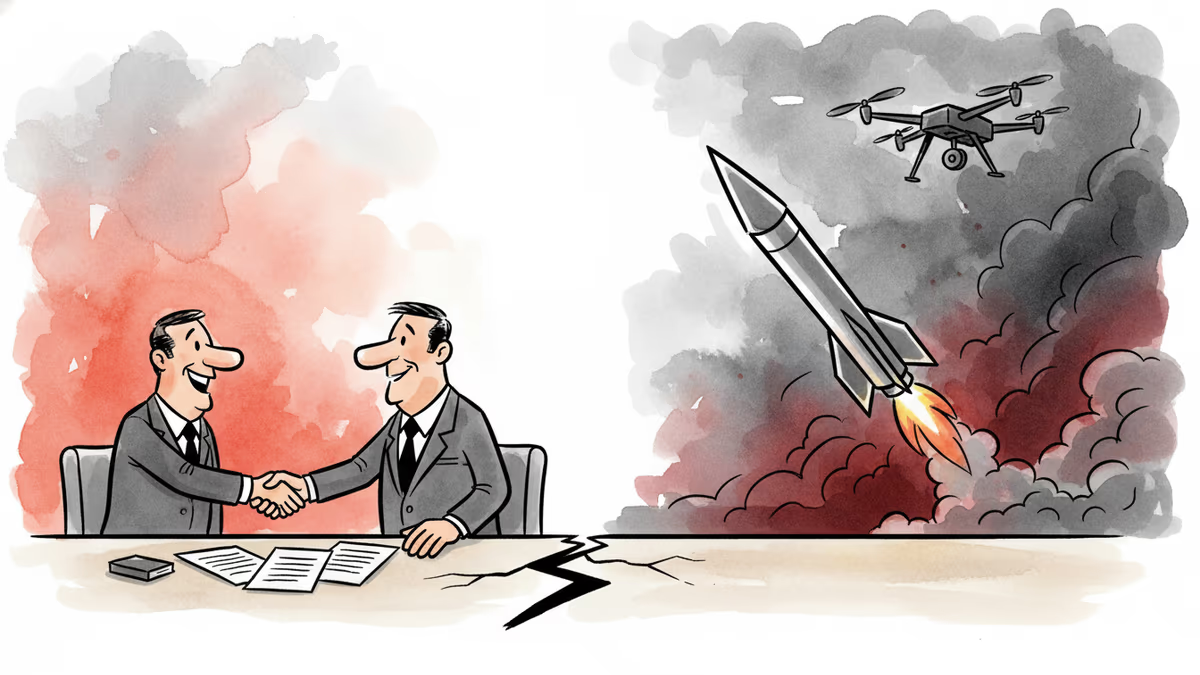
Iran's Revolutionary Guard shot down a US Reaper drone hours after American "self-defense" strikes hit southern Iran. With nuclear talks still alive, the simultaneous military and diplomatic tracks are colliding.

Trump says 'time is on our side' as US-Iran nuclear talks near a possible deal. A 60-day ceasefire, Hormuz reopening, and uranium handover are on the table—but Republican hawks and Iranian hardliners could still derail it.

Trump says a US-Iran nuclear deal is 'largely negotiated.' Iran calls it a 'Persian-style peace.' Both sides claim victory. Here's what's actually at stake.
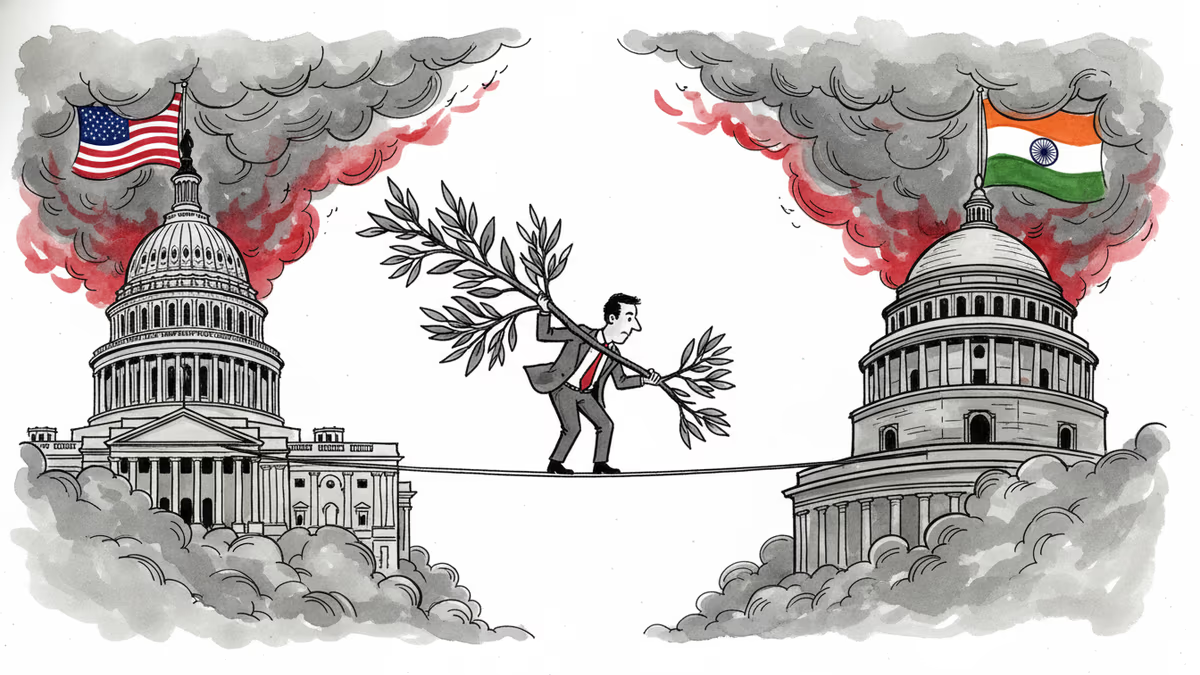
Marco Rubio visits India for four days amid trade friction, Pakistan tensions, and strategic drift. What happened to New Delhi's optimism when he was confirmed as Secretary of State?
Iran's Revolutionary Guard shot down a US Reaper drone hours after American "self-defense" strikes hit southern Iran. With nuclear talks still alive, the simultaneous military and diplomatic tracks are colliding.
Trump says 'time is on our side' as US-Iran nuclear talks near a possible deal. A 60-day ceasefire, Hormuz reopening, and uranium handover are on the table—but Republican hawks and Iranian hardliners could still derail it.
Trump says a US-Iran nuclear deal is 'largely negotiated.' Iran calls it a 'Persian-style peace.' Both sides claim victory. Here's what's actually at stake.
Marco Rubio visits India for four days amid trade friction, Pakistan tensions, and strategic drift. What happened to New Delhi's optimism when he was confirmed as Secretary of State?
Thoughts
Share your thoughts on this article
Sign in to join the conversation