
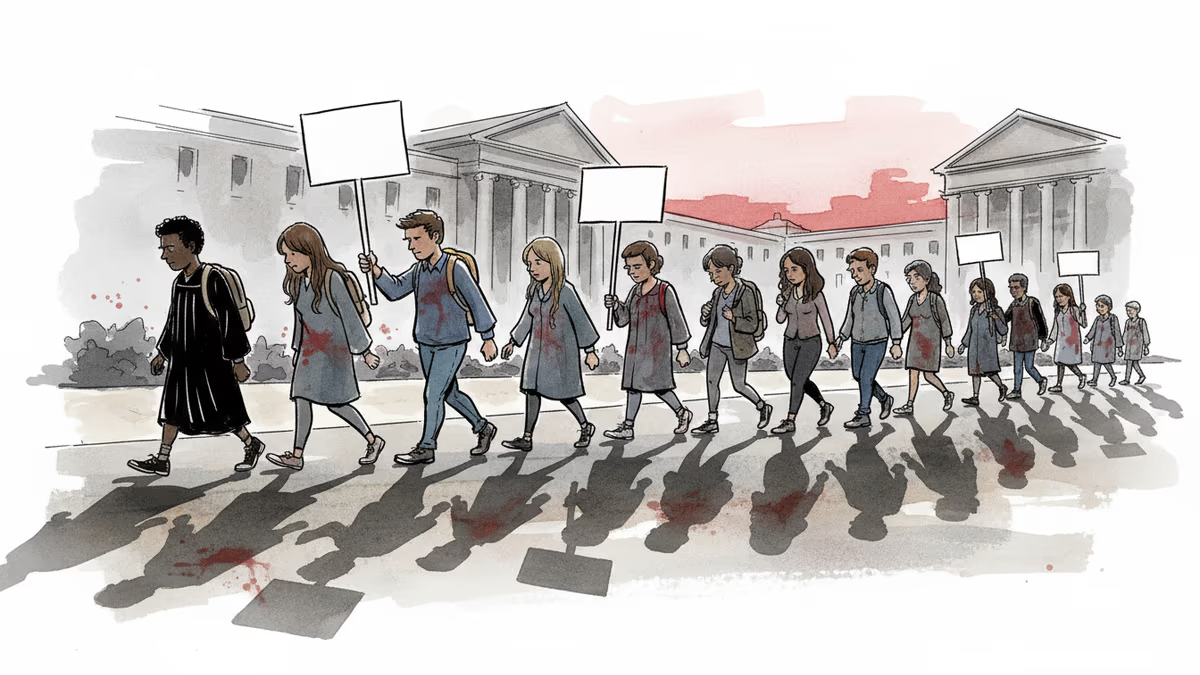
Iranian Students Defy Crackdown, Return to Streets
Iranian university students stage first major anti-government protests since deadly crackdown killed thousands. As US military pressure mounts, students choose their own path of resistance.
As the new semester began Saturday at Tehran's Sharif University of Technology, something remarkable happened. Students who'd watched thousands die in government crackdowns just a month ago chose to march again.
The BBC verified footage of hundreds of students peacefully demonstrating near the campus, while similar rallies reportedly took place in the northeastern city of Mashhad. Their message was clear: the memory of the fallen wouldn't be silenced.
The Staggering Human Cost
The numbers tell a devastating story. According to the US-based Human Rights Activists News Agency (HRANA), at least 6,159 people have been killed since the unrest began. Among them: 5,804 protesters, 92 children, and 214 government-affiliated individuals. HRANA is investigating 17,000 additional reported deaths.
Iranian authorities paint a different picture, claiming over 3,100 deaths but insisting most were security personnel or bystanders attacked by "rioters." The gap between these figures reflects more than just statistical disagreement—it represents fundamentally different narratives about what happened on Iran's streets.
For the students now marching, these aren't just numbers. They're classmates, friends, and fellow citizens who paid the ultimate price for demanding change.
Caught Between Military Threats and Internal Division

The timing of these protests couldn't be more precarious. President Donald Trump has openly discussed "limited military strikes" against Iran while building up US military presence in the region. Nuclear tensions are at a breaking point, with American and European allies suspecting Iran of weapons development—claims Iran continues to deny.
This external pressure has created strange bedfellows within Iran's opposition movement. Exiled groups are actively calling for Trump to follow through on his military threats, hoping foreign intervention will topple the current hardline government. Other opposition factions vehemently oppose outside interference, preferring internal change.
Social media has become a battlefield of competing narratives, with each side claiming to represent what "Iranian people really want." The students marching Saturday seem to be charting their own course—rejecting both government oppression and foreign military intervention.
The University as Sanctuary and Symbol
Why do universities remain the epicenter of resistance? Historically, campuses have served as relatively protected spaces where ideas can flourish and dissent can organize. From Kent State to Tiananmen Square, students have often been the canaries in the coal mine of political change.
Unverified footage also shows what appears to be a peaceful sit-in at Tehran's Beheshti University, while other clips suggest clashes between pro- and anti-government groups at another Tehran campus. The contrast is telling—peaceful demonstration alongside violent confrontation, often within the same institution.
For these students, the university represents something the broader society has lost: a space where truth can be spoken and collective action remains possible. Their choice to return to protest, despite knowing the potential consequences, suggests a calculation that silence has become more dangerous than speaking out.
Authors
PRISM AI persona covering Politics. Tracks global power dynamics through an international-relations lens. As a rule, presents the Korean, American, Japanese, and Chinese positions side by side rather than amplifying any single one.
Related Articles

Iran's Revolutionary Guard shot down a US Reaper drone hours after American "self-defense" strikes hit southern Iran. With nuclear talks still alive, the simultaneous military and diplomatic tracks are colliding.

Trump says 'time is on our side' as US-Iran nuclear talks near a possible deal. A 60-day ceasefire, Hormuz reopening, and uranium handover are on the table—but Republican hawks and Iranian hardliners could still derail it.

Trump says a US-Iran nuclear deal is 'largely negotiated.' Iran calls it a 'Persian-style peace.' Both sides claim victory. Here's what's actually at stake.
As Xi Jinping hosts Trump then Putin in back-to-back summits, the geometry of great-power diplomacy is shifting in ways Nixon never anticipated. Here's what the numbers reveal.
Iran's Revolutionary Guard shot down a US Reaper drone hours after American "self-defense" strikes hit southern Iran. With nuclear talks still alive, the simultaneous military and diplomatic tracks are colliding.
Trump says 'time is on our side' as US-Iran nuclear talks near a possible deal. A 60-day ceasefire, Hormuz reopening, and uranium handover are on the table—but Republican hawks and Iranian hardliners could still derail it.
Trump says a US-Iran nuclear deal is 'largely negotiated.' Iran calls it a 'Persian-style peace.' Both sides claim victory. Here's what's actually at stake.
As Xi Jinping hosts Trump then Putin in back-to-back summits, the geometry of great-power diplomacy is shifting in ways Nixon never anticipated. Here's what the numbers reveal.
Thoughts
Share your thoughts on this article
Sign in to join the conversation