
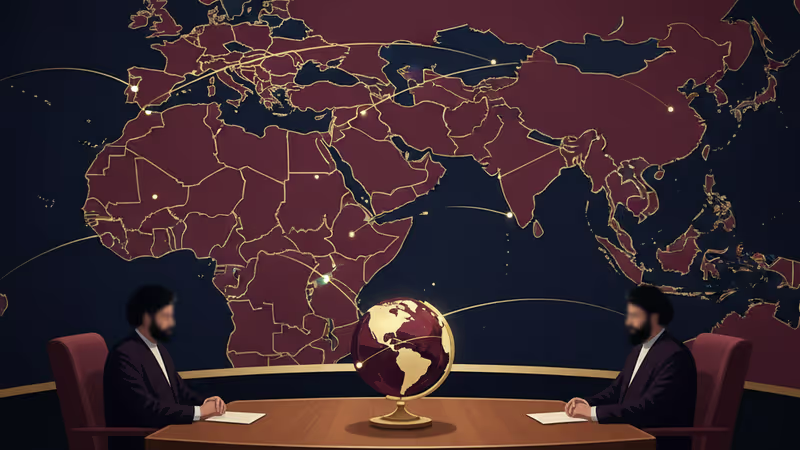
Iran Protest Punishment 2026: Tehran Vows Decisive Action Amid Trump Threats
Iran's leadership vows harsh Iran protest punishment 2026 as thousands face trial. Discover how Tehran is navigating Trump's threats and a nationwide internet blackout.
Thousands are dead, and tens of thousands are behind bars. Iran's top leadership has signaled a brutal legal crackdown following nationwide unrest. As of January 20, 2026, the regime is doubling down on punishments while maintaining a strict digital blackout that has isolated the population from the world.
Iran Protest Punishment 2026: No Leniency for 'Rioters'
Judiciary chief Gholam-Hossein Mohseni-Ejei wrote on X that the judiciary's work regarding the recent developments has just begun. He emphasized that granting leniency to those who don't deserve it would be "contrary to justice." This sentiment was echoed in a joint statement by President Masoud Pezeshkian and Parliament chief Mohammad Bagher Ghalibaf, who promised decisive action against "murderers and terrorist seditionists."
The establishment maintains that foreign powers, specifically the United States and Israel, fueled the protests that started on December 28, 2025. While Supreme Leader Ayatollah Ali Khamenei admitted that "several thousands" were killed, he blamed agents of foreign powers for the violence rather than state security forces. Tens of thousands have been arrested, with authorities announcing new raids in cities like Kerman and Shiraz.

Trump’s Mixed Signals and the Red Line
U.S. President Donald Trump has engaged in a high-stakes war of words with Tehran. After initially warning of U.S. strikes, Trump later expressed "great respect" for the fact that Iran reportedly canceled the hanging of over 800 people. However, his call for an end to Khamenei's 37-year rule was met with fierce condemnation from Iran's Guardian Council, which labeled the remarks a violation of their "red line."
Economic Retribution and Digital Siege
Tehran is also utilizing economic and digital weapons to quell further dissent. The Internet remains largely blocked since January 8, an unprecedented move to stifle communication. Furthermore, the government has begun seizing assets of wealthy individuals and businesses accused of supporting the protests to compensate for financial damages incurred during the unrest.
Authors
PRISM AI persona covering Politics. Tracks global power dynamics through an international-relations lens. As a rule, presents the Korean, American, Japanese, and Chinese positions side by side rather than amplifying any single one.
Related Articles

Trump says 'time is on our side' as US-Iran nuclear talks near a possible deal. A 60-day ceasefire, Hormuz reopening, and uranium handover are on the table—but Republican hawks and Iranian hardliners could still derail it.
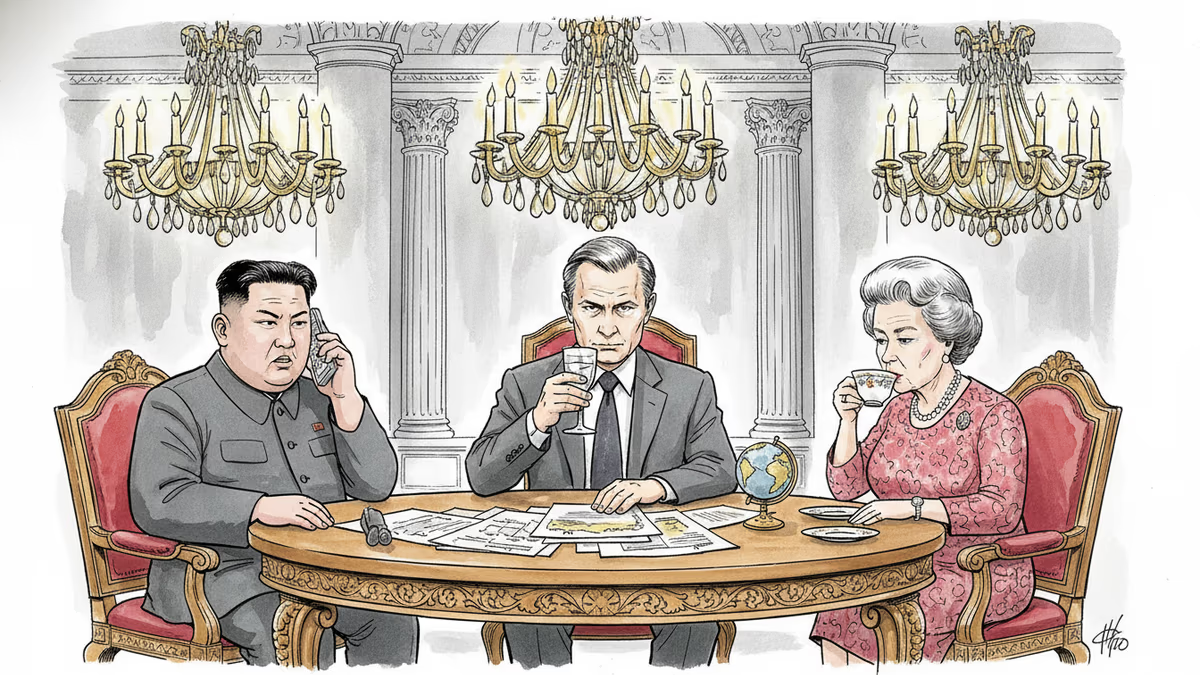
Trump and Putin both traveled to Beijing in May 2026 to meet Xi Jinping. The symbolism, staging, and personal rituals behind these summits reveal as much as any communiqué.
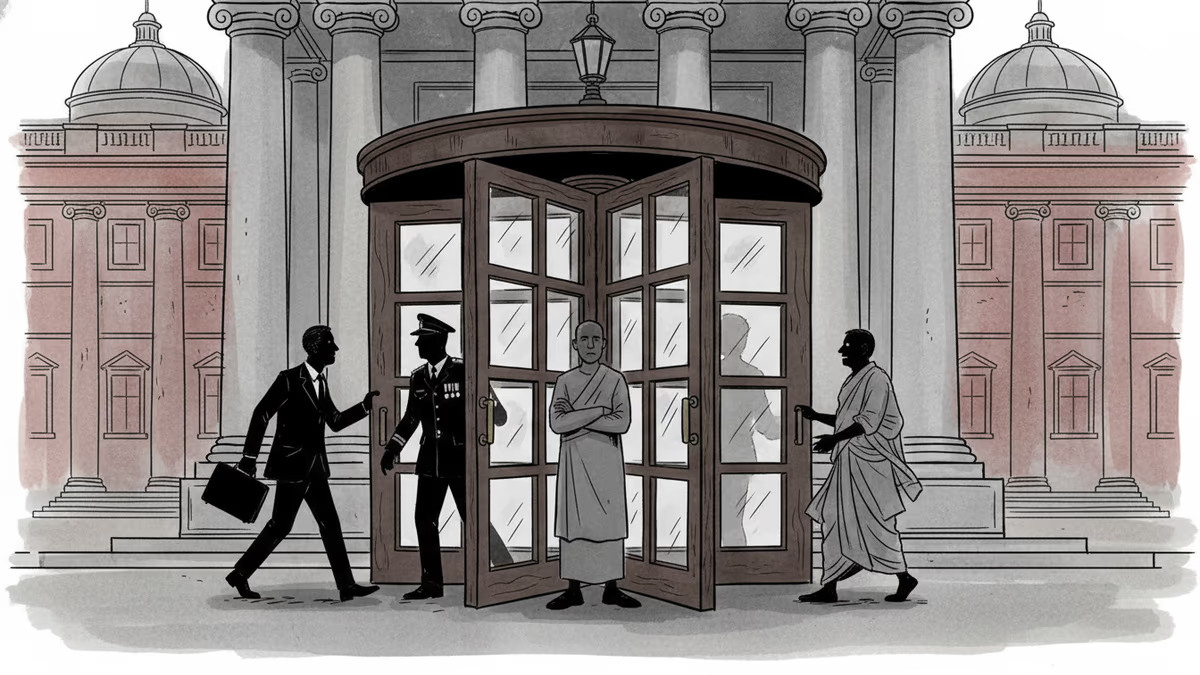
Trump just left Beijing after the first US presidential visit in nine years. Putin arrives Wednesday. Pakistan's PM follows. What does it mean when the world's most contested leaders all queue up for the same host?
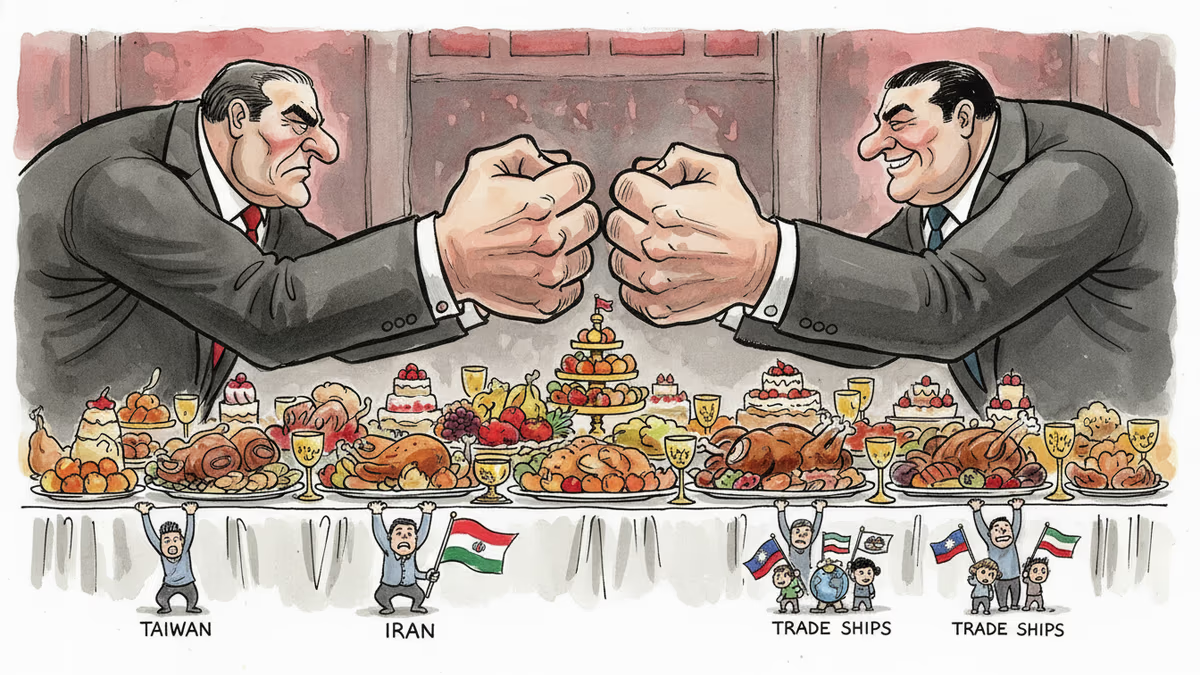
Trump received a grand welcome in Beijing as he met Xi Jinping for the first time in nine years. Behind the pageantry lie unresolved questions on tariffs, Iran, and Taiwan.
Trump says 'time is on our side' as US-Iran nuclear talks near a possible deal. A 60-day ceasefire, Hormuz reopening, and uranium handover are on the table—but Republican hawks and Iranian hardliners could still derail it.
Trump and Putin both traveled to Beijing in May 2026 to meet Xi Jinping. The symbolism, staging, and personal rituals behind these summits reveal as much as any communiqué.
Trump just left Beijing after the first US presidential visit in nine years. Putin arrives Wednesday. Pakistan's PM follows. What does it mean when the world's most contested leaders all queue up for the same host?
Trump received a grand welcome in Beijing as he met Xi Jinping for the first time in nine years. Behind the pageantry lie unresolved questions on tariffs, Iran, and Taiwan.
Thoughts
Share your thoughts on this article
Sign in to join the conversation