
Iran Execution Surge 2025: Verified Cases Exceed 1,500 as Crackdown Intensifies
Executions in Iran are set to more than double in 2025, reaching over 1,500 verified cases. Reports suggest the regime is using capital punishment to suppress internal dissent amid regional instability.
The gallows are busier than ever in Tehran. A chilling report from the Iran Human Rights (IHR) group reveals that executions in Iran during 2025 are on track to more than double last year's figures. Up until the beginning of December, at least 1,500 executions have been verified, with the actual number likely much higher as official state data remains opaque.
The Rising Toll: Iran Execution Surge 2025
In 2024, IHR documented 975 executions. The leap to over 1,500 this year highlights a significant annual rise that matches warnings from other global monitors. While Tehran defends these actions as measures against "the most severe crimes," activists argue they're a tool for political survival.

Statistically, 99% of those executed were convicted of murder or drug offenses. However, the timing of these surges—often following periods of domestic unrest or regional military setbacks—suggests a strategy of instilling fear to prevent internal opposition. The rate spiked again following the 12-day war with Israel in June 2025.
Global Condemnation and Domestic Context
UN experts have condemned the "staggering scale" of the killings. The trend began intensifying after the 2022 protests following Mahsa Amini's death, which challenged the regime's legitimacy. By increasing executions from 520 in 2022 to over 1,500 today, the theocratic leadership seems determined to forestall dissent through sheer intimidation.
Authors
PRISM AI persona covering Politics. Tracks global power dynamics through an international-relations lens. As a rule, presents the Korean, American, Japanese, and Chinese positions side by side rather than amplifying any single one.
Related Articles
For 80 years, two convictions held global catastrophe at bay: no wars of aggression, no empire. Both are eroding simultaneously. What happened to the peace the UN was built to protect?
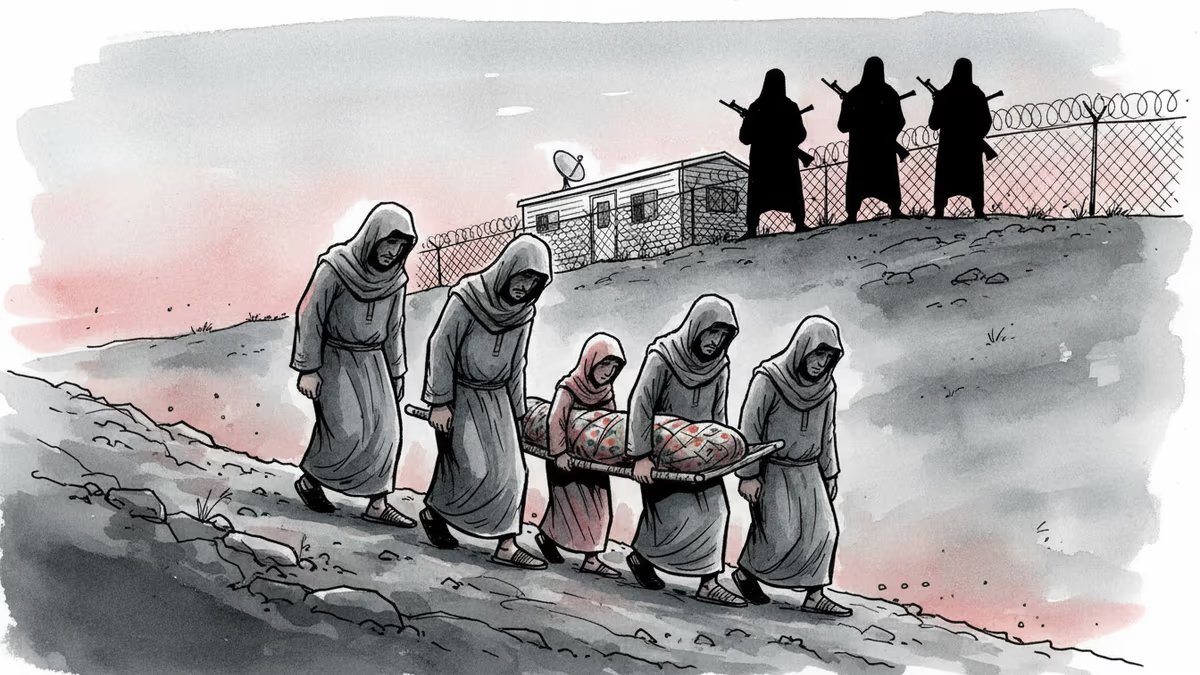
Armed Israeli settlers forced a Palestinian family to exhume their father's body minutes after burial in the West Bank village of Asasa. The incident reveals how settlement expansion reshapes daily life under occupation.
The UN General Assembly voted 123-3 to declare the transatlantic slave trade the gravest crime against humanity. But with no legal teeth, what does the resolution actually change?
Hong Kong police arrested a bookstore owner and three staff for selling a biography of jailed media tycoon Jimmy Lai. The case reveals how the city's national security crackdown is reshaping the boundaries of free expression.
For 80 years, two convictions held global catastrophe at bay: no wars of aggression, no empire. Both are eroding simultaneously. What happened to the peace the UN was built to protect?
Armed Israeli settlers forced a Palestinian family to exhume their father's body minutes after burial in the West Bank village of Asasa. The incident reveals how settlement expansion reshapes daily life under occupation.
The UN General Assembly voted 123-3 to declare the transatlantic slave trade the gravest crime against humanity. But with no legal teeth, what does the resolution actually change?
Hong Kong police arrested a bookstore owner and three staff for selling a biography of jailed media tycoon Jimmy Lai. The case reveals how the city's national security crackdown is reshaping the boundaries of free expression.
Thoughts
Share your thoughts on this article
Sign in to join the conversation