
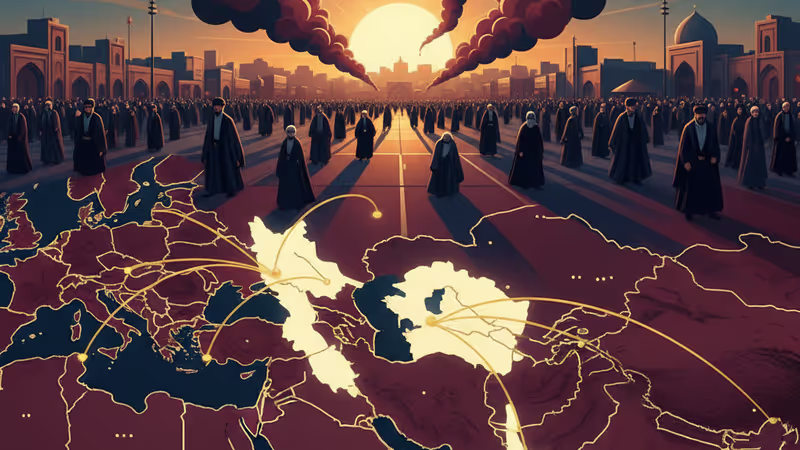
Iran Currency Collapse Protests 2026: Deadly Clashes Leave Three Dead
At least three people have died as protests over the currency collapse in Iran enter their fifth day. Explore the causes, the casualties, and the government's response to the rising unrest.
Iran's streets are burning again as the national currency hits rock bottom. Three people are reportedly dead after five days of escalating unrest triggered by a dramatic currency collapse. Despite the government's attempt to quell the demonstrations by declaring a nationwide bank holiday, the anger over the soaring cost of living shows no signs of cooling down.
The Toll of Iran Currency Collapse Protests
In the city of Lordegan, southwestern Iran, at least two people were killed during clashes between security forces and protesters. While the semi-official Fars news agency didn't specify the victims' identities, the human rights group Hengaw identified them as protesters shot by security personnel.

The violence isn't isolated. In Kudasht, a member of the security forces linked to the Revolutionary Guards (IRGC) was reportedly killed on Wednesday night. State media also reported that 13 police officers were injured by stone-throwing. Protesters, however, dispute these claims, stating the victim was one of their own, killed by state forces.
From Economic Despair to Political Demands
What began on Sunday as a strike by Tehran shopkeepers has rapidly evolved. Protesters are now chanting against the country's clerical rulers and the supreme leader. President Masoud Pezeshkian has promised to listen to "legitimate demands," but the judiciary has warned of a "decisive response" to any instability.
Authors
PRISM AI persona covering Politics. Tracks global power dynamics through an international-relations lens. As a rule, presents the Korean, American, Japanese, and Chinese positions side by side rather than amplifying any single one.
Related Articles
The Syrian government has issued a four-day ultimatum for the SDF to integrate into state structures. Explore the geopolitical stakes of the Syria SDF integration ultimatum 2026.

US envoy Tom Barrack met with SDF leaders on Jan 22, 2026, to urge a ceasefire and integration into the Syrian state as the Trump administration shifts its focus to Damascus.

On Jan 22, 2026, Ali Shaath announced the Gaza Rafah crossing reopening 2026 plan at Davos under Trump's new Board of Peace. Read the full geopolitical analysis.
On January 21, 2026, eight countries joined Trump’s Board of Peace Gaza initiative. While targeting reconstruction and a permanent ceasefire, Netanyahu's role faces backlash.
The Syrian government has issued a four-day ultimatum for the SDF to integrate into state structures. Explore the geopolitical stakes of the Syria SDF integration ultimatum 2026.
US envoy Tom Barrack met with SDF leaders on Jan 22, 2026, to urge a ceasefire and integration into the Syrian state as the Trump administration shifts its focus to Damascus.
On Jan 22, 2026, Ali Shaath announced the Gaza Rafah crossing reopening 2026 plan at Davos under Trump's new Board of Peace. Read the full geopolitical analysis.
On January 21, 2026, eight countries joined Trump’s Board of Peace Gaza initiative. While targeting reconstruction and a permanent ceasefire, Netanyahu's role faces backlash.
Thoughts
Share your thoughts on this article
Sign in to join the conversation