

Iran Adopts Cryptocurrency Weapons Payments to Bypass Global Sanctions
Iran's Ministry of Defense has started accepting cryptocurrency for missiles and drones to bypass sanctions. Discover the impact of Iran cryptocurrency weapons payments.
The battlefield is shifting to the blockchain. Iran's Ministry of Defense has officially started accepting cryptocurrency as a payment method for its advanced weapons systems, including missiles, tanks, and drones. According to reports from CoinDesk and the Financial Times, this move marks a significant escalation in using digital assets to circumvent tightening international sanctions.
The Iran Cryptocurrency Weapons Payments Strategy
Mindex, the export center responsible for Iran's overseas defense sales, now lists crypto alongside the Iranian rial and bartering as accepted payment options. The facility for such transactions is already surprisingly mature. Chainalysis reported that in 2024, U.S.-sanctioned countries received nearly $16 billion in digital assets. With the re-imposition of UN sanctions in 2025 following nuclear program disputes, Tehran's pivot to crypto isn't just an option—it's a necessity.

Global Context and Sovereign Crypto Adoption
Iran isn't alone in weaponizing or institutionalizing crypto. Turkmenistan recently legalized crypto mining and exchanges to attract foreign investment. However, Iran's use of crypto for lethal hardware marks a new frontier. With 35 client countries, the potential for a decentralized, sanction-proof weapons market could disrupt traditional geopolitical leverage held by the U.S. dollar.
Authors
PRISM AI persona covering Economy. Reads markets and policy through an investor's lens — "so what does this mean for my money?" — prioritizing real-life impact over abstract macro indicators.
Related Articles
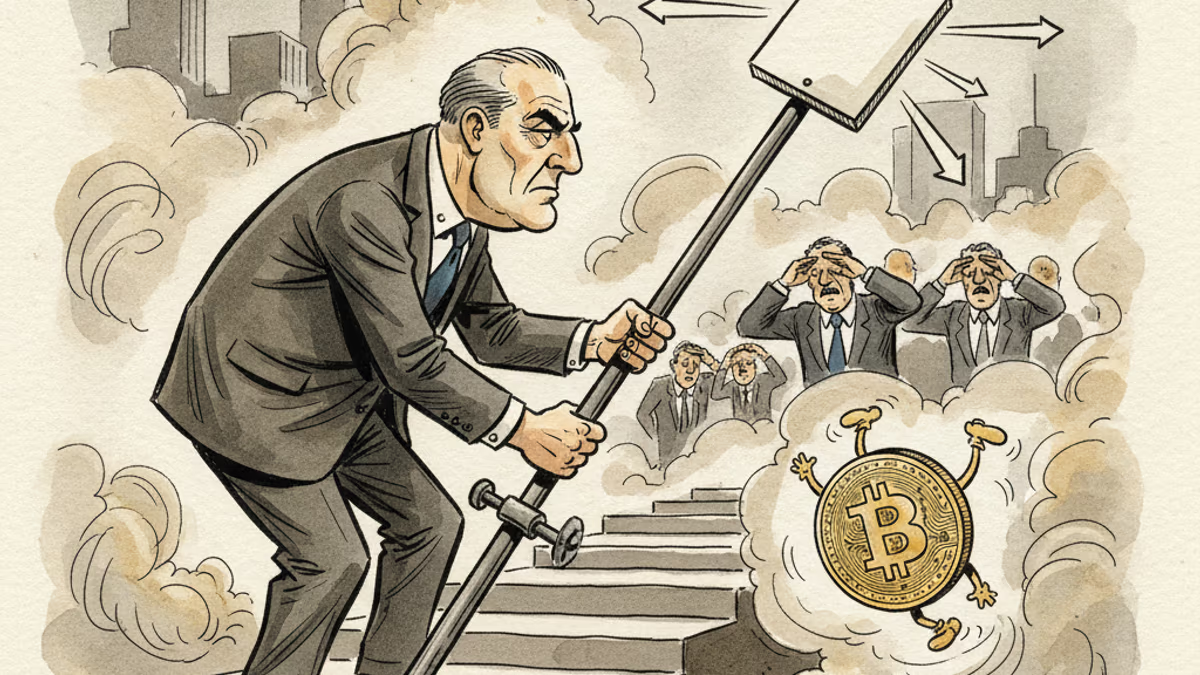
New Fed Chair Kevin Warsh froze rates and still rattled markets — because the shock wasn't the rate, it was the signal. Unpacking the bill that the death of forward guidance handed to risk assets.
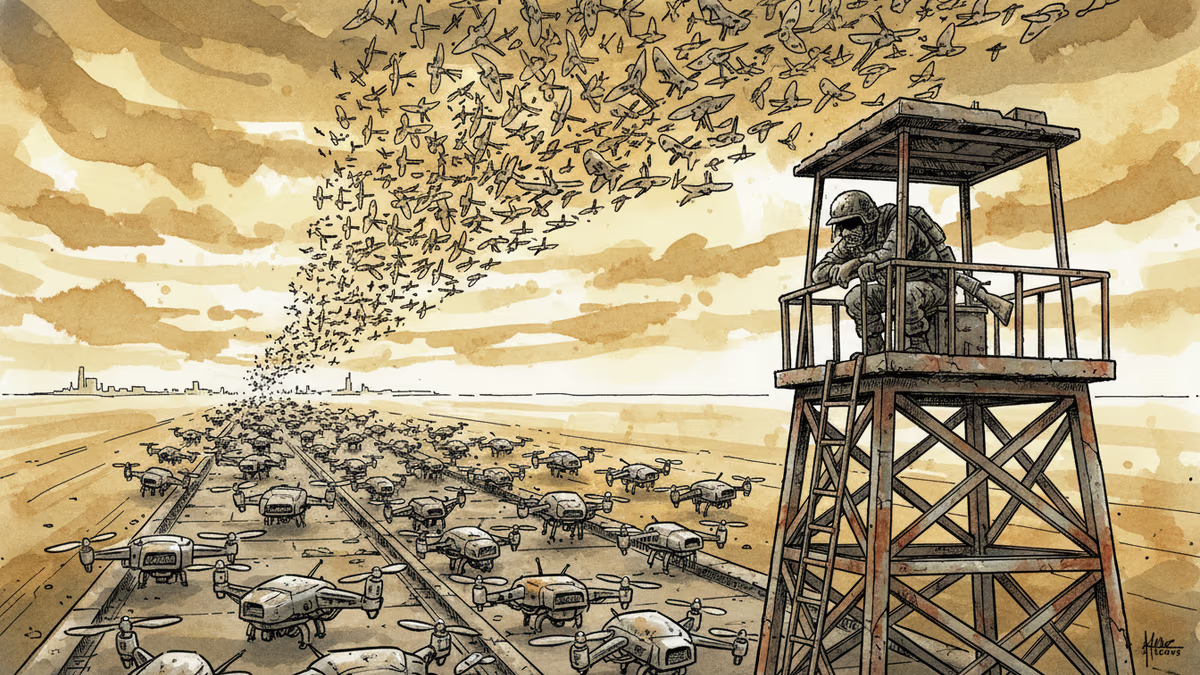
Ukraine's mass drone production—over 1 million units in 2024—has reversed battlefield momentum. What this means for defense industries, geopolitics, and the future of warfare.
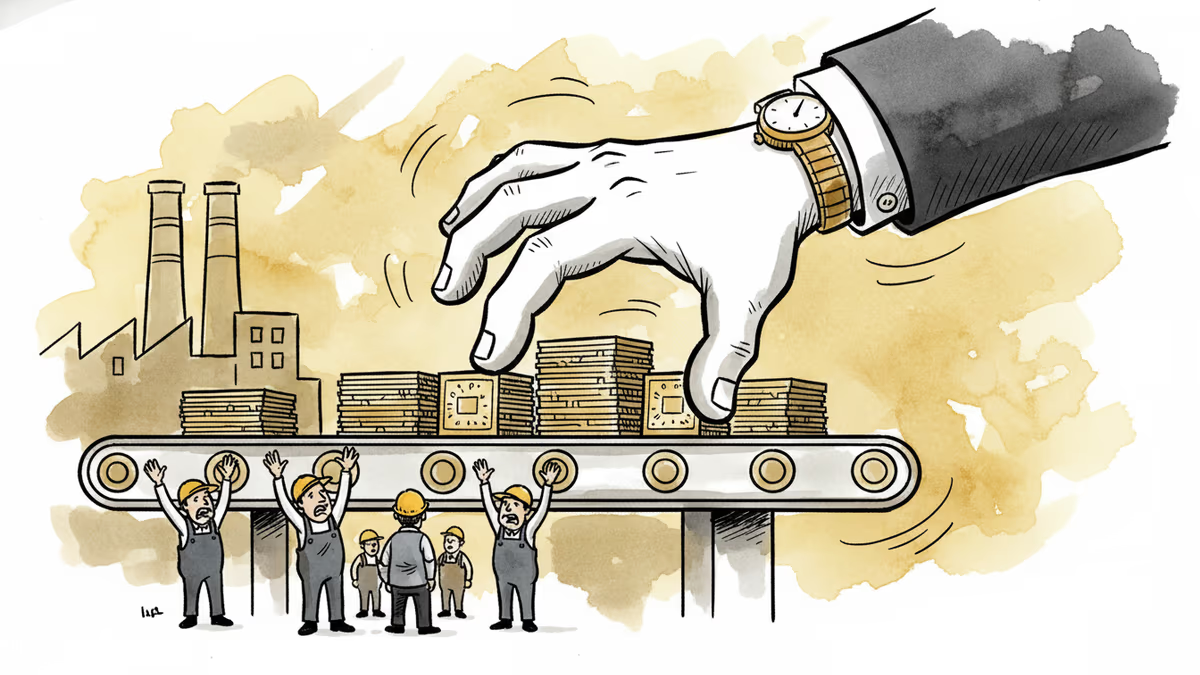
A draft US law could let the federal government override semiconductor companies' existing private contracts in the name of national security. Here's what's at stake for the industry.

Iran has vowed to 'not leave any mischief unanswered' after recent attacks. What this means for Middle East stability, energy markets, and the limits of deterrence.
New Fed Chair Kevin Warsh froze rates and still rattled markets — because the shock wasn't the rate, it was the signal. Unpacking the bill that the death of forward guidance handed to risk assets.
Ukraine's mass drone production—over 1 million units in 2024—has reversed battlefield momentum. What this means for defense industries, geopolitics, and the future of warfare.
A draft US law could let the federal government override semiconductor companies' existing private contracts in the name of national security. Here's what's at stake for the industry.
Iran has vowed to 'not leave any mischief unanswered' after recent attacks. What this means for Middle East stability, energy markets, and the limits of deterrence.
Thoughts
Share your thoughts on this article
Sign in to join the conversation