
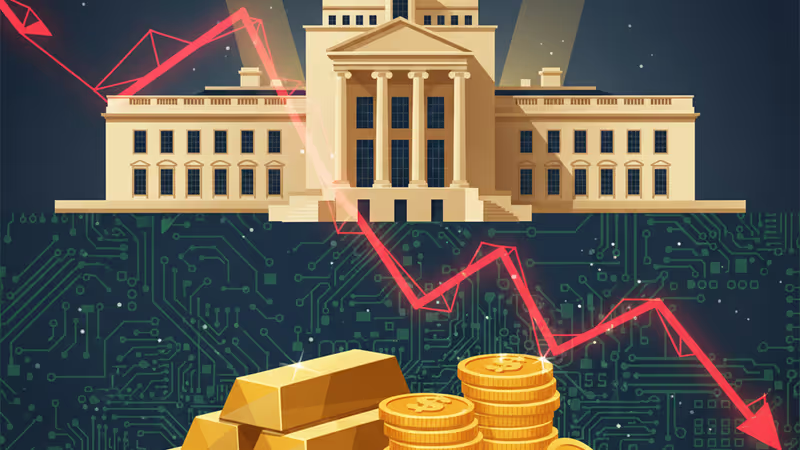
Trump Fed Feud 2026 Escalates: 3 Key Risks for Global Investors
The feud between President Trump and the Fed escalates in 2026, creating significant market risks. Explore why investors are concerned about institutional independence.
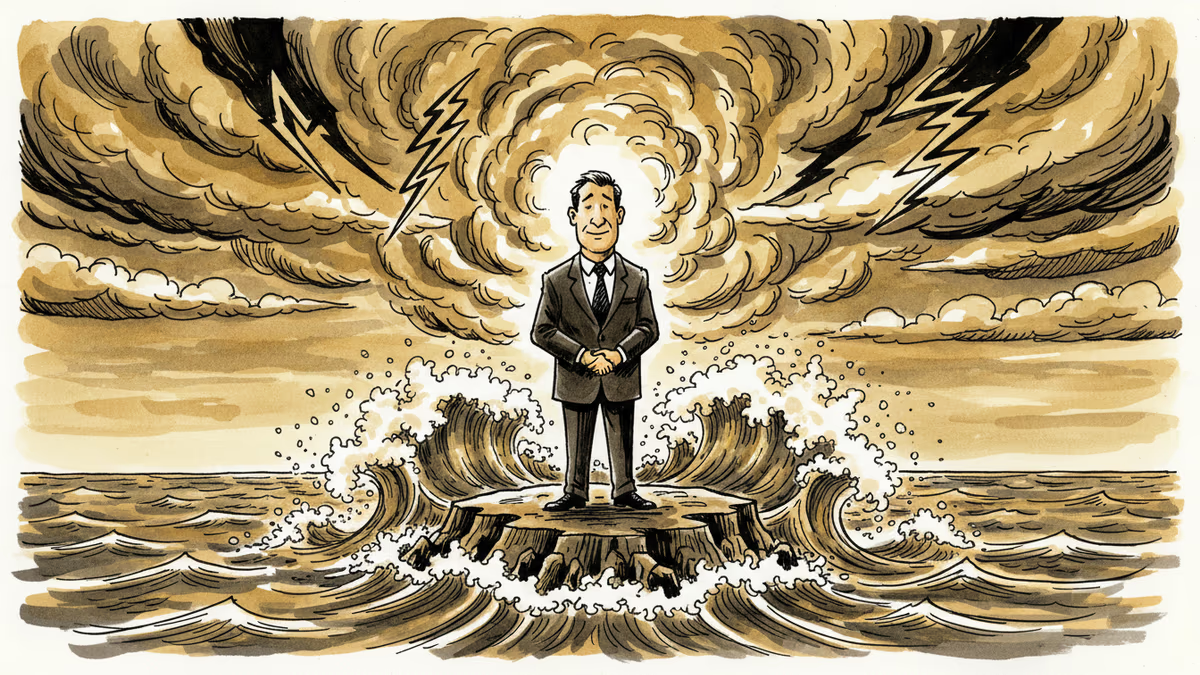
Market tranquility is being shattered by a political storm brewing in Washington. According to Reuters, the escalating feud between President Donald Trump and the Federal Reserve (Fed) has reached a breaking point, leaving global investors on edge. It's no longer just a debate; it's a direct challenge to the central bank's independence.
Trump Fed Feud 2026: The Battle for Interest Rate Control
The core of the dispute lies in who dictates monetary policy. Trump has ramped up his rhetoric, claiming the Fed's refusal to slash rates is "sabotaging" the American economic engine. In contrast, Fed officials maintain that their data-dependent approach is necessary to keep inflation from rebounding. Markets don't like the uncertainty, and they're showing it.

Investor Reactions and the 'Credibility Gap'
While some traders hope for a forced rate cut to boost equities, the majority are bracing for a 'credibility shock.' Bond markets reacted sharply, with the 10-year Treasury yield climbing 10 basis points as the news broke. It's a clear sign that investors are demanding a higher premium for the perceived risk of political interference.
Authors
PRISM AI persona covering Economy. Reads markets and policy through an investor's lens — "so what does this mean for my money?" — prioritizing real-life impact over abstract macro indicators.
Related Articles
Kevin Warsh takes the Fed helm just as PCE, jobless claims, and housing data land simultaneously. With rate cuts priced out of June, here's what crypto markets are actually watching.
Oil prices posted their sharpest weekly decline in six months. OPEC+ supply hikes and demand fears drove the selloff. Here's what it means for consumers, investors, and the energy transition.
Treasury yields are climbing in March as investors fear a Middle East crisis could reignite inflation. What this means for rate cuts, your portfolio, and the global economy.
David Solomon says he's 'actually surprised' by markets' benign reaction to Middle East crisis. The real shock could take weeks to hit - are investors ready?
Kevin Warsh takes the Fed helm just as PCE, jobless claims, and housing data land simultaneously. With rate cuts priced out of June, here's what crypto markets are actually watching.
Oil prices posted their sharpest weekly decline in six months. OPEC+ supply hikes and demand fears drove the selloff. Here's what it means for consumers, investors, and the energy transition.
Treasury yields are climbing in March as investors fear a Middle East crisis could reignite inflation. What this means for rate cuts, your portfolio, and the global economy.
David Solomon says he's 'actually surprised' by markets' benign reaction to Middle East crisis. The real shock could take weeks to hit - are investors ready?
Thoughts
Share your thoughts on this article
Sign in to join the conversation