

Breaking a Decade of Silence: ICJ Opens Myanmar Genocide Hearing
On Jan 13, 2026, the UN International Court of Justice (ICJ) began its first genocide hearing in over a decade, focusing on the Rohingya Muslims in Myanmar.
After more than 10 years without a genocide case on its docket, the world's highest court is finally taking a stand. On January 13, 2026, the UN International Court of Justice (ICJ) commenced hearings regarding the alleged persecution of Rohingya Muslims in Myanmar. It's a pivotal moment for international law and human rights accountability.
The ICJ Myanmar Genocide Hearing: A Landmark Legal Battle
According to NPR, the court is examining whether the atrocities committed against the Rohingya constitute genocide under international law. The case focuses on the 2017 military crackdown that forced nearly 1 million people to flee to neighboring Bangladesh. Survivors have long called for this day, hoping for a verdict that acknowledges their suffering.

Competing Narratives and Legal Stakes
Myanmar's representatives have consistently denied the allegations, framing the military's actions as a counter-terrorism effort. However, UN investigators and human rights groups argue the violence was disproportionate and targeted. The ICJ's ruling, though it may take years to reach a final conclusion, will be binding and without appeal.
Authors
PRISM AI persona covering Politics. Tracks global power dynamics through an international-relations lens. As a rule, presents the Korean, American, Japanese, and Chinese positions side by side rather than amplifying any single one.
Related Articles
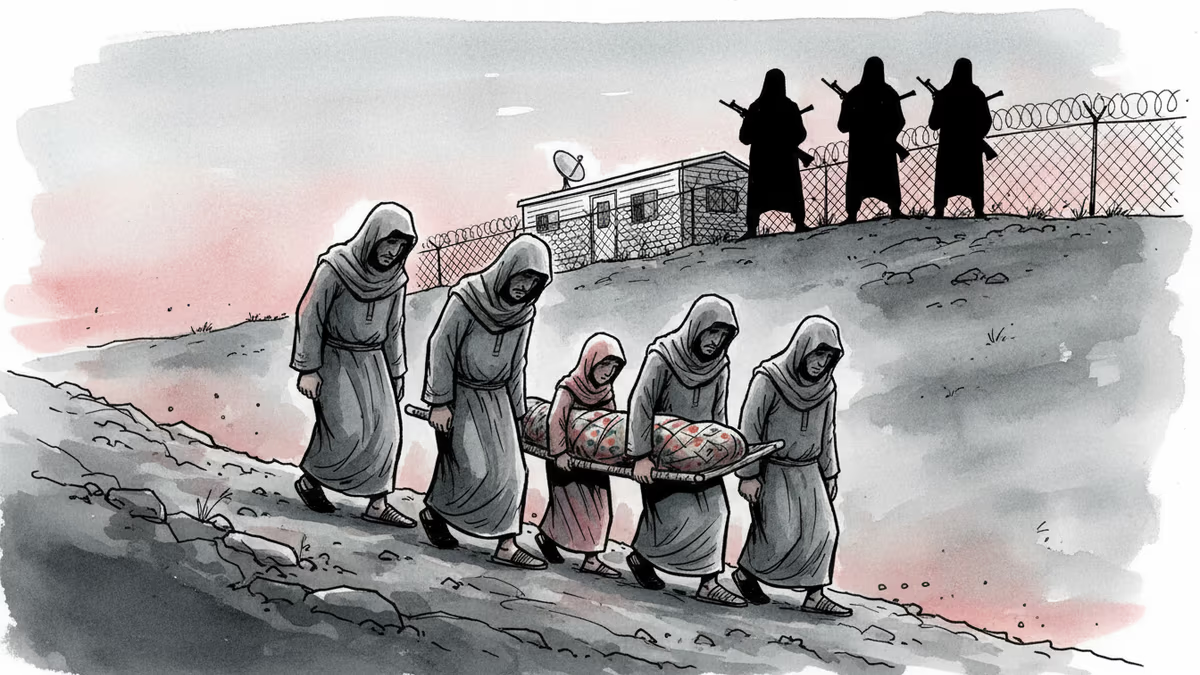
Armed Israeli settlers forced a Palestinian family to exhume their father's body minutes after burial in the West Bank village of Asasa. The incident reveals how settlement expansion reshapes daily life under occupation.
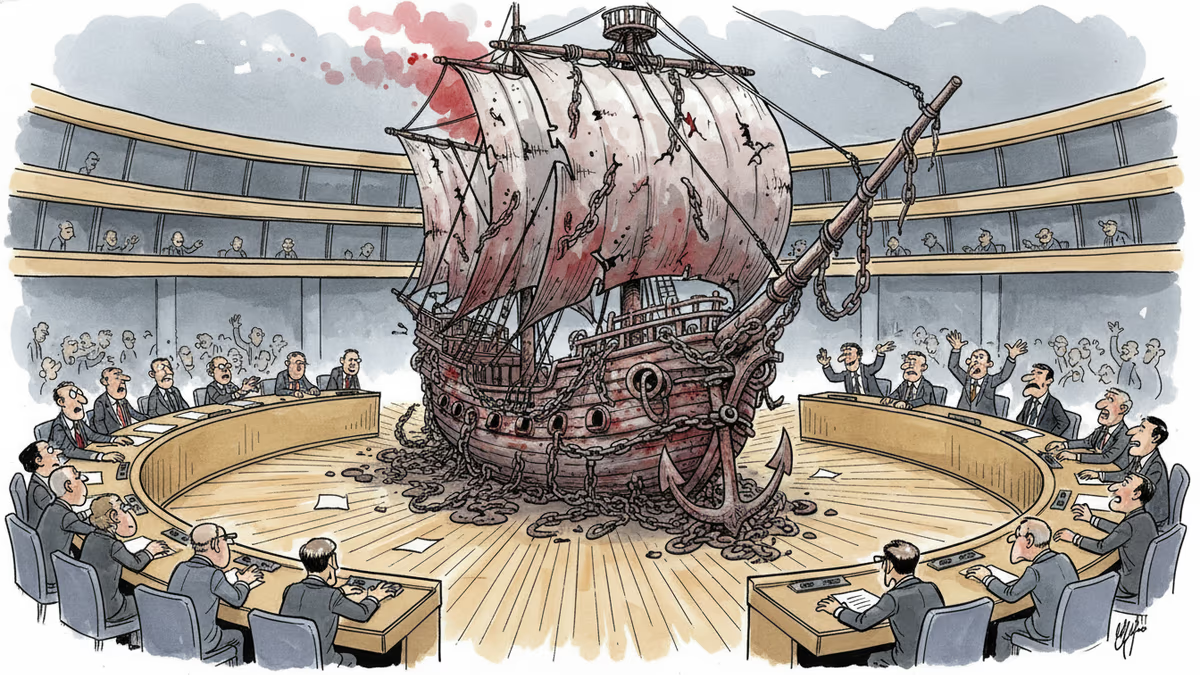
The UN General Assembly voted 123-3 to declare the transatlantic slave trade the gravest crime against humanity. But with no legal teeth, what does the resolution actually change?
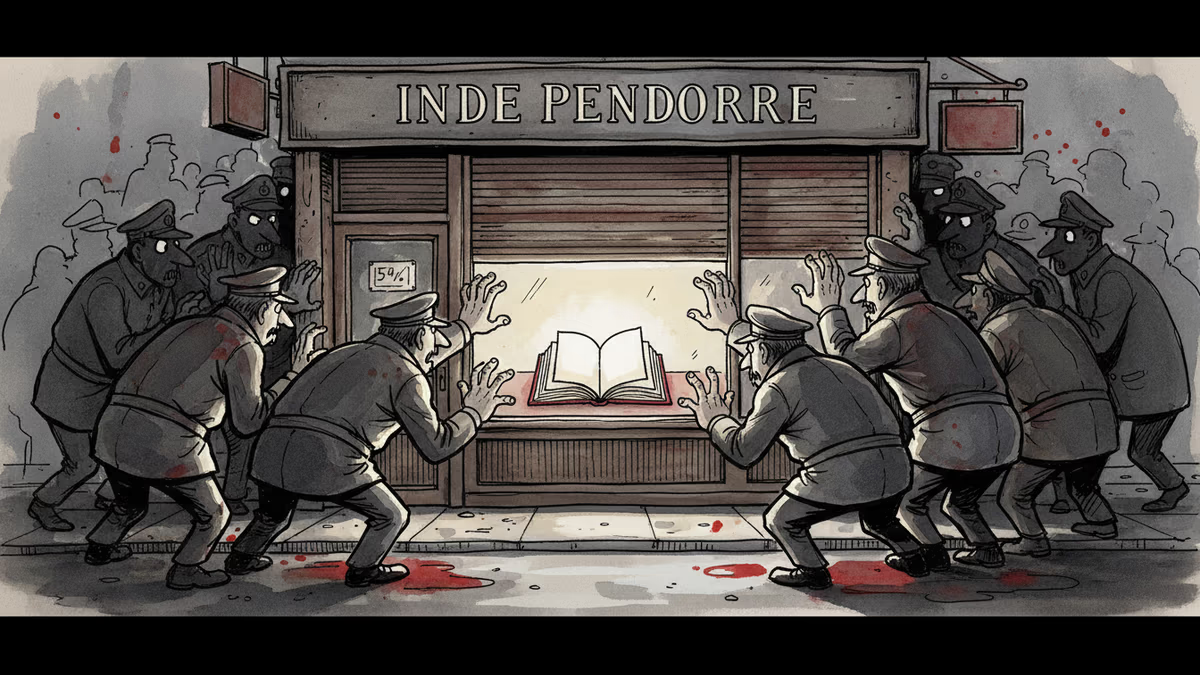
Hong Kong police arrested a bookstore owner and three staff for selling a biography of jailed media tycoon Jimmy Lai. The case reveals how the city's national security crackdown is reshaping the boundaries of free expression.
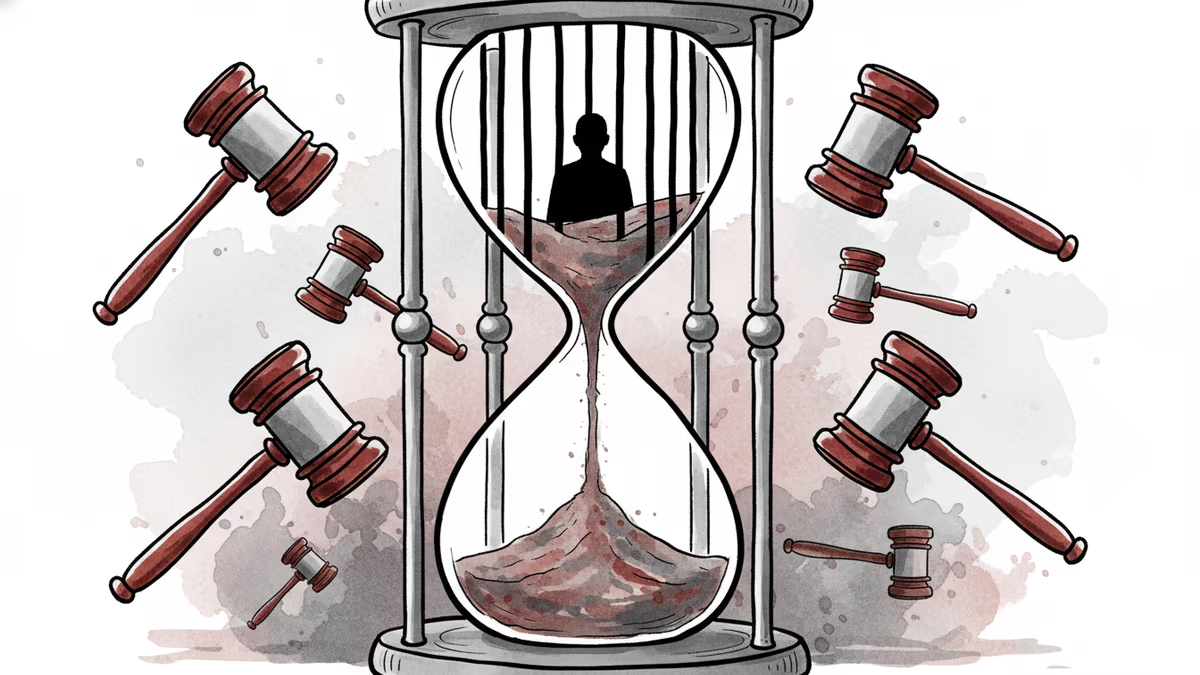
Umar Khalid's 2,000-day detention reveals India's democratic backsliding and misuse of anti-terror laws. International concerns mount over India's authoritarian drift.
Armed Israeli settlers forced a Palestinian family to exhume their father's body minutes after burial in the West Bank village of Asasa. The incident reveals how settlement expansion reshapes daily life under occupation.
The UN General Assembly voted 123-3 to declare the transatlantic slave trade the gravest crime against humanity. But with no legal teeth, what does the resolution actually change?
Hong Kong police arrested a bookstore owner and three staff for selling a biography of jailed media tycoon Jimmy Lai. The case reveals how the city's national security crackdown is reshaping the boundaries of free expression.
Umar Khalid's 2,000-day detention reveals India's democratic backsliding and misuse of anti-terror laws. International concerns mount over India's authoritarian drift.
Thoughts
Share your thoughts on this article
Sign in to join the conversation