

Instacart's AI in the FTC's Crosshairs: The Hidden Tax of Algorithmic Convenience
The FTC's probe into Instacart isn't just about groceries. It's a landmark case against opaque algorithmic pricing, with huge implications for the entire tech industry.
The Lede: Beyond the Grocery Cart
The Federal Trade Commission's (FTC) investigation into Instacart's pricing isn't just about a 7% markup on your groceries. For any executive in the tech, retail, or investment space, this is a blaring siren. It signals the end of the 'black box' era for consumer-facing algorithms. The core question regulators are now asking is no longer *if* a platform adds value, but *how* it extracts that value—and whether that extraction is deceptive. This probe is a test case for the entire on-demand economy, where algorithmic pricing has become the silent, and highly profitable, engine of growth.
Why It Matters: The Trust Economy Under Scrutiny
Instacart's stock slid 7% on the news, but the real damage isn't on the ticker; it's to the foundational trust between platforms and users. The convenience economy is built on a simple premise: trade money for time and ease. This investigation threatens to reframe that transaction as trading money for algorithmic manipulation.
- The Regulatory Shot Across the Bow: Under Chair Lina Khan, the FTC has been hunting for a high-profile case to set a precedent for regulating algorithmic pricing. Instacart, with its recent IPO and mass-market consumer base, is the perfect target. The outcome here will create a ripple effect, impacting how companies like Uber, DoorDash, and even Amazon deploy pricing AI.
- The Consumer Trust Deficit: Instacart's defense—that it's merely A/B testing like any retailer—is a technical distinction lost on a consumer who feels they've been overcharged. The perception of 'surveillance pricing,' whether technically true or not, erodes the platform's core value proposition. If users can't trust the price they see, the entire model fractures.
- Strained Retailer Relationships: By stating that its retail partners set the prices, Instacart is deflecting blame. This will inevitably force a difficult conversation. Are grocery giants like Kroger and Costco comfortable being associated with opaque pricing tests that could damage their own brand equity? This probe could accelerate retailers' investment in their own first-party delivery services to regain control.
The Analysis: The 'Eversight' Smoking Gun
Instacart’s claim that it doesn’t use “dynamic pricing” is a careful, semantic argument designed to sidestep the explosive connotations of Uber's surge pricing. They call it “randomized A/B testing.” But for the end user, the effect is identical: two people can be shown different prices for the same item from the same store at the same time. The intent behind the difference is irrelevant to the person paying more.
The most critical piece of this puzzle is Instacart’s 2022 acquisition of Eversight, an AI-powered pricing firm, for $59 million. The company's own regulatory filings stated the goal was to “create compelling savings opportunities for customers.” The FTC will be laser-focused on whether Eversight's technology was also used to identify price-insensitive customers and optimize revenue extraction. You don’t buy a sophisticated AI pricing engine just to run simple store-vs-store sales tests. You buy it to gain a granular, data-driven edge—an edge regulators now view as potentially unfair and deceptive.
PRISM Insight: The 'Explainability' Tax on AI Platforms
For investors, this marks a new, material risk factor: the 'Explainability Tax.' The value of a platform is no longer just its network effects and gross merchandise value (GMV). A significant portion of its valuation must now be discounted by the risk embedded in its opaque algorithms. The market has long rewarded companies that could build complex, high-margin systems without revealing their inner workings. That era is over.
The key tech trend this accelerates is the push for Explainable AI (XAI) in consumer finance and e-commerce. It's no longer enough for a model to be effective; it must also be transparent and fair. Companies that can prove their algorithms provide value without discriminatory or deceptive pricing will command a premium in both public markets and the court of public opinion. Those who can't will face a future of endless regulatory battles and customer churn.
PRISM's Take: The Convenience Premium Has a Ceiling
Instacart's defense is a masterclass in corporate doublespeak. The distinction between 'A/B testing' and 'dynamic pricing' is an engineering argument that holds no water from a consumer protection standpoint. At its core, the company used its platform and data advantage to test how much more it could charge users without them noticing. The FTC's unusually strong statement that it is “disturbed” by the reports suggests it sees this not as a technicality, but as a fundamental breach of fair-market principles.
This investigation is the opening salvo in a new war on algorithmic opacity. The convenience premium that Instacart and its peers charge is now under a microscope, and if it's found to be artificially inflated by a black box algorithm, the regulatory and reputational cost will be far greater than any revenue gained. The future belongs to platforms that use AI to create transparent value, not to hide a hidden tax.
Related Articles
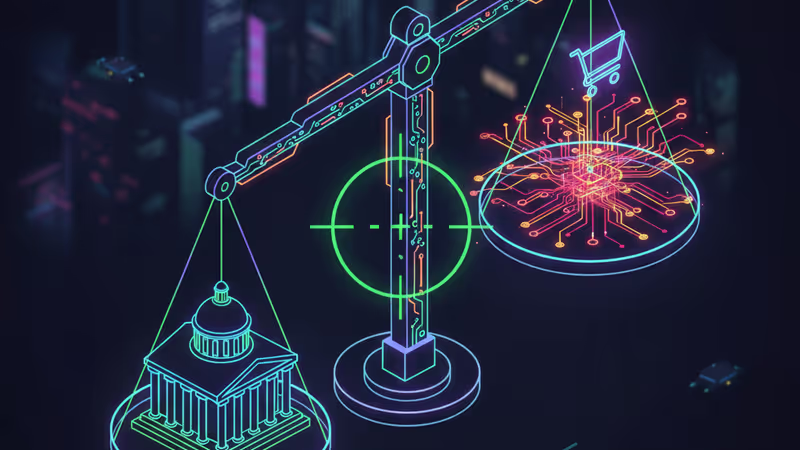
The FTC is investigating Instacart's AI pricing tool. PRISM analyzes why this signals a new era of regulatory scrutiny for all algorithmic commerce.

A California judge found Tesla's 'Full Self-Driving' marketing deceptive. PRISM analyzes why this ruling is a major red flag for investors and the entire EV industry.

A US Senate probe into AI data centers and soaring electricity bills marks a new regulatory battle. Discover the hidden infrastructure costs threatening the AI boom.

A new report shows Instacart's AI is charging some users 23% more. PRISM analyzes why this isn't a price test, but a fundamental breach of trust.