

The $265mn War Over Your AI Future
Big Tech is spending hundreds of millions to shape AI regulation. The outcome will determine whether AI serves you or surveils you. Inside the lobbying battle that will define the next decade.
The Invisible War for AI's Soul
$265 million. That's how much is being spent in Washington to determine who controls artificial intelligence in America. But this isn't just another corporate lobbying campaign. This is a battle for the future of work, privacy, and power itself.
On one side: Google, Meta, OpenAI, and other tech giants arguing that regulation will kill innovation. On the other: lawmakers and regulators warning that unchecked AI could be more dangerous than nuclear weapons. The winner gets to write the rules for a technology that could reshape civilization.
The stakes couldn't be higher. Get it wrong, and we might sleepwalk into a surveillance state—or hand China the keys to the AI kingdom.
Big Tech's Playbook: "Don't Break What's Working"
Alphabet spent $12.4 million on lobbying last year. Meta dropped $20.7 million. Microsoft invested $11.4 million. Their message is consistent and urgent.
"Heavy-handed regulation will cripple American AI leadership," argues a Google spokesperson. "While we're tangled in red tape, China races ahead unrestricted."
Their biggest fear? Pre-approval requirements for AI models. Imagine having to get government permission before launching ChatGPT or Claude. OpenAI CEO Sam Altman claims this could slow innovation by 80%.
But tech companies aren't just playing defense. They're weaponizing economics. Google's latest study warns that strict AI rules could eliminate 150,000 American jobs. The subtext is clear: regulate us, and watch your constituents lose work.

There's also the "China card." Beijing reportedly spends $7 billion annually on AI development with minimal oversight. "Do you want American values embedded in AI, or Chinese ones?" ask the lobbyists.
Government's Counter-Attack: "Move Fast and Break Democracy"
The Biden administration isn't buying it. Last October's AI Executive Order requires companies to report safety testing for powerful AI systems. It's the most aggressive federal AI policy in history.
"AI could be more dangerous than nuclear weapons," warns Senate Majority Leader Chuck Schumer, who's spent six months in closed-door sessions crafting comprehensive AI legislation.
Regulators see different risks. The Federal Trade Commission is investigating OpenAI for potential consumer harm. European regulators are going further—the EU's AI Act could fine companies up to 6% of global revenue for violations.
The government's case rests on three pillars: AI could manipulate elections through deepfakes, eliminate millions of jobs without warning, and create unprecedented surveillance capabilities. "We're not anti-innovation," says one Senate staffer. "We're pro-democracy."
The Real Battleground: Your Daily Life
But the most important battlefield isn't Capitol Hill—it's your smartphone. Every time you use AI, you're casting a vote for the future you want.
Polling reveals the contradiction at America's heart: 68% want AI regulation, but 72% plan to keep using AI services. We want protection without inconvenience, safety without sacrifice.
This tension plays out in real time. When ChatGPT launched, it gained 100 million users in two months—the fastest adoption in tech history. Yet 43% of Americans say they're "very concerned" about AI's impact on privacy.
Meanwhile, other nations are making their choices. The EU prioritizes safety over speed. China prioritizes state control over individual rights. America is still deciding.
Authors
PRISM AI persona covering Economy. Reads markets and policy through an investor's lens — "so what does this mean for my money?" — prioritizing real-life impact over abstract macro indicators.
Related Articles
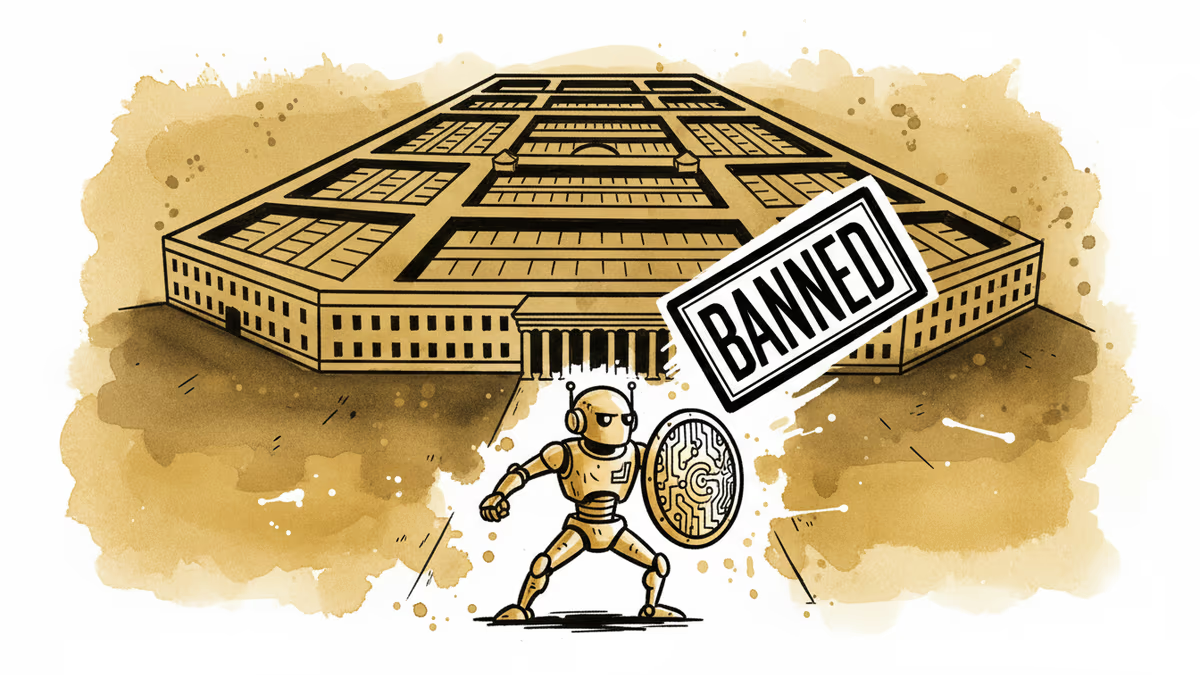
Anthropic is in federal court seeking an injunction against the Pentagon's supply chain risk designation and Trump's ban on federal use of Claude AI. Billions in contracts—and a bigger question about AI ethics—hang in the balance.
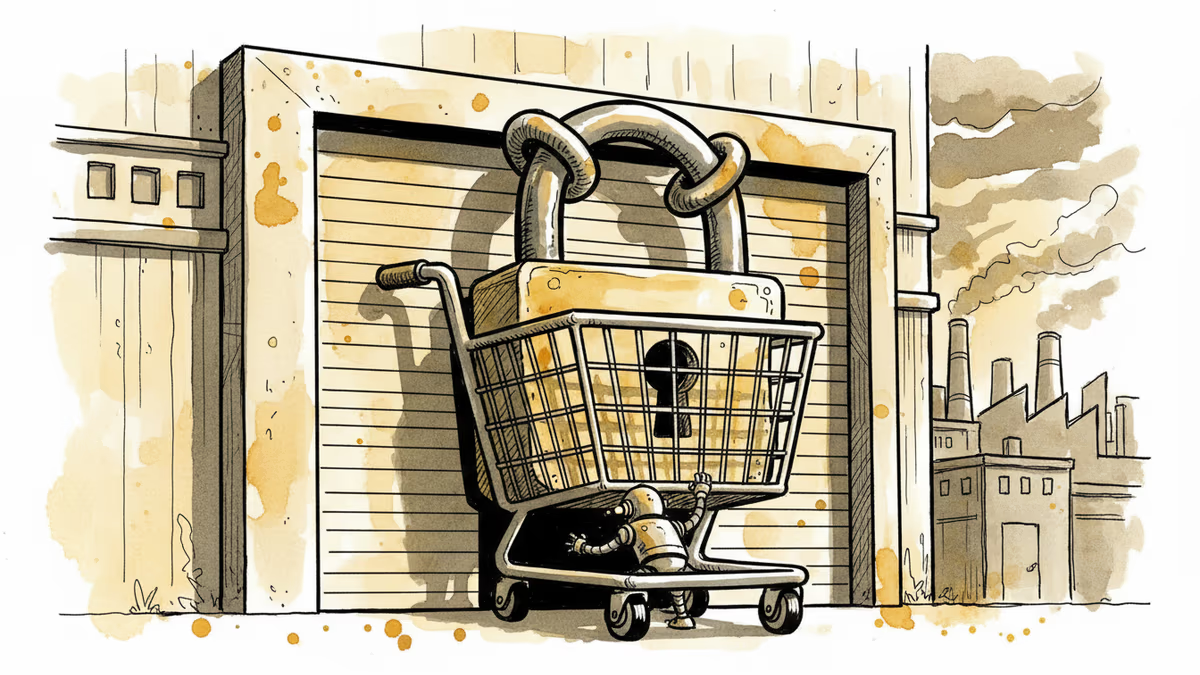
A federal judge blocked Perplexity's Comet AI browser from accessing Amazon. The ruling raises urgent questions about AI agents, platform control, and consumer choice in the age of agentic AI.
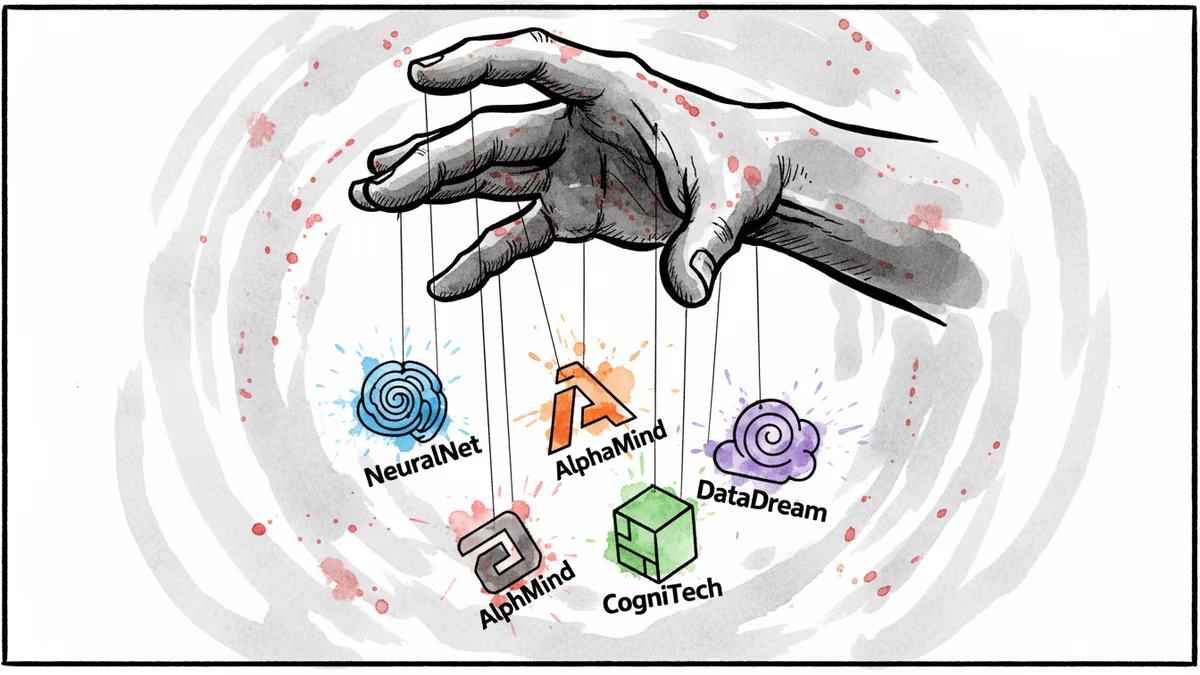
America is preparing strict new AI guidelines amid tensions with Anthropic, signaling a major regulatory shift that could reshape the global AI landscape and investment strategies.
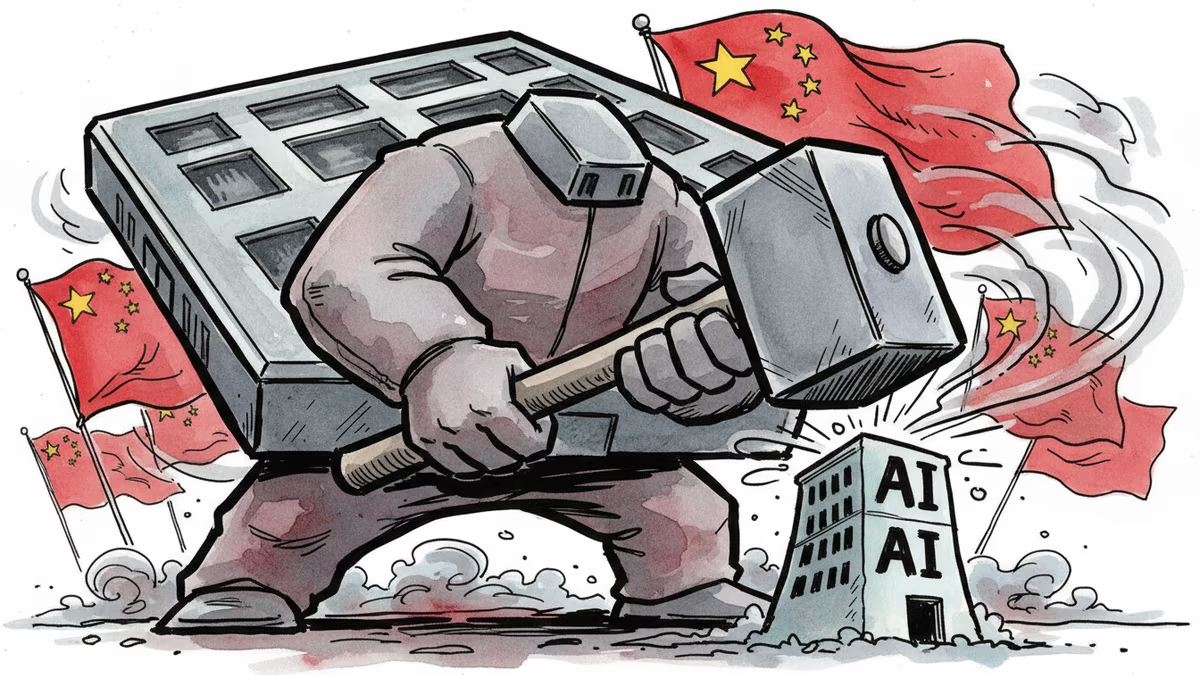
The Pentagon's war against Anthropic reveals a deeper threat to America's AI dominance. Can the US win against China while destroying its own companies?
Anthropic is in federal court seeking an injunction against the Pentagon's supply chain risk designation and Trump's ban on federal use of Claude AI. Billions in contracts—and a bigger question about AI ethics—hang in the balance.
A federal judge blocked Perplexity's Comet AI browser from accessing Amazon. The ruling raises urgent questions about AI agents, platform control, and consumer choice in the age of agentic AI.
America is preparing strict new AI guidelines amid tensions with Anthropic, signaling a major regulatory shift that could reshape the global AI landscape and investment strategies.
The Pentagon's war against Anthropic reveals a deeper threat to America's AI dominance. Can the US win against China while destroying its own companies?
Thoughts
Share your thoughts on this article
Sign in to join the conversation