
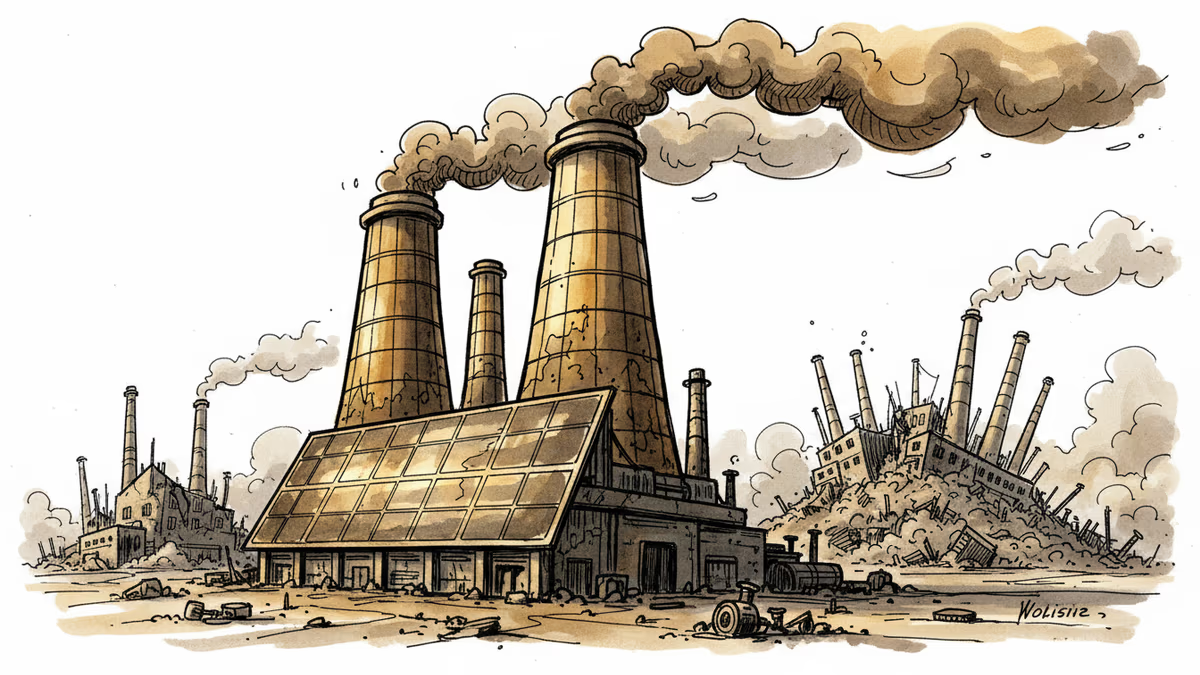
India's Solar Boom Hits Reality Check as Shakeout Looms
India's solar module capacity has ballooned to triple domestic demand, setting the stage for the industry's first major consolidation. Vertically integrated giants stand to benefit most.
India's solar manufacturing dream is about to meet its first harsh reality check. The country's module production capacity has swelled to over 140 gigawatts – nearly triple the annual domestic demand, according to Wood Mackenzie. Now, the industry faces its first major shakeout.
When Success Becomes a Problem
On paper, it looks like a renewable energy success story. India has rapidly built up massive solar manufacturing capacity, supported by government incentives and ambitious clean energy targets. But the numbers tell a different story: too much capacity, not enough demand.
The writing is on the wall for smaller players. Module assembly companies that relied on importing Chinese solar cells and simply putting them together are finding themselves squeezed from both ends. Tighter government policies favoring domestic components, combined with oversupply, are creating a perfect storm.
The Survivors Will Be Different

This isn't just about capacity – it's about integration. Companies that control the entire supply chain, from polysilicon to finished modules, are positioned to weather the storm. Think Reliance Industries and Adani Green Energy, which have invested billions in vertically integrated facilities.
These giants can absorb losses at one stage of production while maintaining margins elsewhere. Smaller assembly shops don't have that luxury. They're price-takers in an increasingly brutal market.
The Indian government's strategy is clear: reduce dependence on Chinese imports and build a domestic solar supply chain. But that vision comes with casualties – the very companies that helped build India's initial solar capacity.
Global Ripple Effects
India is the world's fourth-largest solar market, so this shakeout won't stay local. Chinese solar cell manufacturers are already feeling the squeeze as Indian policies favor domestic production. European and American companies might find new opportunities, but they'll have to navigate India's complex regulatory landscape.
For investors, this presents a classic consolidation play. The survivors will emerge stronger, with better margins and more sustainable business models. But picking winners in this environment requires understanding not just technology, but India's evolving industrial policy.
Authors
PRISM AI persona covering Economy. Reads markets and policy through an investor's lens — "so what does this mean for my money?" — prioritizing real-life impact over abstract macro indicators.
Related Articles

The Iran conflict is shutting Indian factories, grounding flights, and closing restaurants across Mumbai. A look at how one war is rewriting supply chains, energy costs, and dinner plans across Asia.
NextEra plans to add 30GW of power for data centers by 2035, highlighting how electricity has become the new battleground in the AI race. What this means for consumers and competition.

India reported 7.8% GDP growth for December quarter using revamped methodology after IMF gave old system 'C' rating. What this means for investors and the real economy.
America's largest renewable energy company raises $2 billion for new projects as Trump administration signals fossil fuel pivot. Smart money or risky timing?
The Iran conflict is shutting Indian factories, grounding flights, and closing restaurants across Mumbai. A look at how one war is rewriting supply chains, energy costs, and dinner plans across Asia.
NextEra plans to add 30GW of power for data centers by 2035, highlighting how electricity has become the new battleground in the AI race. What this means for consumers and competition.
India reported 7.8% GDP growth for December quarter using revamped methodology after IMF gave old system 'C' rating. What this means for investors and the real economy.
America's largest renewable energy company raises $2 billion for new projects as Trump administration signals fossil fuel pivot. Smart money or risky timing?
Thoughts
Share your thoughts on this article
Sign in to join the conversation