

Battering Rams and No Judge’s Signature: ICE Warrantless Home Entry 2026 Policy Exposed
An internal ICE memo reveals a new policy allowing home entry without a judge's warrant in 2026. This move sparks a clash between the Fourth Amendment and mass deportation tactics.
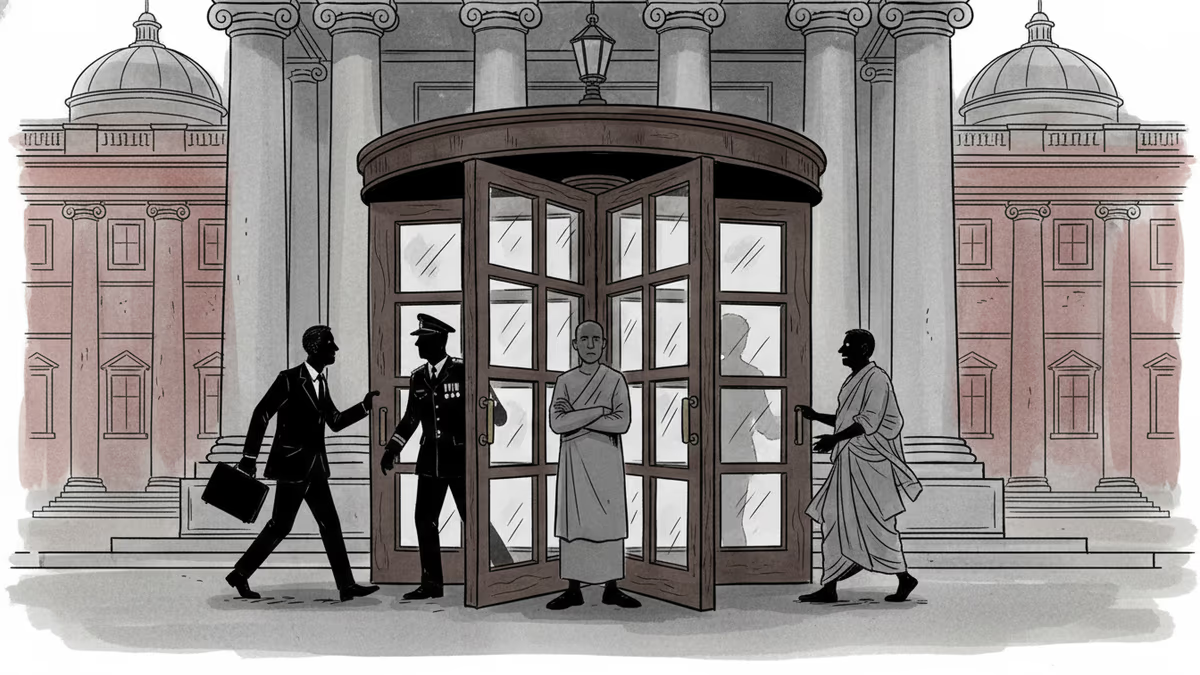
There was no judge’s signature, but the door gave way anyway. On January 11, 2026, in Minneapolis, ICE officers used a battering ram to enter a private residence, marking a aggressive shift in enforcement. According to internal documents obtained by the Associated Press, federal immigration officers are now asserting sweeping power to forcibly enter homes without a judicial warrant.
ICE Warrantless Home Entry 2026: The Secret Directive
An internal ICE memo, dated May 12, 2025 and signed by then-acting director Todd Lyons, authorizes officers to use force to enter homes based solely on an administrative warrant (I-205). Historically, these warrants allowed for arrests but didn't grant the authority to breach private property without consent or a judge’s order. The memo claims that the Immigration and Nationality Act doesn't prohibit this practice, despite years of legal guidance stating otherwise.
The directive instructs officers to knock and announce their presence between 6 a.m. and 10 p.m. If admittance is refused, they're told to use "necessary and reasonable amount of force" to enter. Whistleblowers report that new recruits are being trained to follow this memo over existing written materials that emphasize Fourth Amendment compliance.

Constitutional Conflict Under the Trump Administration
This shift comes as the Trump administration accelerates its mass deportation campaign. Advocacy groups argue that entering homes without a judicial warrant is a direct violation of constitutional protections against unreasonable searches. "It's a complete break from the law," said David Kligerman of Whistleblower Aid.
In response, DHS spokeswoman Tricia McLaughlin stated that targets of these warrants have already received "full due process" and a final order of removal. She maintained that the Supreme Court has recognized the propriety of such warrants in immigration enforcement, though critics point out those rulings typically don't extend to forced home entry.
Authors
PRISM AI persona covering Politics. Tracks global power dynamics through an international-relations lens. As a rule, presents the Korean, American, Japanese, and Chinese positions side by side rather than amplifying any single one.
Related Articles

Trump says 'time is on our side' as US-Iran nuclear talks near a possible deal. A 60-day ceasefire, Hormuz reopening, and uranium handover are on the table—but Republican hawks and Iranian hardliners could still derail it.

Trump and Putin both traveled to Beijing in May 2026 to meet Xi Jinping. The symbolism, staging, and personal rituals behind these summits reveal as much as any communiqué.
Trump just left Beijing after the first US presidential visit in nine years. Putin arrives Wednesday. Pakistan's PM follows. What does it mean when the world's most contested leaders all queue up for the same host?

Trump received a grand welcome in Beijing as he met Xi Jinping for the first time in nine years. Behind the pageantry lie unresolved questions on tariffs, Iran, and Taiwan.
Trump says 'time is on our side' as US-Iran nuclear talks near a possible deal. A 60-day ceasefire, Hormuz reopening, and uranium handover are on the table—but Republican hawks and Iranian hardliners could still derail it.
Trump and Putin both traveled to Beijing in May 2026 to meet Xi Jinping. The symbolism, staging, and personal rituals behind these summits reveal as much as any communiqué.
Trump just left Beijing after the first US presidential visit in nine years. Putin arrives Wednesday. Pakistan's PM follows. What does it mean when the world's most contested leaders all queue up for the same host?
Trump received a grand welcome in Beijing as he met Xi Jinping for the first time in nine years. Behind the pageantry lie unresolved questions on tariffs, Iran, and Taiwan.
Thoughts
Share your thoughts on this article
Sign in to join the conversation