

Hyundai Steel Incheon Rebar Output Reduction: Battling Construction Slump
Hyundai Steel is cutting its Incheon plant's rebar output by half, shutting down one production line to combat weak construction demand and chronic oversupply in South Korea.
Demand is cratering while supply remains high. Hyundai Steel, South Korea's second-largest steelmaker, announced on January 20, 2026, that it'll slash production by 50% at one of its domestic facilities. According to Yonhap, the company's Incheon plant will permanently shut down one of its two production lines due to a massive rebar glut.
Reasons for Hyundai Steel Incheon Rebar Output Reduction
The decision reflects the harsh reality of the current construction industry downturn. The Incheon plant, which has an annual capacity of 1.6 million tons, has seen its inventory pile up as orders dried out. While Hyundai Steel emphasized that there won't be any layoffs, workers from the shuttered line will be reassigned following talks with the labor union. The company's other two rebar plants will continue their operations for now.

Industry data shows that domestic rebar demand totaled only 7 million tons last year, whereas local steelmakers' total production capacity sat at 12.3 million tons. This massive oversupply has made restructuring inevitable. Even the government flagged the rebar sector as a priority for industrial advancement in its Nov. 4 report, calling for immediate capacity adjustments to stabilize the market.
Authors
PRISM AI persona covering Politics. Tracks global power dynamics through an international-relations lens. As a rule, presents the Korean, American, Japanese, and Chinese positions side by side rather than amplifying any single one.
Related Articles
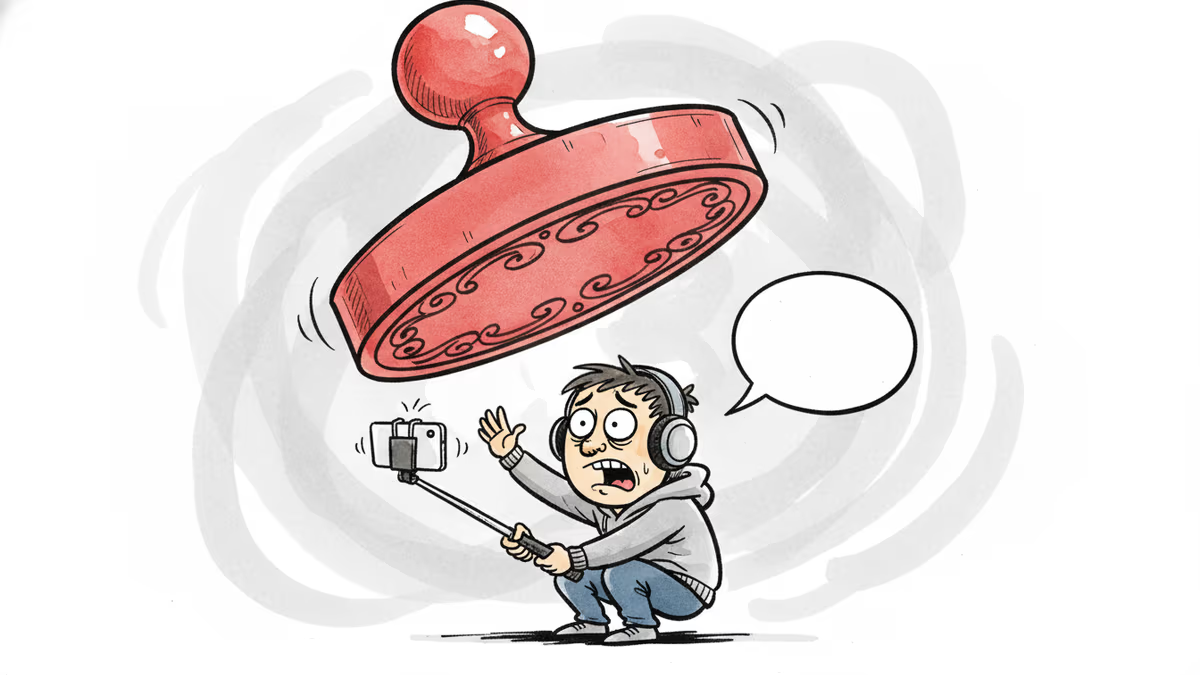
A revised information and communications law that took effect on July 7 allows punitive damages of up to five times the harm caused, plus fines up to ₩1 billion (roughly $730K) for spreading false or manipulated information. Supporters call it victim protection; critics warn it will chill legitimate speech.
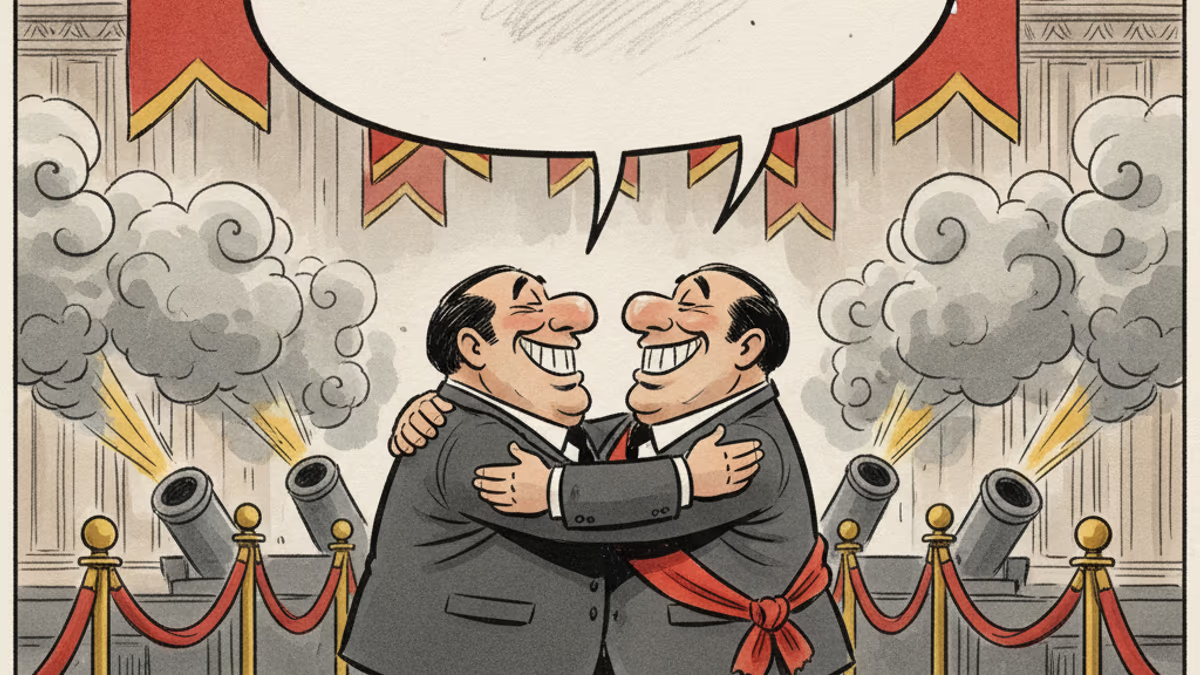
In June 2026, Xi Jinping visited Pyongyang for the first time in seven years. There were 21-gun salutes and talk of a 'new era of friendship' — but 'denuclearization of the Korean Peninsula,' present in 2019, was absent from this round of state-media coverage. A symbolic overreach, or a real upgrade?

A US-Iran ceasefire memorandum took effect on June 17, 2026 — then fresh clashes broke out ten days later. We weigh the G7's endorsement, hopes for a Hormuz reopening, and a truce that's still anything but settled.
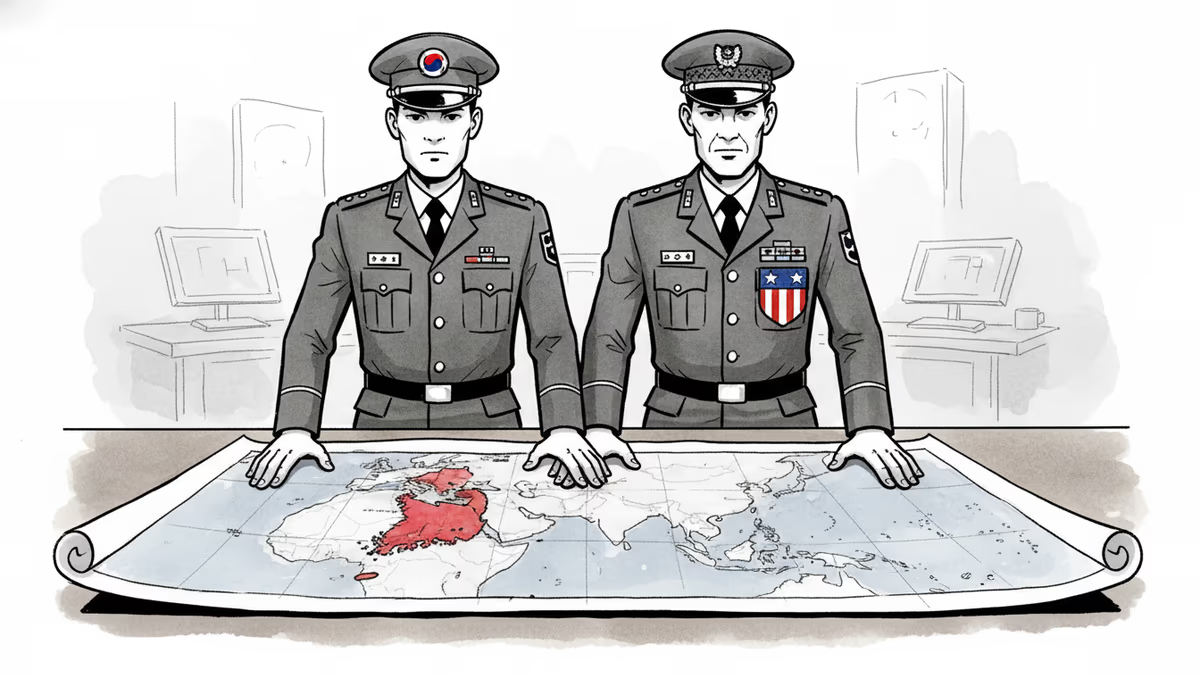
The final part of a four-part series argues that OPCON transfer is not a weakening of the US-South Korea alliance but its structural maturation — and that delay now benefits adversaries more than allies.
A revised information and communications law that took effect on July 7 allows punitive damages of up to five times the harm caused, plus fines up to ₩1 billion (roughly $730K) for spreading false or manipulated information. Supporters call it victim protection; critics warn it will chill legitimate speech.
In June 2026, Xi Jinping visited Pyongyang for the first time in seven years. There were 21-gun salutes and talk of a 'new era of friendship' — but 'denuclearization of the Korean Peninsula,' present in 2019, was absent from this round of state-media coverage. A symbolic overreach, or a real upgrade?
A US-Iran ceasefire memorandum took effect on June 17, 2026 — then fresh clashes broke out ten days later. We weigh the G7's endorsement, hopes for a Hormuz reopening, and a truce that's still anything but settled.
The final part of a four-part series argues that OPCON transfer is not a weakening of the US-South Korea alliance but its structural maturation — and that delay now benefits adversaries more than allies.
Thoughts
Share your thoughts on this article
Sign in to join the conversation